CLIMATE ACTION
PUTTING THE PLANET FIRST
Shannel Pinidiya asks who can solve climate change: firms or communities?
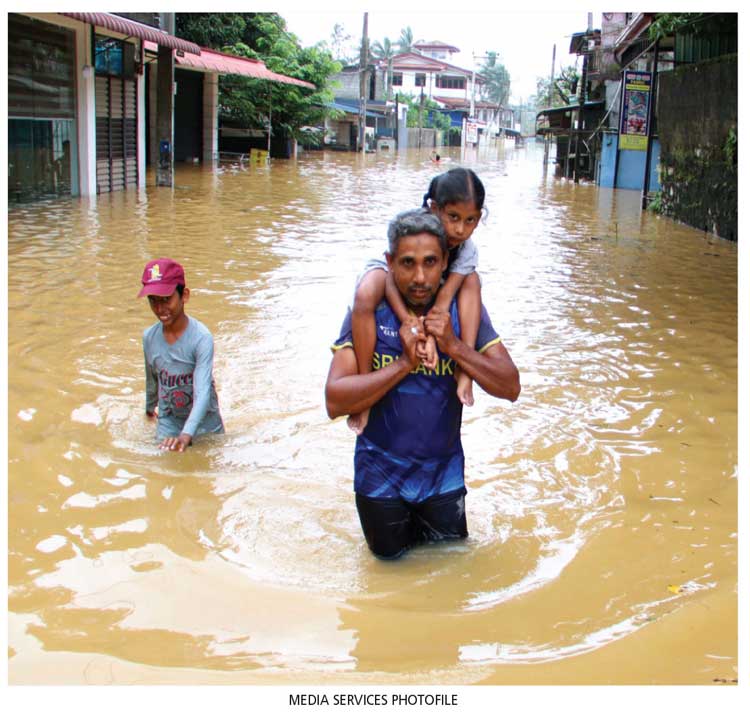
In our current political environment, climate change plays a paradoxical role. It is both highly reported and severely underreported. In countries such as Sri Lanka that rely on the cycle of wet and dry seasons, extremes are expected.
The dichotomy between the unbearably hot dry season and unending rain of the wet season is a part of our norm. Therefore, extreme flooding and heatstroke weren’t effects of an unstable environment but cyclic acts of nature. The problem is that natural disasters in today’s status quo are not fundamentally natural.
Instead, they are anthropogenic: results of man-made actions and events. When we picture anthropogenic disasters, we imagine conventionally discussed scenarios.
An example is the devastating flash floods in Nepal. UNICEF states that the floods occurred due to the collapse of a “large mass of ice and rock… from a glacier.”
One can assume that the collapse took place because of global warming, which in turn occurred because of the burning of fossil fuels. The case study presents a straightforward causal link between events.
On the other hand, despite cyclones being just as anthropogenic, they’re not conventionally associated with the Anthropocene. According to the Climate Council, modern tropical cyclones are likely to be more intense because of “rising ocean surface temperatures and a warmer, wetter atmosphere.”
This provides “a larger source of energy for tropical cyclones to draw on once they are formed,” it adds.
Accordingly, due to rising temperatures, there is an increase in extreme rainfall.
For example, according to a study published by World Weather Attribution (WWA), “heavy five day precipitation events such as those associated with Cyclone Ditwah are now about 28-160 percent more intense due to the warming to date.”
The stereotypical image of climate change, associated predominantly with ice caps melting, acid rain and drought, limits the ability to understand the sheer impact of the Anthropocene in day-to-day life. Therefore, it is easier for the general public to dismiss the impact of climate change on cyclones, thereby labelling them ‘normal’ acts of nature.
Cyclone Ditwah was man-made. While the environmental impact of our island may be comparatively small in the sea of anthropogenic harm, Sri Lanka isn’t exempt from responsibility.
In order to safeguard our communities, we must reduce our climate impact while demanding that the rest of the world – specifically the global north – does the same.
In a world that runs on profit, environmental impact is not a core responsibility of stakeholders. And it is undeniable that our corporations have a massive stake in this crisis.
Evidence ranges from mineral sand mining in Mannar, which as cited by journalist Roy Fernando, “accelerates coastal erosion, increasing vulnerability to climate disasters,” while threatening local livelihoods, to waste dumping in rivers and oceans.
In a country with growing economies such as Sri Lanka, it seems impossible for corporations to do anything but contribute both to the economy and the climate crisis. While revolutionising profit incentivisation may be far away, pushing for accountability and sustainability – however small – is not.
Organisations are the engine behind the Anthropocene but they can and must be the catalyst for a more sustainable future.
If businesses are to solve climate change, they must do it with communities – with the very people they are meant to serve
Working with nature and not against it means going back to precolonial times, when our ancestors worked with and for nature.
This could manifest as companies selling indigenous and noninvasive plants, focussing on architecture that is sustainable, bioengineering degradable plastic, selling natural handmade clothing that is meant to last a lifetime and boosting local businesses.
As academic and researcher Poornima Gamaethige claims that “there is a growing market for handmade sustainable products coupled with cultural values, local identities and craftsmanship.” What is needed then is a reprioritisation of our people over large-scale profits.
If businesses are to solve climate change, they must do it with communities – with the very people they are meant to serve. Communities should pressure corporations to act on their behest, creating a symbiotic relationship.
For so long on our island, communities have held on to our cultural survival. Whether through traditional handloom clothing or fish bought from local fishermen instead of large corporations, our endurance hinges on our communal cultures.
Responsibility for the Anthropocene doesn’t belong solely to individuals; it belongs to the collective. This collective moves beyond communities. It integrates businesses into the fold and reprioritises their ethos from profit to people.
Therefore, it is not merely about our desire to use one less plastic bag; companies must ensure we pick the reusable ones.