ECONOMIC POLICY

INDIA PLUS ONE PROVIDES AN OPPORTUNITY FOR SRI LANKA
Sri Lanka must work towards capitalising on the giant market across the Palk Strait
Shiran Fernando zooms in how the island nation can make the most of India Plus One
For years, Sri Lanka’s geographical location has been described as one of its greatest economic advantages. Situated along major international shipping routes and across the Palk Strait from India, the island has the potential to serve as a gateway to South Asia.
Yet, geography alone can’t create prosperity. The real question is whether Sri Lanka is translating this advantage into trade, investment, tourism and deeper economic integration with its rapidly growing neighbour.
The emerging ‘India Plus One’ strategy provides an opportunity to do precisely that.
As businesses diversify supply chains and seek new markets, Sri Lanka can position itself as a complementary investment and business destination alongside India. Recent developments suggest that the opportunity is beginning to materialise although significant potential remains untapped.
INDIA’S GROWTH India has emerged as one of the world’s fastest growing major economies with economic growth projected at around seven percent for this year.

Supported by domestic consumption, infrastructure investments, manufacturing and services, its expanding economy is creating demand for goods, logistics, tourism and specialised services.
This presents an opportunity for Sri Lanka to connect domestic businesses with India’s expanding market, attract Indian investments and participate in regional supply chains. The objective isn’t to compete with India but complement its growth by offering competitive products, services and investment opportunities.
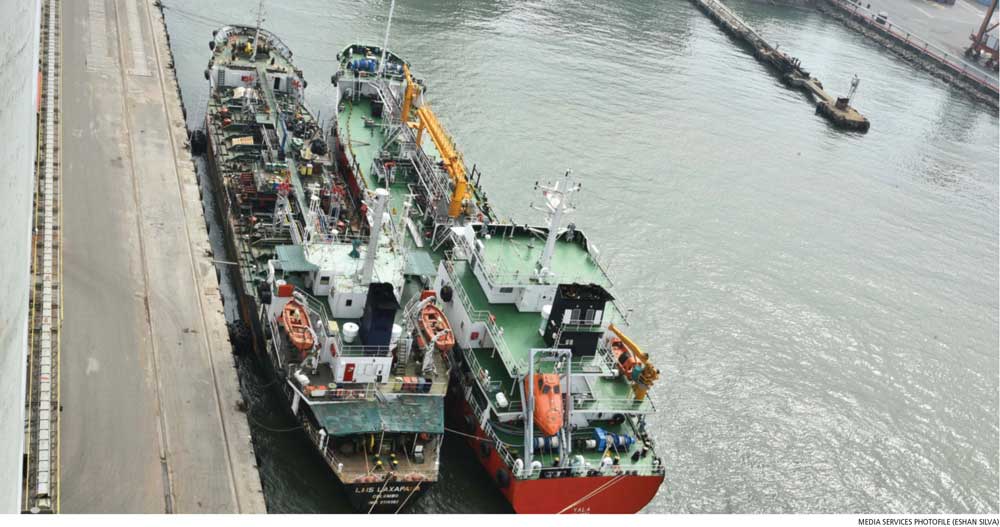
MARITIME ASSET The Port of Colombo remains a central pillar of this opportunity.
Colombo handled approximately 8.3 million twenty-foot equivalent units (TEUs) last year. Its transshipment operations account for the overwhelming majority of container traffic and reflect the port’s importance to regional shipping networks.
From January to August 2026, transshipment volumes increased by approximately 10.9 percent year on year.
However, Sri Lanka can’t rely indefinitely on location alone as India is investing in its own port infrastructure. And this development is increasing the need for Colombo to remain competitive through efficiency, reliability and capacity.
The next step is to expand beyond transshipment into logistics, warehousing, distribution and maritime services that connect shipping with regional supply chains.
INDIAN TOURISTS Tourism offers another tangible opportunity.
India recorded around 32.8 million departures by its nationals in 2025 while Sri Lanka welcomed 531,511 Indian visitors that year.
Momentum has continued and from January to September this year, Indian arrivals in Sri Lanka increased by 16.6 percent compared with the corresponding period in 2025.
While this growth is encouraging, Sri Lanka captures only a small share of India’s outbound travel market. Proximity, short flight times and cultural connections provide natural advantages, but they need to be supported by targeted marketing, stronger air connectivity and attractive travel packages.
Opportunities extend beyond leisure tourism to weddings, wellness, business events, premium hospitality and family holidays.
The objective should be to increase arrivals, as well as visitor spending, lengths of stay and investment in tourism infrastructure.
EXPORT MOMENTUM Trade is another indicator of the growing relationship.
Sri Lankan merchandise exports to India increased by approximately 10.2 percent year on year between January and August 2026, and reached US$ 777 million. India has overtaken the UK to become Sri Lanka’s second largest export market.
Growth has been supported by exports of boilers, piston engines, pumps and vacuum pumps, coconut shell charcoal, animal feed and base metal products.
This diversification suggests that Sri Lankan businesses are finding opportunities in industrial and intermediate goods alongside traditional exports.
Nevertheless, the scale of the Indian market means that considerable potential remains.
Sri Lanka’s exporters should identify opportunities across manufacturing, processed foods, rubber products, information technology and specialised services. And greater market intelligence, participation in trade fairs, and connections with Indian buyers and distributors are essential to converting demand into sustained export growth.
TRADE FRAMEWORK Realising this opportunity calls for a modern trade framework.
The existing India-Sri Lanka FTA has provided an important foundation but today’s commercial environment centres on cooperation that extends beyond traditional tariff concessions.
India’s growth is an opportunity… and the challenge is to turn proximity into prosperity
A modernised agreement should address non-tariff barriers, customs procedures, standards, services, investments and digital trade. It should also provide greater predictability for businesses seeking to establish cross border partnerships and integrate into regional value chains.
The government’s establishment of a trade negotiation team creates an opportunity to prioritise this agenda.
VIABLE LINKS Recent Indian business delegations and engagements between chambers of commerce have strengthened commercial links.
Such visits can connect businesses across manufacturing, healthcare, renewable energy, information technology, logistics and tourism.
So is the India Plus One strategy working for Sri Lanka?
Rising exports, increasing Indian tourist arrivals and growing port activity suggest that the country is beginning to capture some of the benefits of India’s economic expansion.
But these are early indicators; not evidence that the full opportunity has been realised.
Sri Lanka needs a coordinated approach that connects trade policy, investment promotion, tourism, logistics and private sector engagement. India’s growth is an opportunity on Sri Lanka’s doorstep and the challenge is to turn proximity into prosperity.