LUBRICANT SECTOR
Compiled by Tamara Rebeira
THE SCIENCE OF PROTECTION
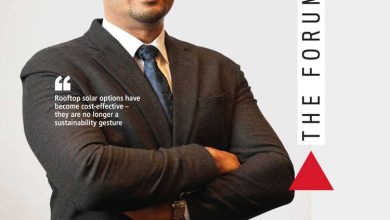
Bertram Paul outlines the lubricant sector’s role in national productivity

Q: What role does the lubricants sector play in supporting key industries such as transport, logistics, manufacturing and power generation in Sri Lanka?
A:Lubricants are the quiet enablers of national productivity.
In transport and logistics, the right engine and gear oils together with greases reduce friction, heat and wear, extend drain intervals and protect fleets that keep supply chains moving.
And in manufacturing, specialised industrial lubricants and hydraulic fluids support uptime on critical assets such as compressors, pumps, gearboxes and turbines, where a single hour of unplanned stoppage can translate into substantial costs.
As for power generation, lubricant performance is directly linked to reliability and efficiency, because turbines and auxiliary equipment operate under high loads and temperatures.
At a country level, quality lubrication supports energy efficiency, asset longevity and lower ownership costs – outcomes that matter to every operator, especially in a market that must continuously balance cost discipline with operational resilience.
Q: To what extent is the shift towards synthetic lubricants affecting demand for traditional petroleum based products?
A:We see a measured but clear shift towards higher performance formulations, driven less by fashion and more by OEM specifications, tighter emission norms, and customer focus on longer service intervals and better fuel economy.
Synthetics are growing in premium passenger vehicles, modern motorcycles, heavy-duty fleets and certain industrial applications, where higher temperatures, higher loads and longer drain intervals are priorities. Traditional mineral based products will remain relevant for years – especially where equipment is older or operating conditions are moderate.
The real evolution is towards ‘fit-for-purpose’ lubrication: matching the product technology to the duty cycle, OEM requirement and maintenance discipline, rather than a one-size-fits-all approach.
Q: What are the main challenges facing established brands in maintaining market share amid increasing price competition and informal market activity?
A:Established brands compete on more than price – they compete on trust, performance and consistency.
The challenge is that price led competition can blur the distinction between products that are genuinely engineered to meet specifications and those that appear to be similar.
Customers may not always have full visibility on product provenance, storage conditions or whether the product meets the claimed standard. Therefore, to maintain market share responsibly, brands must invest in customer education, strong channel governance, and technical support that helps users quantify the value of longer equipment life, fewer breakdowns and predictable maintenance.
They also have to stay agile by offering the right pack sizes, ensuring availability and continuing innovating with products aligned to modern OEM requirements while never compromising on quality.
Q: How significant is the issue of counterfeit or substandard lubricants – and what impact does it have on the sector?
A:Counterfeit and substandard lubricants are a serious concern because the risk is not limited to the lubricant category – it directly impacts engine durability, industrial asset reliability and in some cases, operational safety.
Often, the damage is silent at first: accelerated wear, deposits, corrosion, seal incompatibility, overheating and premature component failure.
When customers can trust that products on shelves are being monitored and verified, it protects them and end-users from avoidable equipment damage
For fleet and industrial operators, that translates into higher maintenance cost, more downtime and reduced resale value of equipment. For the sector, it erodes consumer confidence and undermines fair competition for legitimate importers, blenders, and distributors who invest in compliance, quality assurance and after sales technical service.
In Sri Lanka, there has been a noticeable increase in unauthorised and substandard products in recent years, coinciding with limited regulatory oversight and reduced market monitoring role that existed in the past. Such products adversely affect licensed operators, consumers and the government, through reduced revenue and unfair competition.
Addressing this requires a coordinated effort: stronger enforcement, better traceability, market surveillance and consistent customer awareness, so that buyers understand that cheapest can become the most expensive decision over the lifecycle of an asset.
Q: How do you think quality and compliance can be maintained in the lubricant market?
A:Sri Lanka has made progress through standards, testing capability and the role of relevant authorities but the effectiveness of any framework ultimately depends on consistent enforcement across the entire value chain – from import and local blending, to distribution and retail.
To make that enforcement effective, it is important that a clearly mandated regulatory body is in place and properly resourced, to set and maintain minimum quality standards, require proof of conformity and take decisive action against non-compliance.
Additionally, the industry also has a role to play by promoting good storage and handling practices, supporting education for mechanics and fleet engineers, and encouraging customers to purchase from authorised channels.
In practice, the market needs three things working together: clear and current specifications aligned to recognised international standards; routine market sampling and independent testing with meaningful consequences for non-compliance; and better traceability to deter counterfeiting, mislabelling and malpractices such as adulteration.
When customers can trust that products on shelves are being monitored and verified, it protects them and end-users from avoidable equipment damage and safety risks while creating a level playing field for responsible businesses.
The interviewee is the Managing Director and Chief Executive Officer of Chevron Lubricants Lanka.