CONSTRUCTION INDUSTRY

COMPILED BY Suresh Ginige
FOUNDATIONS OF REBUILDING
Thusith Gunawarnasuriya surveys the path to a recovery in construction
Q: The construction industry has shown signs of recovery following a challenging few years. How would you assess the current state of the industry?
A: The industry has shown strong resilience after one of the most difficult periods in recent history. The challenges were significant – foreign exchange shortages, high interest rates, elevated material costs, and delays in both public and private investments.
However, the operating environment has improved meaningfully. Inflation has moderated, financing conditions are gradually easing, confidence is returning, and construction activity is beginning to recover across residential, commercial and infrastructure segments.
Cement demand is a useful indicator of this recovery. The market declined to around 3.6 million tonnes in 2023, recovered to approximately 4.4 million tonnes in 2024 and reached around 5.2 million tonnes last year. It is expected to increase further – to around 5.5 million tons in 2026.
This signals a clear rebound, although the industry is still below its previous peak. The priority now is to sustain this momentum and convert the recovery into stable long-term growth.
Q: What are the main challenges currently facing the industry – and what steps are needed to unlock its full potential?
A: The main challenge is certainty. Construction requires long-term confidence because investors, developers, banks, contractors and suppliers make decisions based on future visibility.
While demand is returning, the industry still needs a stronger pipeline of projects, predictable policy direction and a more supportive financing environment.
Access to credit remains important, particularly for housing, small contractors and developers. Public infrastructure investment is also below its full potential due to fiscal constraints.
To unlock growth, Sri Lanka requires continued macroeconomic stability, consistent regulations, transparent project approvals, and stronger public and private sector participation.
Priority areas such as transport infrastructure, tourism, industrial zones, renewable energy, urban development and affordable housing can create a strong multiplier effect.
If these elements come together, construction can once again become one of the key engines of employment, investment and national development.
Q: The availability and affordability of building materials remain key concerns. How is the industry addressing these challenges while maintaining quality and sustainability?
A: Availability has improved significantly compared to the crisis period but affordability remains a concern for builders and consumers.
The industry must therefore focus not only on supply but also efficiency, innovation and responsible cost management. Local manufacturing plays a critical role in improving resilience and reducing excessive dependence on imports.
At the same time, sustainability is becoming central to affordability. Blended cements and lower carbon construction materials can reduce environmental impacts, while maintaining performance and quality.
And investments in energy efficiency, alternative fuels, waste co-processing, logistics optimisation and product innovation help manage cost pressures while supporting climate goals.
The future of construction materials should not be about choosing between affordability and sustainability. The industry must make sustainable construction more accessible, practical and mainstream.
Q: Labour shortages and skills gaps continue to affect the industry. What strategies do you believe are necessary to build a future ready construction workforce?
A: The skills gap is a structural issue. Materials, standards, technology and customer expectations are changing but workforce development has not always moved at the same pace.
We need a coordinated national effort involving government, vocational training institutions, universities, industry associations, contractors and manufacturers. More emphasis is needed on technical education, apprenticeship pathways, certification and continuous skills development, for masons, technicians, supervisors, engineers and project managers.
Customers and investors will increasingly look for reliability, technical performance, lower carbon solutions and lifecycle value rather than simply the lowest initial cost
In addition, we must improve the image of construction careers. The industry offers opportunities for entrepreneurship, specialisation and upward mobility, but young people need to see it as a modern, respected and future oriented career path.
Digital tools, data, automation and advanced building systems will increasingly shape construction, so adaptability and lifelong learning will be essential.
Q: How do you see the industry evolving over the next few years – and what changes do you expect to see in demand and investment patterns?
A: I am optimistic about the medium to long-term outlook. Sri Lanka still has significant unmet needs in housing, infrastructure, tourism, logistics, utilities and industrial development.
As confidence strengthens, I expect demand to become more balanced and diversified. Large infrastructure will remain important but growth will also come from private housing, hospitality projects, commercial developments, renewable energy, logistics facilities and industrial investments.
Market expectations will also change. Customers and investors will increasingly look for reliability, technical performance, lower carbon solutions and lifecycle value rather than simply the lowest initial cost.
Ready mix concrete, engineered cement solutions and green building materials will become more relevant, as projects become more complex and sustainability standards rise.
Technology will also reshape the construction value chain from design and planning, to manufacturing, logistics and customer engagement. Overall, the industry is moving from recovery towards transformation – and companies that invest in innovation, capability and sustainability will be best positioned to lead.
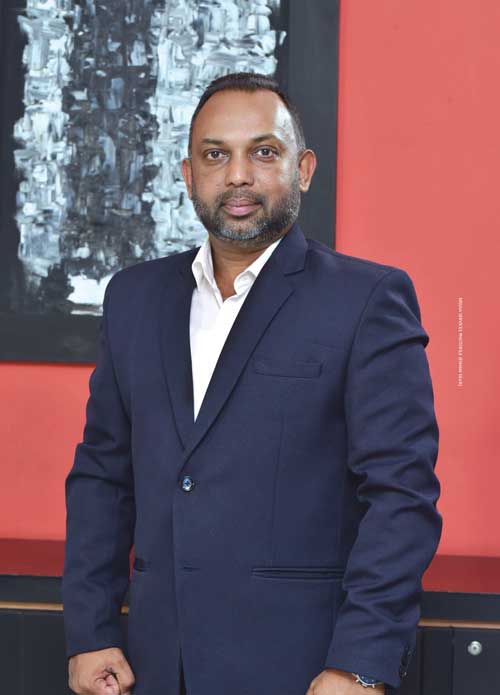
The interviewee is the Chief Executive Officer of Insee Lanka.