FMCG SECTOR

CONSUMER BEHAVIOUR
Compiled by Yamini Sequeira
THE NEW CONSUMER REALITY
Ravi Jayawardena presents critical tools for marketers amid evolving markets
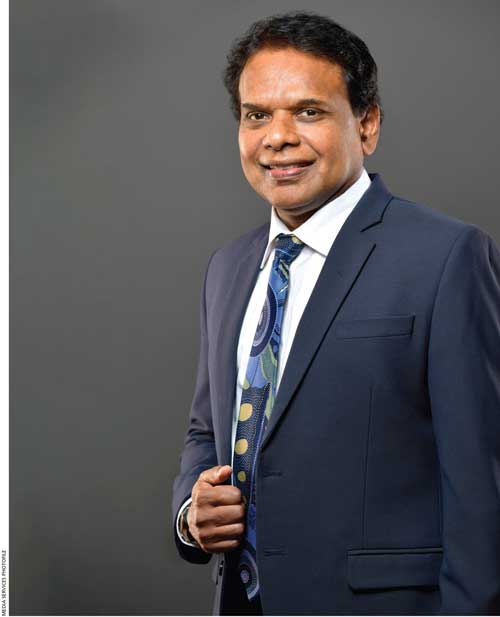
The fast-moving consumer goods (FMCG) sector offers a window to the mood of the nation. Its fortunes have mirrored economic and social shifts over the past five years, from pandemic induced stockpiling and the rapid rise of online shopping, to inflation driven belt-tightening and the search for value.
And the effects of these changes continue to shape market dynamics today.
SAVVY CONSUMERS “The pandemic may have altered purchasing patterns but the economic crisis that followed reshaped spending priorities more fundamentally. When prices rise and incomes remain static, consumers naturally reduce nonessential spending. We saw usage decline across many categories as people had less in their budgets,” Ravi Jayawardena asserts.
Although market conditions improved gradually through 2024 and early last year, consumer confidence remains fragile.
“Recent geopolitical developments and global uncertainties have reintroduced volatility into supply chains and commodity markets. The last few months have been particularly challenging. Freight costs and fuel prices have risen while consumer confidence has weakened. As a result, consumers are cautious,” he rues.
Jayawardena believes that enduring brands share one characteristic above all others: consistency.
“Across global markets, brands that have survived for decades have resisted the temptation to compromise on quality – particularly during difficult periods. Consumers are extremely knowledgeable today. A slight decline in quality is noticed immediately,” he stresses.
Jayawardena emphasises that the strongest brands consistently deliver on their promises rather than relying on aggressive promotions or temporary incentives: “If a brand overpromises and under delivers, consumers become frustrated. And longevity disappears since trust erodes.”
While advertising is essential, he cautions against making promises that products cannot fulfil, noting that “effective advertising can sometimes damage brands if expectations are raised far beyond what the product can actually deliver.”
For FMCG products, convenience often influences purchasing behaviour as much as brand preference.
“If consumers have to go too far to find a product, something isn’t working. A winning brand needs three facets: easy availability, strong awareness and consistent product quality. That is why a strong distribution network is important,” he declares.
INNOVATION MATTERS Innovation has become a defining feature of competitive FMCG markets worldwide.
Jayawardena argues that successful innovation requires forward-looking consumer insights: “Companies should follow consumers, not their competitors. The most successful innovations come from understanding where consumer behaviour is heading over the next three to five years.”
Pack size innovation has become particularly relevant as consumers seek affordability without abandoning preferred brands. “Consumers still want to enjoy products they trust. Smaller pack sizes allow them to do so while managing household budgets effectively,” he muses.
Jayawardena also points to changing purchasing power and evolving lifestyles as trends that continue to influence product development.
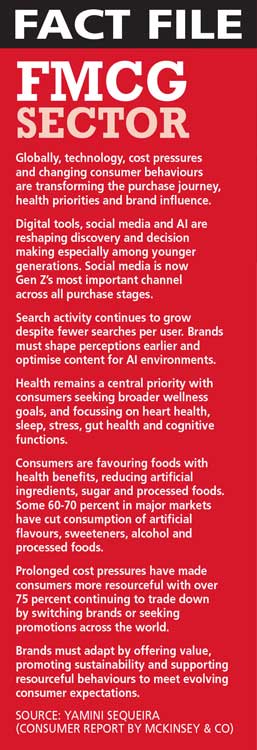
Health and wellness have emerged as another important driver of innovation. The pandemic heightened awareness of personal wellbeing, prompting consumers to pay closer attention to ingredients, nutrition and healthier alternatives.
Growing concerns over diabetes, heart disease and other lifestyle related illnesses are gradually influencing purchasing decisions. However, he believes that this reality extends beyond food.
“Food is only one element of the equation. Lifestyle plays an equally important role. Increasingly sedentary lifestyles – particularly among younger generations – are contributing to broader health challenges,” he cautions.
This creates opportunities for FMCG companies to develop products that are aligned with evolving consumer priorities while promoting greater public awareness.
DIGITAL ENGAGEMENT “Digital transformation has changed nearly every aspect of marketing strategy. Smartphone penetration, social media engagement and digital content consumption have fundamentally changed how brands communicate with consumers,” he acknowledges.
And Jayawardena observes that “social media is growing much faster than traditional channels as consumers are constantly connected through their phones. Consumer attention has become increasingly fragmented.”
In addition to competing with rival brands, companies must now contend with an endless stream of content, entertainment and advertising messages.
The rise of influencers and content creators has further diversified communication channels, particularly among younger audiences. While the local influencer ecosystem remains smaller than those in larger regional markets, Jayawardena believes its impact will continue to grow.
“We are definitely seeing growth among younger consumers. Digital communities and creators are becoming more relevant to how brands engage with future generations,” he notes.
RETAIL EVOLUTION The evolution of distribution channels is transforming the FMCG sector. Modern trade has steadily expanded, although traditional trade continues to dominate overall market volumes.

“Ten years ago, modern trade contributed a relatively small proportion of sales. Today, depending on the category, it can account for 25-30 percent nationally and much more in urban areas. Nevertheless, traditional neighbourhood stores remain highly relevant and account for the majority of sales across most FMCG categories,” he reveals.
Jayawardena continues: “As modern trade expands, the balance of power gradually shifts towards the channel. Brand owners must adapt their strategies accordingly. E-commerce remains comparatively small within FMCG but continues to develop steadily, particularly in selected categories.”
Moreover, technology is increasingly shaping operational execution across the FMCG value chain. Advanced analytics, geotracking systems and real-time sales monitoring have become standard tools for many companies.
“Modern FMCG organisations have access to unprecedented levels of market intelligence. Companies can now analyse performance by region, outlet, brand and product almost in real time. The level of information available today is infinitely greater than it was even a decade ago,” he explains.
These capabilities enable faster decision making, targeted resource allocation and improved pathways to market efficiency, making data driven decision making an increasingly important competitive differentiator.
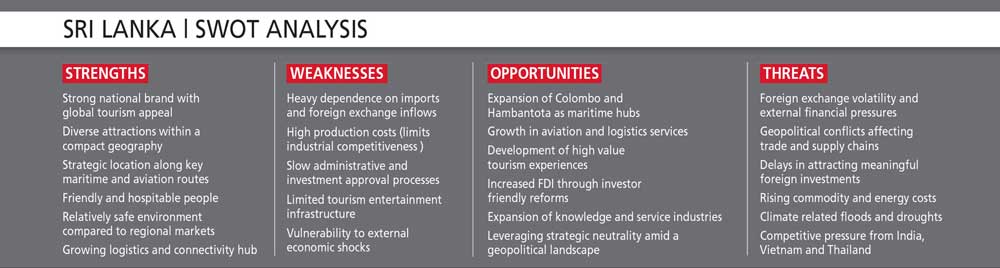
REALITY CHECK Despite signs of a broader recovery, Jayawardena remains measured about the country’s near-term economic outlook. Dependence on imported inputs, foreign exchange inflows and global economic conditions continue to create vulnerabilities.
Many FMCG categories remain heavily exposed to fluctuations in commodity prices and currency movements.
“When the US Dollar strengthens, costs increase almost immediately. Unfortunately, consumer incomes do not rise at the same pace. As a result, households often return to prioritising essentials whenever economic pressures intensify,” he notes.
Looking ahead, he expects conditions to remain challenging for the next 12-15 months unless stronger foreign investment inflows help stabilise the wider economy. He asserts that “the key is maintaining stability and attracting investments. If we can strengthen our foreign exchange inflows and stabilise the dollar, many sectors will benefit.”
In conclusion, Jayawardena believes the future belongs to organisations that remain closely aligned with consumers while continuing to adapt to changing realities.