LMDtv – 3
Sri Lanka’s cybersecurity defences are being put under the microscope due to the rising rate of cybercrime. Yet, according to the Asia Policy Lead and Senior Programme Manager for Inclusive Economic Development of the Asia Foundation Rukshanie Vidyaratne, there is much more to this than meets the eye.
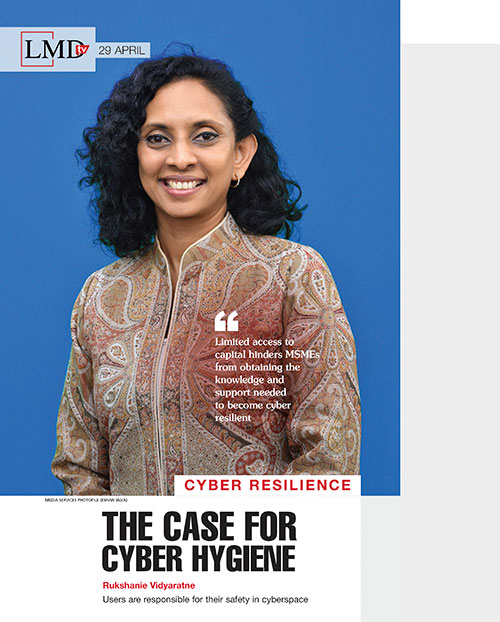
Speaking to LMDtv’s Ruwandi Perera, she noted that “whatever we see or is reported is what we talk about,” while there remains a gamut of cybercrimes that go undetected.
Despite the growing threat, she stressed that this is part and parcel of moving towards a digital economy, and Sri Lanka must embrace the opportunities that digitalisation offers while also being prepared to defend against adversities that come with it.
“We need to look at why we’re being attacked – and why people believe that they won’t be attacked,” she added. With the government, public institutions, businesses and individuals coming under attack, she posed several important questions: “What’s the risk? Are we losing data? Are we losing reputation? Are we losing businesses? And are we losing trust?”
Cybercrime can affect everyone, Vidyaratne cautioned, highlighting the need to be conscious about what’s shared online, as once it’s posted the information is ‘out there.’
“If and when you share a lot of information online, the responsibility to stay safe lies with you because it was your decision to share the data. You need to know what to share and what not to,” she emphasised.
Micro, small and medium-size enterprises (MSMEs) are among the segments most vulnerable to cyberattacks.
Vidyaratne explained: “Limited access to capital hinders MSMEs from obtaining the knowledge and support needed to become cyber resilient. They are often unable to allocate a dedicated individual to protect digital assets and can therefore be exposed to phishing attacks, ransomware, trojans, malware or impersonation scams.”
Children are another vulnerable group. “Kids have become victims of romance fraud – not only in Sri Lanka but globally too,” she noted, adding that there are many impersonators and deepfakes online.
Senior citizens are also under threat – this segment is more susceptible to hackers impersonating established institutions, Vidyaratne noted: “The elderly have a lot of confidence in government agencies and institutions such as banks, and if they’re contacted by a cybercriminal they may not hesitate to share information.”
It boils down to embracing cyber hygiene. Individuals need to remain vigilant and take precautions when it comes to cybersecurity. She stressed that passwords should never be written down – especially on the back of a phone or wallet – because at the end of the day, the loss is personal since you could lose data and also your reputation.
While individual MSMEs may be small in size and volume, that does not exempt them from being targeted.
She explained: “Cybercriminals don’t target you individually. Targeting has become automated and AI driven. Rather than targeting one large company and attempting to bypass all its firewalls to steal a large sum of money, hackers will cast their net across a number of small businesses and extract smaller amounts from each of them.”
Vidyaratne asserted that victims are often identified as part of a broader scheme and may be targeted in different ways while the attacks may either be locally generated or the cybercriminals could be operating from another country.
“Hackers are interested in your laptops, tablets, smartphones and even analogue phones, which can be used to expose owners to deepfake scams, voice phishing and even smishing via text messages. You cannot afford to assume that you won’t be a target. You must always remain vigilant, verify payments and receipts, vendors, bank account details and more,” she urged.
Vidyaratne cautioned online users and urged them to diligently practise cyber hygiene as Sri Lanka moves further towards a digital economy.