SUPERBRANDS SRI LANKA 2025
DEFINING BRAND LEADERSHIP
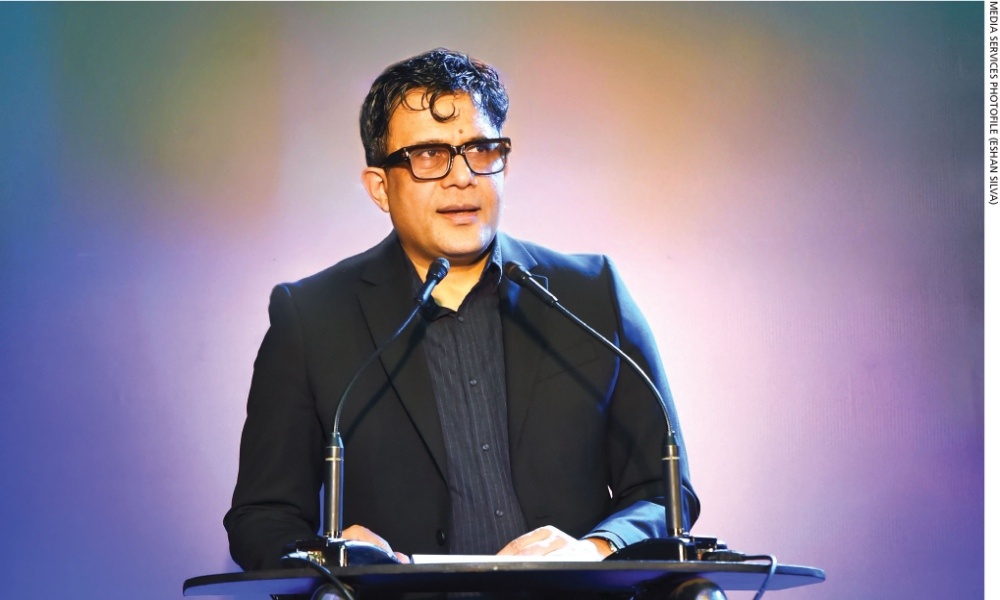
Shariful Islam explains why credibility is the new brand advantage
In today’s world, trust has become both the most valuable and most fragile currency a brand can possess. When Superbrands was first established in the UK in 1994, its objective was clear: to recognise and celebrate brands that had earned exceptional trust and reputation within their markets.
Shariful Islam observes that over the past three decades, this objective has only grown in importance. Today, as Superbrands operates in more than 95 countries; the context in which brands operate has fundamentally changed.
“We now live in a time defined by constant information, accelerated by technology and shaped by an increasingly complex global environment. Consumers are more informed, yet more uncertain. They are exposed to more choices than ever before, yet trust fewer claims. In such a landscape, visibility is no longer sufficient. Credibility has become the true differentiator,” Islam adds.
At its core, a brand is a promise. Its strength lies not in what it says but in what it delivers consistently. Over time, this consistency builds trust. And ultimately, it is trust that determines whether a brand is chosen, preferred and remembered.
However, Islam cautions that “we are operating in what is often described as a BANI world – one that is brittle, anxious, non-linear and often difficult to comprehend. In such an environment, brand leadership requires more than operational excellence. It requires clarity of purpose, consistency of delivery and the ability to remain relevant amid constant change.”
“A Superbrand is not defined by scale alone, nor by short-term success. It is defined by reputation – by the ability to offer meaningful emotional and/or physical advantages that consumers recognise, value and are willing to pay a premium for. More importantly, it is defined by the trust it commands across stakeholders,” he reiterates.
The shift from rapid growth to structural reform brings a different set of challenges – i.e. from demographic changes and labour constraints, to increased exposure to global and environmental uncertainties.
Islam is of the view that the coming years will demand greater strategic clarity from businesses. Growth may be more measured, and competition for consumer attention and spending will intensify. In such an environment, the brands that succeed will be those that reinforce trust, not merely communicate value.
He asserts: “It is often during periods of uncertainty that the true strength of a brand is revealed. Strong brands do not retreat in difficult times. They invest in their foundations, they refine their positioning and they prepare themselves not only to endure but lead the next phase of growth.”
In this context, Superbrands recognition serves as more than a mark of distinction – it becomes a strategic asset. When consumers become more cautious, they seek reassurance. And as Islam notes, they look for signals that reduce uncertainty and help them make confident decisions. And the Superbrands seal serves precisely this role.
“It acts as an independent validation of quality, credibility and performance – a visible marker that the brand has been recognised through a rigorous and impartial process,” Islam affirms.
Islam says that for leading brands, this has important implications: “In markets where price competition is prevalent, the ability to command preference based on reputation rather than price becomes a defining advantage. Superbrands recognition supports this by reinforcing the brand’s premium positioning and enabling it to compete on the basis of trust, not simply cost.”
For businesses seeking investment, partnerships or regional expansion, independent recognition also serves as a powerful signal. “In a world where decisions are often made quickly and across borders, credible third party validation becomes an efficient shorthand for quality and reliability,” Islam affirms.
Experience across markets has shown that brands rarely lose their position solely due to operational failure. Most often, they lose relevance because consumer expectations evolve, new competitors redefine value and attention shifts in ways that are not immediately visible.
The question for any leading brand therefore, is not simply whether it leads today but whether it will continue to define its category in the future. The Superbrands programme helps address this by providing a framework through which market leadership can be translated into enduring recognition.
“Category leaders are often the most visible and therefore, the most vulnerable. They’re the most imitated, the most challenged and the most closely scrutinised. Superbrands recognition helps protect and reinforce their position, by placing their leadership within an independent and globally recognised context,” Islam explains.
He continues: “It is also important to emphasise that Superbrands status is not open to all. It is by invitation. Brands are identified and selected through a rigorous, multi-layered evaluation process involving global, regional and local expertise. This ensures that the recognition remains meaningful, credible and exclusive.”
Superbrands is not about recognising brands that are merely successful – it is about recognising brands that define excellence.
“The strongest brands do not engage with Superbrands simply to be acknowledged. They do so to help shape the standards of their category and contribute to defining what leadership means within their market,” Islam asserts.
For brands that are selected, the recognition reflects what has already been achieved. Choosing to take up that status however, reflects a forward-looking decision: a commitment not only to lead today but be remembered as the brand that defined the category for years to come.