NUCLEAR BOGEY
THE EVOLUTION OF IRAN AS AN ISLAMIC NATION
Saro Thiruppathy analyses Iran’s journey from a cosmopolitan nation to an Islamic republic after the 1979 revolution that overthrew the Shah
The Americans and Europeans in their selective Islamophobic commentary keep trumpeting the danger that Iran poses to the Middle East, claiming that nuclear power in the hands of Tehran poses an existential threat to Israel.
Ironically, the largest Jewish population in the Middle East outside Israel is now living safely in Iran.
There’s been a serious push by the US for regime change in that country and the establishment of the son of the late Shah Reza Pahlavi as its new ruler. The putative new shah is even referred to as ‘the crown prince’ by some parties, despite him not being of royal lineage.
MODERN HISTORY Prior to the appointment of Mohammed Reza Pahlavi as the shah in 1941, his father occupied the post and founded the Pahlavi Dynasty. In August of the same year, the senior shah was deposed after the invasion by the Allied Occupation that comprised the Russians and British.
Operation Countenance was conducted because Pahlavi refused to expel German nationals who were living in Iran at the time.
The British and Russians then handed control of the country to his son in September and the junior Pahlavi ruled Iran from that time until 1979. Although the younger shah requested American assistance against the allied invasion, the US wasn’t interested because it hadn’t entered World War II at the time.
ALL ABOUT OIL In 1951, Iranian Prime Minister Mohammad Mosaddegh angered the US and UK when he nationalised the British controlled Iranian oil industry in 1951. Following the 1953 coup orchestrated by the CIA and MI6, known as Operation Ajax, he was jailed and subsequently placed under house arrest.
The Americans also feared that Mosaddegh’s policies could see the communist favouring Tudeh Party take control of Iran during the Cold War. Though it wasn’t part of his National Front government, Tudeh did provide street level support for his nationalisation policies.
Operation Ajax saw the denationalisation of Iran’s oil industry in 1953 and resumption of Western control of that valuable asset. By this time, Pahlavi had become a key ally of the US, which provided him with the assistance needed to rule Iran with an iron fist through his cruel SAVAK secret police.
Then 20 years later, Pahlavi terminated the Consortium Agreement of 1954 and brought the full control of oil extraction, production and refining under the National Iranian Oil Company on 20 March 1973. It’s possible that this decision triggered his downfall among the very foreign governments that had empowered him since Operation Ajax.
As the Iranian people began protesting the Shah’s policies in 1978, then US president Jimmy Carter, French president Valéry Giscard d’Estaing, British premier James Callahan and Germany’s chancellor Helmut Schmidt met in Guadeloupe in January 1979 to discuss the untenable situation in Iran.
They were concerned that the revolution, which began a year earlier on 7 January, was gaining traction – and Pahlavi’s regime was weakening as a result of it.
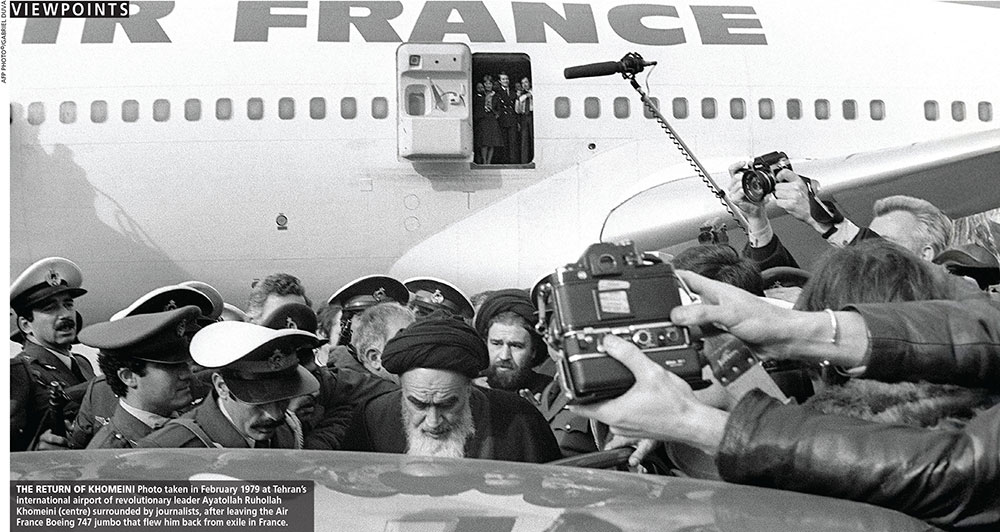
Subsequently, Ayatollah Khomeini – who was living in exile, in France – returned to Tehran at the invitation of the Iranian people on 1 February after the Shah had fled on 16 January 1979. Pahlavi had first sought refuge in Egypt, Morocco, Mexico and Panama, before being admitted to the United States in October.
COMMUNISM FEARS Across the border from Iran meanwhile, the regime of former Afghan president Mohammad Dauod Khan fell because the Marxist-Leninist People’s Democratic Party of Afghanistan (PDPA) seized power in April 1978 through a bloody military coup known as the Saur Revolution.
This resulted in national instability due to radical and unpopular reforms, and violent repression by the PDPA government.
In an act of provocation in July 1979, Carter authorised the US to fund the establishment of the guerilla faction known as the Mujahideen – six months before the Russians had even entered Kabul – to support the Marxist government.
The Americans under Carter preferred an anti-communist Islamic regime in Iran under the ayatollah rather than a Soviet backed leadership in Tehran.
NUCLEAR BOGEY The myth of a nuclear threat is what the US, Israel and the EU have been using of late, to promote regime change and neutralise Tehran.
But the Iranians, who are used to severe hardships due to the sanctions introduced by the Americans and Europeans, were prepared for the US’ favourite game against the governments it opposes.
Tehran replied militarily after it was attacked in June 2025 and again in February this year, and the Middle East has been pummelled by Iran for allowing the presence of American military bases in the region.
It seems that kismet has come calling and the nations that have conspired for decades to destroy the ancient Persian Empire are finally facing Iran’s wrath.
The prevailing situation is doing far more damage to the Americans and Europeans than Operation Ajax could do to the Iranian people’s sovereignty in 1953.