STATE OF THE NATION

FLY SO LOW THAT IT’S JUST NOT CRICKET!
Wijith DeChickera spies pie in the sky with a formerly highflying cash cow – yet senses some hope in the down-to-earth reforms of a sacred cow
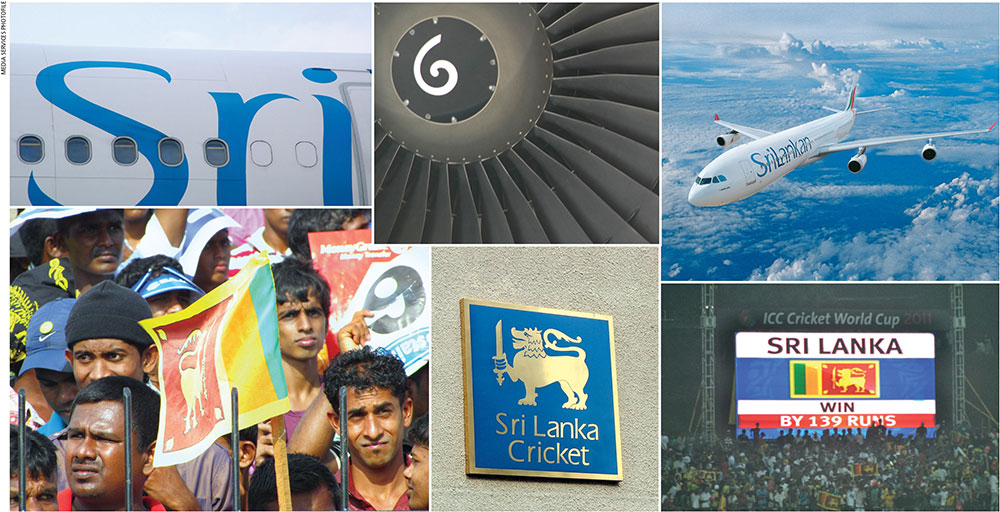
So Sri Lanka Cricket (SLC) has gone through the ritual ablutions of reform again – a new committee to run the show, a fresh mandate and the perennial promise of clean hands on a well-oiled bat.
The true story lies not in the appointments but why such resets have become cyclical in our most hallowed sporting temple.
For more than a decade, the national team’s performances have oscillated between flashes of past glory and long troughs of mediocrity. Since the twilight of the gods after its golden age, inconsistency, administrative interference and opaque governance plagued the game.
Selection controversies, coaching churn and allegations of politicisation reduced what was once a debonair cricketing machine into a creaky apparatus. And the International Cricket Council’s (ICC) periodic interventions only underscored the depth of institutional malaise.
The new administration is less a brave new dawn than yet another act in a long running morality play. The sacred cow must be preserved even if the ramshackle temple requires reconstruction.
Contrast this with SriLankan Airlines, where the narrative is not cyclical redemption but a series of rapid descents into repeated crash landings. If cricket is a religion with its liturgy, the airline is a failed ROI with a ledger that bleeds profusely every time the national interest and national psyche are wounded.
Years of mounting losses, questionable fleet decisions and politically influenced management have left the national carrier grounded in debt even as its aircraft remain airborne… still connecting our tropical paradise with the world along routes where data manipulation and untenable commissions introduced chaos into the serenity.
Recent developments sharpened the picture while dulling the doomed airline’s prospects. The arrest of a former CEO – who took his life while out on bail recently – and revelations of procurement irregularities and alleged corruption suggest not mere incompetence but systemic rot.
Successive governments were not simply inattentive stewards but complicit passengers on board with in-flight movies featuring fiscal imprudence and institutional decay. This cash cow has not merely been milked but driven to exhaustion and now tethered to graze in less than green pastures.
The comparison is instructive: both institutions occupy outsized spaces in the national imagination – but of very different types.
Our sporting religion, embodied in SLC, is an emotional commons – a shared narrative of national identity, pride in our players and sundry teams’ potential, and the very real (and often realised) potential in the international arena. Its shocking failures hurt badly but also mobilise hope – at least among diehard fans and loyal aficionados of the (no longer?) gentleman’s game.
Each new board inasmuch as reconfigured team (if, as and when that black swan event occurs in the face of stubborn persistence in fielding ‘passengers’) is greeted – however sceptically by realists and cynics – with the faint belief that our unofficial national sport can be restored to its former glory and Sri Lanka regain its erstwhile standing as demigods.
SriLankan Airlines by contrast, is a technocratic symbol – a marker of state capacity, global connectivity and economic competence. Its failures do not inspire hope as much as they generate resignation (pun intended).
Where cricket’s underperformance provokes outrage at squandered talent and sundry wasted opportunities, the airline’s decline and fall fuels anger at profligately spent (and precious to boot) national resources.
One game plays out on the ground; the other, perpetually up in the air. Yet, both are theatres of governance with national significance.
There is an almost theological symmetry in their trajectories. The sacred cow of cricket is periodically chastened but never slaughtered at the altar of either religious outrage or sacrificial propitiation. Reform instead, is its once and future act of ritual purification.
The cash cow of the airline however, has been relentlessly exploited, its sanctity long since abandoned in favour of short-term gains and lucre for those lucky enough to fly so low enough over the cuckoo’s nest to be considered friends and family (ahem!).
In one, the faithful demand better priests; while in the other, the congregation suspects – and in fact knows – that the temple itself has been repeatedly ransacked.
Both crises share a common root: the politicisation of institutions that ought to be insulated from it. Whether it is team selection or aircraft leasing, the intrusion of undue power into due process has proven corrosive.
The difference between the two institutions lies in process.
Cricket, inflamed by public passion at home and instructed by international structures away, retains at least the capacity for confession, repentance and renewal. SriLankan, tethered to balance sheets and burdened by debt, faces a far more existential reckoning.
So as Sri Lanka Cricket turns over a new leaf, the question remains whether this is reform in substance or form. And as SriLankan Airlines navigates turbulence of its own making, the question is starker still: can a cash cow so thoroughly depleted be revived – or is the ill-fated beast of burden inevitably bound for the abattoir of privatisation?
Both tales are chapters in a larger narrative. It is a story of how national institutions are cherished first and then corrupted; and only rarely redeemed and restored.