NATIONAL RECONCILIATION
SEEKING A MAINSTREAM CONSENSUS
Structural reforms must be implemented without delay – Dr. Jehan Perera
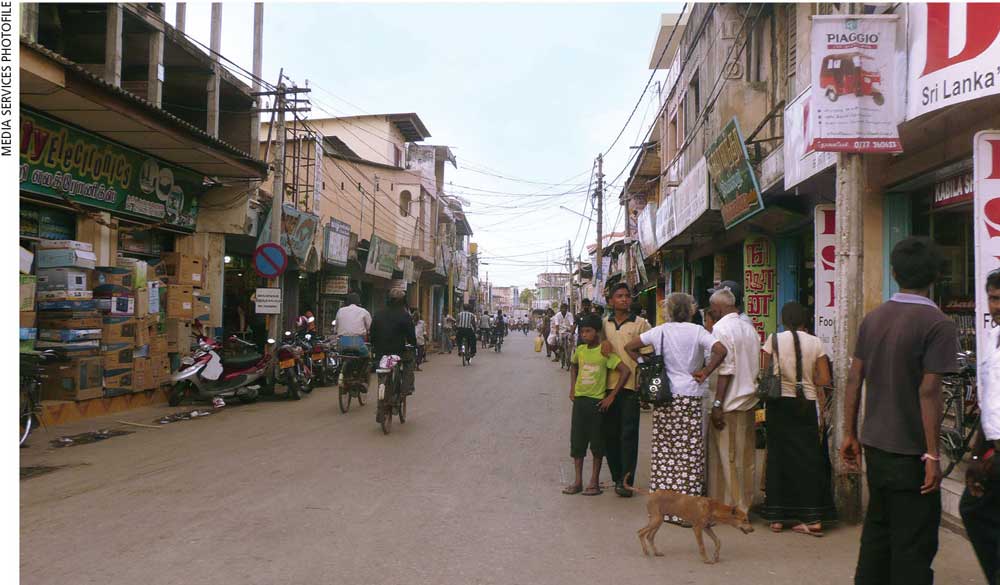
Sri Lanka’s recovery from economic collapse is often described as a process that must move from stabilisation to development – and eventually, transformation. The sequencing appears logical because a country facing shortages, inflation and institutional breakdown naturally needs immediate stabilisation before embarking on deeper reform.
But Sri Lanka’s past experience suggests that stabilisation and transformation can’t be treated as entirely separate processes. Delaying political reform and reconciliation until some future ideal moment risks repeating the failures of the past.
When President Anura Kumara Dissanayake’s government came to power, the country was emerging from one of the gravest crises in its post-independence history. Over the past two years, the country has regained a measure of stability. Inflation has reduced, shortages have ended and state institutions have begun to function more effectively.
However, with multiple crises emerging in the world and international prices spiking, the danger remains that reconciliation and structural reform may now be postponed indefinitely in the name of ‘stabilisation.’
The government’s commitment to hold provincial council elections is significant since they have been repeatedly postponed by successive past administrations. Holding them won’t solve the ethnic discord but it will be an important step towards restoring democratic institutions and meaningful power sharing.
Sri Lanka has repeatedly postponed difficult reforms in the hope that a more convenient political moment will eventually arrive. But it never does. Economic crises, security concerns and political calculations have repeatedly been used to delay decisions on equality, devolution and justice.
The challenge now is to ensure that transformation becomes part of the stabilisation process itself
Instead, inordinate delays have only deepened mistrust and strengthened the status quo.
In the Northern and Eastern Provinces, post-war grievances remain even nearly two decades after the end of the armed conflict. Disputes over land occupied during the war years continue to affect local communities and many families displaced by it are still seeking the return of their ancestral lands.
The continuing large-scale presence of the security forces in civilian areas also remains a source of concern and resentment. For many Tamil people, reconciliation can’t be separated from questions of dignity, equality and justice.
Meanwhile, the longstanding problems faced by the Malaiyaha Tamil community also remain unresolved. Poor housing, landlessness and economic marginalisation continue to affect many estate sector families – generations after independence was granted by the British.
And the denial of citizenship rights after 1948 had left deep social and economic scars that continue to shape the lives of this community even today. Although those rights were eventually restored, many families still lack secure housing and land ownership despite their immense contribution to the national economy. These are serious issues and not simply minority grievances.
However, there are signs that the political perception may be changing. This was explained by minister Bimal Rathnayake at a conference on reconciliation organised by the National Peace Council in May. As the economic collapse affected all communities alike, it generated politics that’s centred on governance, accountability and economic justice rather than ethnic mobilisation.
The aragalaya brought together Sinhalese, Tamils and Muslims with a common demand for political change. While ethnic grievances remain unresolved, there is greater recognition today that the country’s future depends on cooperation rather than conflict.
This changing political climate creates the possibility of bipartisan cooperation on the ethnic issue between Dissanayake and opposition leader Sajith Premadasa. Both have generally avoided racist and communal politics, and sought to appeal across ethnic and religious divides.
Premadasa in particular, has played the role of a responsible opposition leader on the ethnic issue by refraining from exploiting communal fears for short-term political gain. This is a significant departure from the past when competitive ethnic outbidding often undermined attempts at reconciliation.
The challenge now is to ensure that transformation becomes part of the stabilisation process itselfrather than being endlessly deferred to a future period.
There are practical measures that can begin immediately without having to wait for the perfect economic conditions. They include the release of civilian lands that are still under state control, greater civilian authority in the north and east, stronger implementation of language equality in public administration, and accelerated housing and land ownership programmes in the plantations.
Conducting provincial council elections will help begin the process of national reconciliation with bipartisan mainstream consensus.