SRI LANKA TODAY

SHADES OF A PEACE DIVIDEND
Sri Lanka has bucked the trend of conflict in South Asia – Dr. Jehan Perera
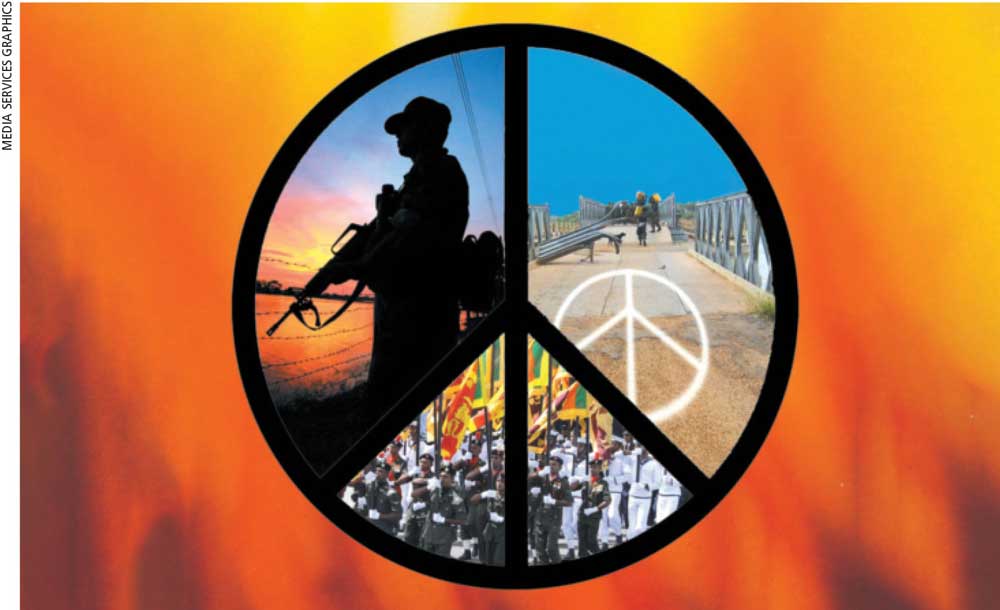
Sri Lanka’s rise to 67th place in the 2026 Global Peace Index from 97th place a year earlier is much more than a national achievement; it’s a development that deserves attention throughout the South Asian region.
At a time when the world has become less peaceful for the 12th consecutive year and South Asia has been identified as a region where peacefulness has deteriorated the most, Sri Lanka has moved decisively in the opposite direction.
This achievement is significant because South Asia has long remained one of the least integrated regions in the world despite its shared history, geography and culture. Historical grievances, border disputes, ethnic divisions and strategic rivalries have prevented the region from realising its collective potential.
The inability of the South Asian Association for Regional Cooperation (SAARC) to evolve into an effective regional organisation unlike the EU or ASEAN reflects the persistence of mistrust among governments.
Meanwhile, economic cooperation within South Asia remains among the lowest in any major region of the world and political disputes continue to overshadow opportunities for collaboration.
Against this backdrop, Sri Lanka’s experience offers lessons that extend beyond its shores. This progress hasn’t taken place by accident: the Global Peace Index attributes Sri Lanka’s improvement to greater political stability, better safety and security, continuous democratic practices rather than military intervention and the gradual restoration of public confidence.
Equally important are the policy choices being made by the present government.
The decision to pursue accountability regarding the Easter Sunday attacks irrespective of the political or institutional standing of those who may be implicated sends an important signal that no individual should be above the law.
Such efforts strengthen public confidence in democratic institutions while also improving Sri Lanka’s position internationally.
The government’s economic management has also contributed to restoring confidence. It has remained committed to the reform programme agreed with the IMF despite the political costs of widening the tax base and strengthening financial governance.
Efforts to identify tax leakages, curb illicit financial flows and improve fiscal discipline demonstrate an understanding that economic stability depends on transparent and accountable institutions.
International confidence has consequently improved even though Sri Lanka continues to face considerable economic vulnerabilities.
Sri Lanka’s experience resonates with broader political developments across South Asia
The government’s approach to ethnic relations has also been measured.
It has consistently affirmed the equal treatment of all citizens regardless of ethnicity or religion while recognising that reconciliation requires sustained effort. Durable peace can’t rest solely on the absence of violence, and it also depends upon ensuring that every community feels included within the national political and economic system.
Sri Lanka’s experience resonates with broader political developments across South Asia. The aragalaya was followed by dramatic political changes in Bangladesh and Nepal, where popular movements similarly demanded cleaner government, greater accountability and more equitable economic opportunities.
Although each country has its own unique political circumstances, they share a common aspiration: citizens increasingly expect governments that are transparent, responsive and capable of delivering public welfare rather than serving narrow political interests.
The new governments in these countries also face similar challenges.
Established political parties that lost power are seeking opportunities to regain influence by highlighting every policy failure. Sections of the state bureaucracy may also resist reform by slowing implementation even when political leaders have adopted progressive policies.
As such, translating electoral mandates into effective governance remains one of the greatest tests facing these governments.
No single country can resolve the deep political divisions that have constrained South Asia for decades. Yet, countries can help create conditions under which trust gradually becomes possible.
Sri Lanka’s experience of emerging from civil conflict, economic collapse and political transformation demonstrates that recovery is achievable when democratic institutions are strengthened, accountability is pursued, economic reforms are sustained and all communities are treated with fairness.
South Asia has often been defined by its conflicts and divisions. But today, the people’s desire for corruption free governments that are sincere about developing their countries is uppermost.
The growing demand across the region for cleaner government and more inclusive societies offers an opportunity for genuine change. Sri Lanka’s recent experience suggests that such a transformation, though difficult, may no longer be out of reach.