LMD JUNE 2026 COVER STORY

THE DEVELOPMENT MANDATE
The real test of recovery is whether it translates into visible improvements in people’s lives
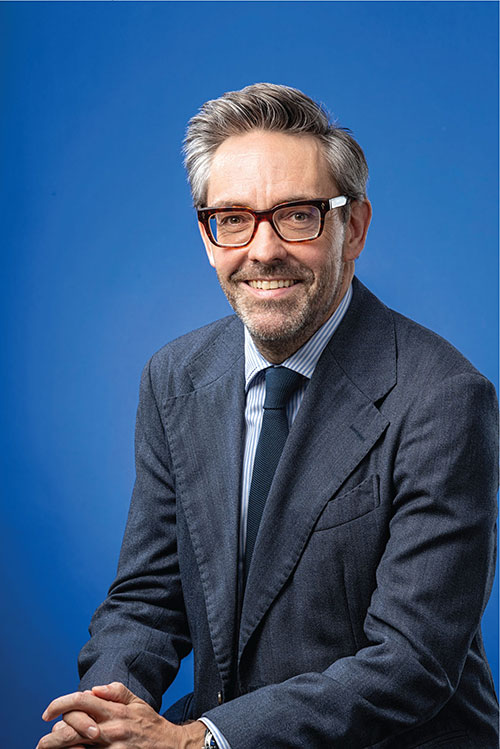
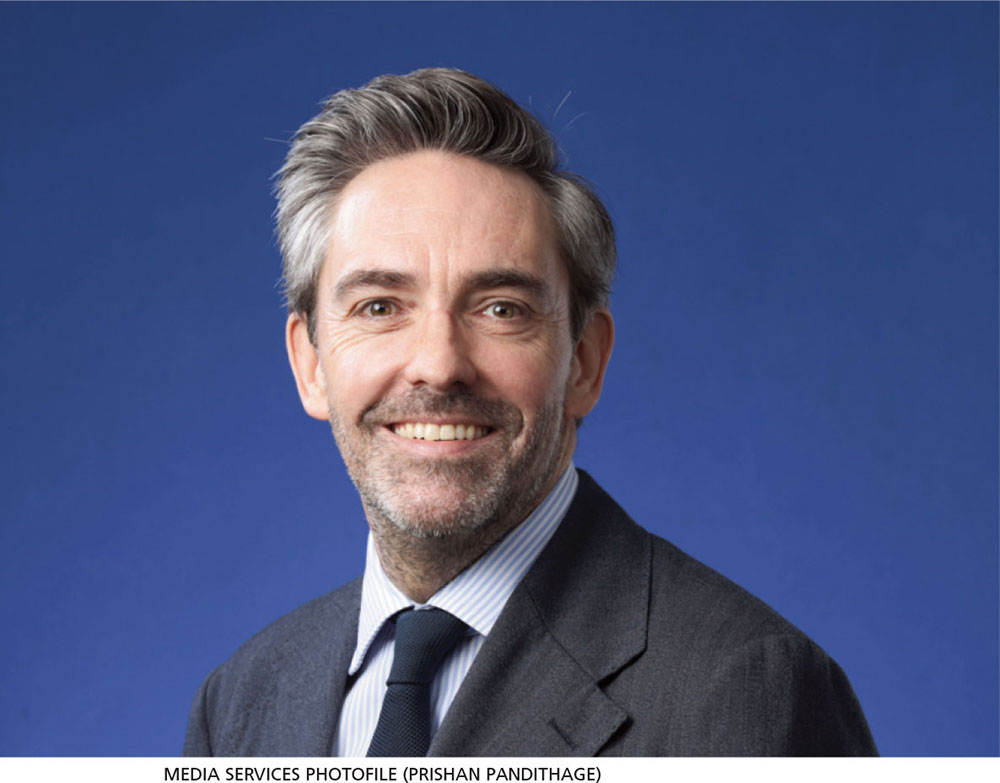
Marc-André Franche
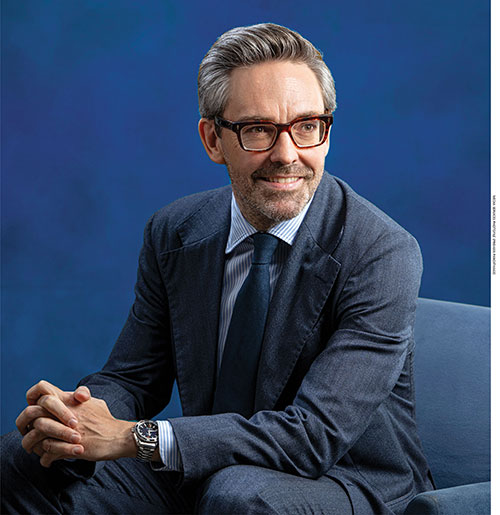
In a country where resilience has become part of the global vocabulary, Marc-André Franche arrived with a career shaped by years of work across development, recovery and peace building contexts around the world. His work has taken him from post-earthquake Haiti to Libya, Pakistan, Colombia, Bolivia and the corridors of the UN in New York City.
Appointed by UN Secretary-General António Guterres as the United Nations Resident Coordinator in Sri Lanka in July 2023, Franche now leads the UN Country Team at a pivotal moment in the island’s journey.
The UN’s role in Sri Lanka is to support national priorities, strengthen partnerships, and help advance inclusive and sustainable development that leaves no one behind.
His mandate is deeply grounded: to bring together agencies, funds and programmes in support of the country’s development priorities, while advancing the UN Sustainable Development Goals (SDGs) in partnership with the government, the private sector, civil society and communities.
With more than 28 years of service within the United Nations, Franche’s career reflects a commitment to countries navigating transition.
Prior to his appointment in Sri Lanka, he served as UNDP Resident Representative in Libya, supporting governance, local peace building and sustainable growth. From 2016 to 2021, he led the Secretary-General’s Peacebuilding Fund in the Department of Political and Peacebuilding Affairs, overseeing investments in more than 50 countries aimed at sustaining peace.
Franche’s earlier roles corroborated his experience across development, recovery and institutional rebuilding. He served as UNDP Country Director in Pakistan (2013-2016) and Deputy Director in Haiti (2008-2012), where he contributed to post-earthquake recovery and reconstruction.
Between 2004 and 2008, he worked with the UNDP in New York City as Programme Adviser for Conflict Prevention in Latin America and the Caribbean. Before that, his work with the UNDP in Colombia (2001-2004) focussed on applied research and policy dialogue, while in Bolivia (1998-2001) Franche worked on poverty reduction and local governance.
Across his assignments, he has worked at the intersection of policy and people.
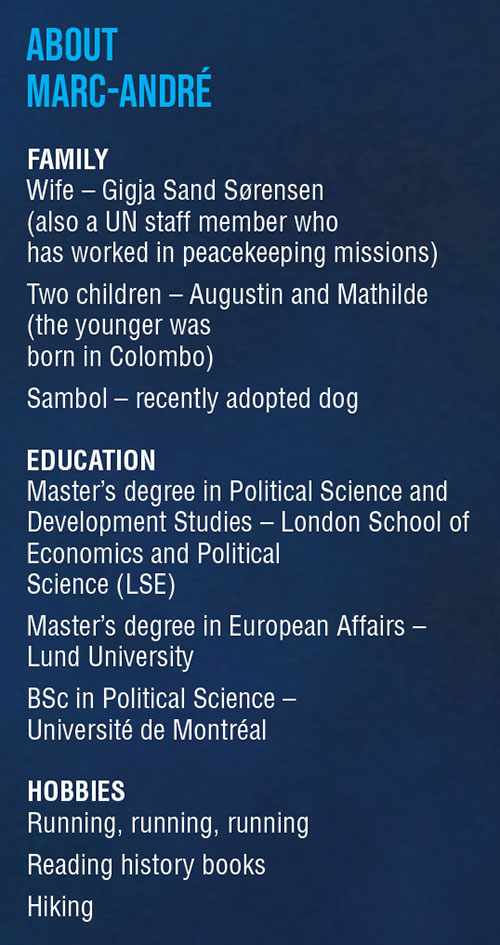
Educated at the London School of Economics and Political Science (LSE), Lund University and Université de Montréal, the Canadian brings to Sri Lanka not only global expertise but a layered understanding of what inclusive development demands.
Today, together with his wife and two children, Franche calls Sri Lanka ‘home’ – and he leads the UN’s work here with a focus on partnership, progress and shared responsibility.
– Compiled by Tamara Rebeira
Q: As the world navigates a period of uncertainty marked by economic fragility and geopolitical tensions, what gives you confidence in the ability of global institutions – including the UN – to deliver stability and progress?
A: One of the clearest lessons from recent crises is just how interconnected our world has become. What begins in one region is quickly felt across economies, markets and households worldwide.
Recent military escalations in the Middle East are a case in point with the World Bank projecting energy prices to surge by 24 percent this year – the steepest rise since the invasion of Ukraine – and the IMF warning that global growth could slow to 3.1 percent.
According to UNDP estimates, more than 30 million people could be pushed into poverty as a result.
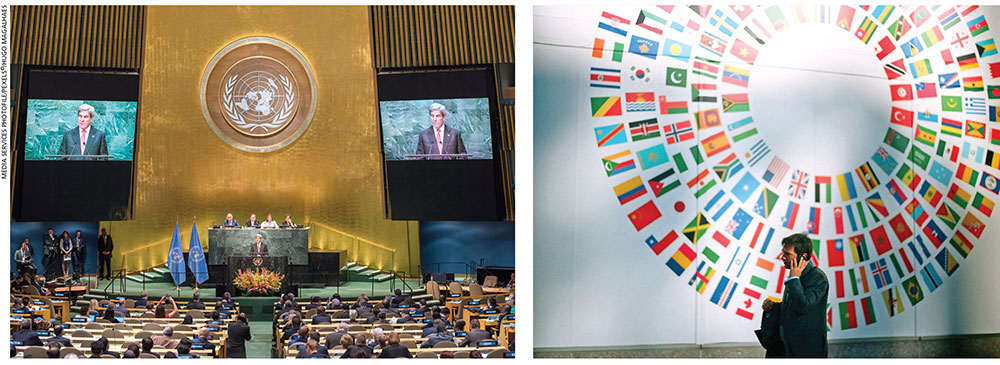
This is precisely the kind of crisis no country can manage alone. It demands collective, multilateral responses – which is why institutions such as the United Nations exist: to bring countries together to maintain peace, manage risks and address shared challenges.
There is also a deeper lesson. There is no sustainable path out of cycles of conflict without adhering to international law – including international humanitarian law. These frameworks protect civilians and help create the conditions for stability and sustainable development. When they are weakened, the consequences are immediate and far-reaching.
We need to remember that the period of relative peace and extraordinary improvements in livelihoods following World War II was driven in part by multilateralism and a stronger set of global rules. The past few years have reinforced a simple truth: lasting solutions cannot be achieved through force. They are built through dialogue and diplomacy, which is tragically lacking in support and resources today.
At a time when multilateralism is under strain and its relevance is increasingly questioned, the demand for cooperation is paradoxically rising. Large, medium and small states alike are looking for ways to manage risks.
For smaller states, a breakdown in global rules is an existential concern. For larger powers, rising competition is also creating a shared interest in guardrails, as the risks of unintended conflict, unregulated technologies – including AI and proxy confrontations – carry costs for all.
This is why institutions such as the United Nations matter more than ever. But multilateralism only works when it’s backed. Any member state that seeks stability and progress for its own people has a direct interest in supporting, empowering and adequately financing the UN so it can deliver on its mandate.
Q: In view of prevailing geopolitical tensions – including in the Middle East – how do such conflicts reshape global security dynamics? And what implications could they have for economies such as ours?
A: Conflicts today are forcing countries to rethink how they approach security and economic stability. The current Middle East crisis illustrates this vividly.
One visible shift is in how countries are responding. Faced with uncertainty and the increasing weaponisation of essential commodities such as energy, many are moving to reduce external dependence by diversifying supply chains and building greater self-reliance.
While this may reduce exposure to shocks, it risks fragmenting, making key goods and commodities harder to access and prices substantially higher. I find it striking that global defence spending reached US$ 2.9 trillion globally in 2025 – the highest on record since 2009 – and yet, the resources allocated to peace building and conflict prevention remain a fraction of that.
As the UN Secretary-General has pointed out, the world could eliminate extreme poverty for a fraction of what it spends on arms. Every dollar redirected to militaries is a dollar not invested in schools, hospitals or infrastructure. For economies such as Sri Lanka, these shifts have direct and worrying consequences.
And as a country reliant on imports of fuel, fertiliser and other essential inputs, disruptions to global supply chains will quickly translate into higher prices and tighter supply. This puts pressure on agriculture, transport and energy with knock-on effects across the economy.
For many households already recovering from successive shocks, these added pressures will deepen vulnerabilities and slow recovery.
This will not be a short-term disruption; it will have a pervasive impact, weighing on growth, discouraging investment, and limiting fiscal space with longer-term consequences for economic stability and development.
In this environment, stability in global markets and predictable international cooperation with a broader set of allies are not abstract goals; they are essential for countries to manage risk, protect hard-won gains and sustain recovery.
The role of the UN is to advocate for that consistency but our effectiveness ultimately depends on Member States acting in line with their obligations
Q: To what extent do external shocks – whether geopolitical conflicts, energy price volatility or supply chain disruptions – pose risks to fragile economic recoveries in developing nations – Sri Lanka being a case in point?
A: The country’s recent history illustrates how quickly external shocks can unravel a fragile recovery. The World Bank has projected that 70 percent of commodity importers worldwide could see weaker growth this year due to the Middle East conflict.
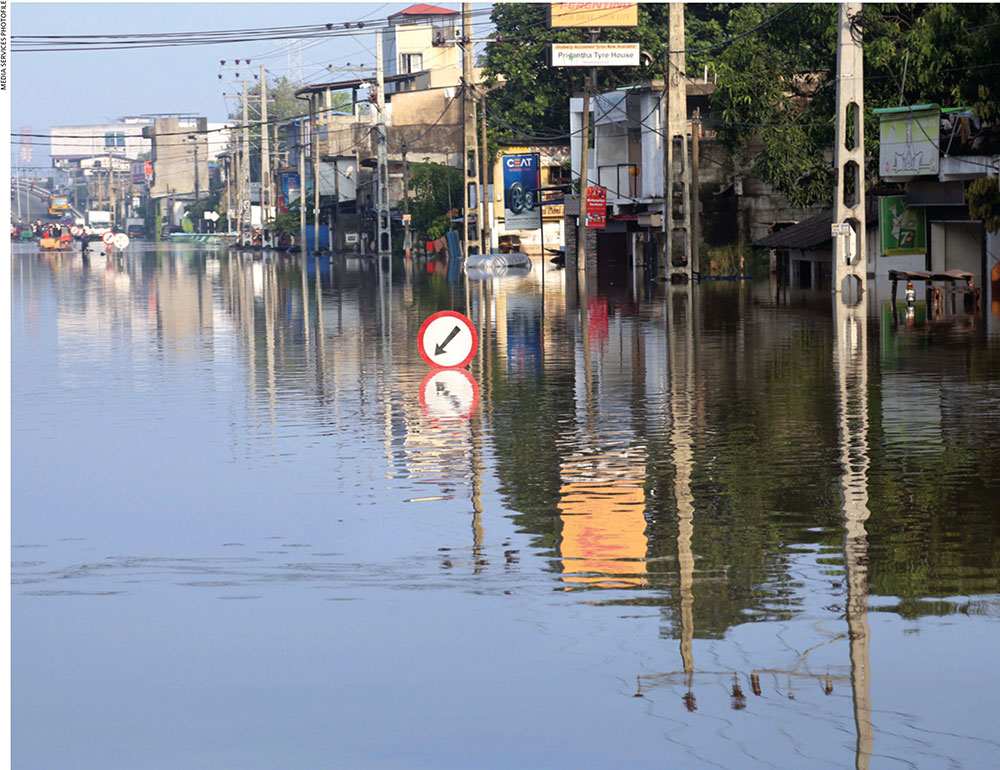
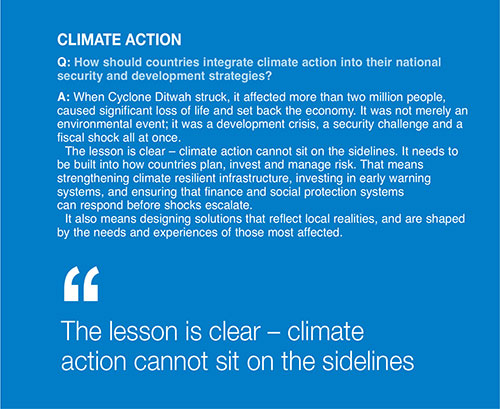
For a country like Sri Lanka, still working on regaining its footing in the aftermath of Cyclone Ditwah and the 2022 economic crisis, this compounds an already difficult trajectory.
What we see on the ground is that these shocks do not act in isolation. A recent survey by the United Nations Economic and Social Commission for Asia and the Pacific (UN ESCAP) suggests that they reinforce one another, amplifying their impact. Rising energy prices feed directly into inflation and the cost of living. Disruptions to supply chains drive up the price of food and essential imports. At the same time, geopolitical tensions can affect tourism and remittances, both of which are critical sources of foreign exchange.
Taken together, these pressures can derail growth, strain foreign exchange reserves and erode household resilience, pushing the limits of what a recovering economy can absorb.
Sri Lanka’s experience reflects a broader reality across many developing countries. When recovery is incipient, externally dependent and fiscally constrained, external shocks can quickly reverse hard-won gains and push vulnerable populations further into risk.
Addressing this requires looking beyond immediate crisis response. It means not simply restoring what existed before but strengthening resilience at its core by diversifying energy sources, prioritising and fast tracking domestic energy generation, and building social protection systems that can respond more effectively to shocks.
It also means reducing overdependence on a limited number of external inflows. Recovery is not only about regaining stability but about building an economy that is better able to withstand the next shock.
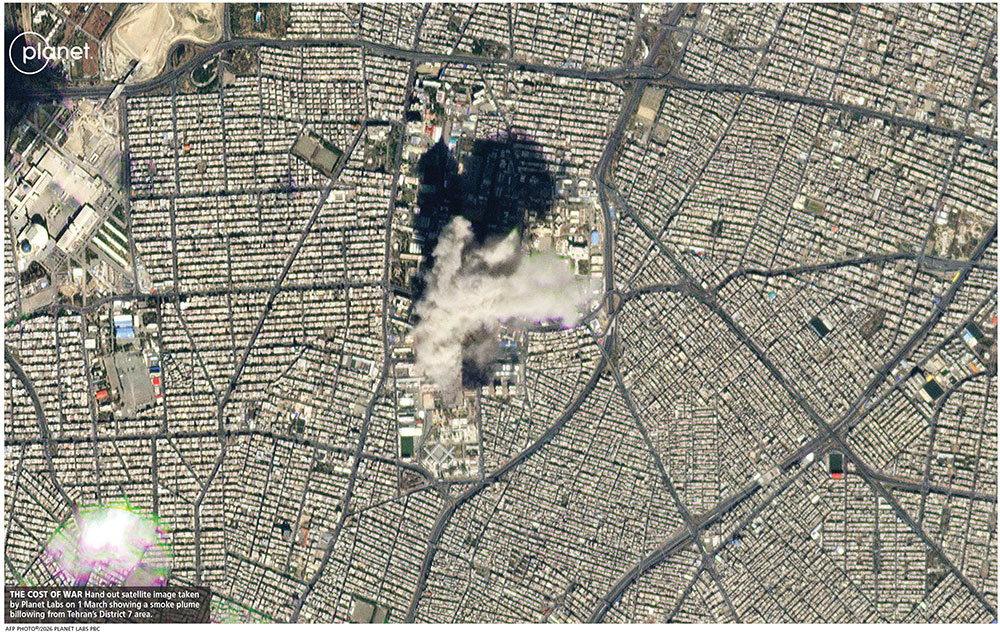
Q: In the wake of the war in Ukraine and hostilities in the Middle East, how is the United Nations adapting its role to remain effective in conflict prevention, mediation and peace building? Put another way, what changes are necessary for the likes of the UN to play a more prominent role in this?
A: Conflicts today are more complex, prolonged and increasingly interconnected. The Security Council remains fragmented, and that is reshaping how the UN engages in peace and security.
The Secretary-General has stressed the need to ‘spare no effort’ to stop the fighting and achieve just and lasting peace in Ukraine, while remaining fully committed and tireless in efforts to advance peace and prevent further escalation in crises such as those in the Middle East. This points to a clear priority: sustained diplomacy, even in the most difficult contexts.
Meanwhile, the rule of law is a cornerstone of global peace and security, and lies at the heart of the UN Charter. But legal frameworks only hold when they are applied consistently. The role of the UN is to advocate for that consistency but our effectiveness ultimately depends on member states acting in line with their obligations.
In practice, this requires sustained presence, flexibility and the ability to engage across multiple tracks over time. Through the United Nations Department of Political and Peacebuilding Affairs (DPPA), the UN supports mediation efforts by deploying envoys and special representatives, providing technical expertise to peace processes, facilitating dialogue between parties, and supporting electoral and constitutional processes that can help reduce tensions.
During the years that I led the Secretary-General’s Peacebuilding Fund, which has invested in over 60 countries to sustain peace, I consistently saw that peace is sustained not by one-off interventions but continuous engagement – often in places that have long since left the headlines but where the risk of relapse remains high.
The ongoing selection of the next Secretary-General has brought these questions into sharp focus. Many member states have called on the UN to play a more active role in peace and security, and this is front and centre of the discussion with each of the candidates.
While the environment is more difficult, the imperative is clear: diplomacy, grounded in the UN Charter and supported by member states remains essential to preventing further escalation, and building the conditions for lasting peace.
Every dollar redirected to militaries is a dollar not invested in schools, hospitals or infrastructure
Q: The UN plays a central role in linking peace, development and human rights. How does this integrated approach translate into practical outcomes in countries such as Sri Lanka?
A: In Sri Lanka, the link between peace, development and human rights is not abstract but shapes how we work in practice.
The Sustainable Development Cooperation Framework for 2023-2027, which guides our support to accelerate progress towards Sustainable Development Goals (SDGs), brings these elements together so that progress in one area reinforces the others.
A key part of this is strengthening national institutions by drawing on international best practices and adapting them to the local context. Take parliamentary oversight: the UN has supported the restructuring of committees and opening proceedings to the public, making the legislative process more transparent and accountable.
On anti-corruption, our support has contributed to stronger laws and a national action plan aligned with international standards. Across the justice and public service sectors, training and technical support are helping officials deliver services more effectively and consistently.
The same approach is applied at community level. The UN continues to support the government in ensuring dignified resettlement and economic reintegration for conflict displaced communities, including securing access to land titles and ownership.
We also work with independent commissions to strengthen their ability to integrate issues such as gender equality into their mandates and day-to-day work.
An area that has taken on new urgency is the spread of misinformation, countering which is critical to preventing tensions before they escalate. Monitoring harmful speech across social media, in partnership with civil society, helps identify risks early and shape targeted responses – including working with technology platforms and policymakers to address harmful content.
For example, during Cyclone Ditwah, misinformation and fake videos added confusion to an already chaotic situation – underscoring why this work is not peripheral but central to both peace and development.
What makes this approach work is that none of it operates in silos. Strengthening institutions builds trust, addressing grievances supports peace and promoting inclusion strengthens development outcomes – this is how an integrated approach translates into real results.
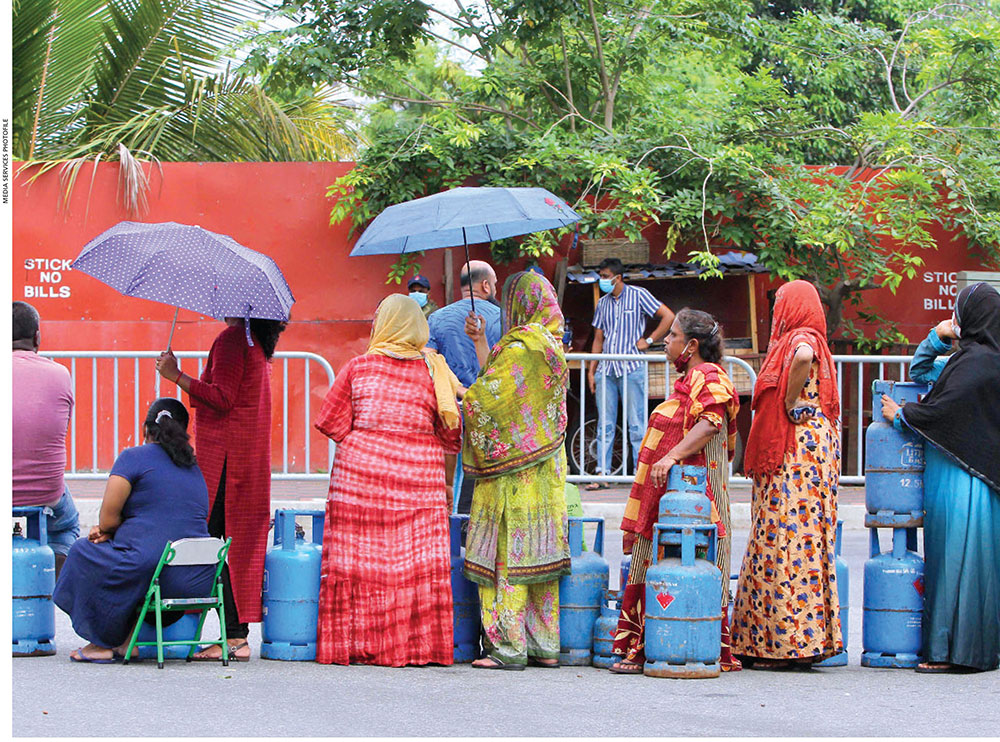
Q: Sri Lanka has made some progress in economic stabilisation following several crises with support from international partners including the International Monetary Fund. From a UN perspective, how sustainable is this recovery – and what risks still need to be addressed?
A: Clearly, Sri Lanka has made significant progress in stabilising its economy after a series of severe shocks, supported by strong national efforts and the backing of many international partners including the IMF.
Inflation has eased, foreign exchange reserves have improved and public finances have begun to stabilise. These are hard-won gains, reflecting difficult but necessary reforms to restore stability.
But stabilisation is only the first step. The real test of recovery is whether it translates into visible improvements in people’s lives and creates a foundation for sustained, inclusive growth.
The World Bank’s 2025 Public Finance Review found that while Sri Lanka’s fiscal adjustment – nearly eight percent of GDP over three years – was necessary, it also put pressure on households through higher indirect taxes, reduced real wages and lower public investment.
Poverty remains roughly double the 2019 level. Growth has not yet translated into widespread welfare improvements. This is a concern because investment is essential to generate jobs, improve productivity and support long-term growth.
Whether this recovery holds will depend on how Sri Lanka moves from stabilisation to growth. Fiscal space remains tight and the country still has limited buffers to absorb future shocks.
At the same time, it continues to face overlapping pressures, from the legacy of the debt crisis to recurring climate risks. There are also practical constraints as challenges in planning, monitoring, delays in decision making and implementation, notably procurement can slow the urgent investments needed to sustain momentum.
While these challenges are addressed, we need to leverage and unlock capital investments by the private sector, which also must do its part.
The focus now needs to be on turning stability into concrete outcomes. That means greater efforts to prioritise and plan, strengthen how institutions deliver, attracting and enacting investment that creates jobs and supports growth, and ensuring that support reaches those who remain most affected.
Social protection systems also need to evolve, becoming more sustainable and responsive to shocks and more anticipatory in nature so that households are protected before crises deepen.
When recovery is incipient, externally dependent and fiscally constrained, external shocks can quickly reverse hard-won gains
Q: Beyond macroeconomic stabilisation, what structural reforms are essential to ensure that the country’s recovery is inclusive, resilient and not vulnerable to future shocks?
A: Macroeconomic stabilisation is an important first step but on its own, it will not deliver an inclusive and resilient recovery.
The focus now must shift to how effectively policies are implemented and whether institutions can translate them into results.
A key challenge is strengthening the state’s ability to plan and deliver. Implementation can be slowed by coordination gaps, procurement delays or underused resources. Improving how priorities are set, how funds are spent and how progress is tracked will help rebuild confidence.
Recovery also depends on a more coordinated ‘whole of government’ approach so that efforts across sectors are aligned and reinforce each other.
We also need to create the conditions for the private sector to drive growth. That means simplifying regulatory processes, increasing transparency in trade and investment, and reducing the cost of doing business. Clear, predictable systems can support private sector growth and job creation.
Digitalisation can help by making services more accessible, improving efficiency and reducing opportunities for undue influence. Strengthening revenue systems and public financial management will also be important to sustain essential services. Recovery needs to be grounded at the community level.
Investing in climate adapted agriculture, diversified livelihoods and more sustainable production can help reduce exposure to future shocks. Strengthening social protection systems will also be key to reaching those most at risk.
The Aswesuma programme for instance, represents an important step towards a more targeted and responsive safety net but it needs to continue evolving to reach informal workers and communities in remote areas who are often hardest hit but last to receive support.
Ensuring equitable access to land is also essential. I have met families in the north and east who still cannot access land they were displaced from decades ago. Until these issues are resolved – transparently and fairly – recovery will remain incomplete for many communities.
Fair and transparent processes to grant land titles, return land where possible, and resolve outstanding claims will be critical to supporting inclusive recovery and long-term social cohesion.
Q: How can multilateral institutions complement International Monetary Fund led programmes to ensure that economic recovery translates into tangible improvements in livelihoods, particularly for the most vulnerable?
A: The IMF programme has played an important role in helping restore a degree of stability after Sri Lanka’s economic crisis.
Our roles as multilateral partners is to work alongside that effort, helping ensure that reforms translate into real improvements in people’s lives, particularly for those who are most vulnerable.
This is often about how reforms are carried through. It includes working with the government to understand how tax and subsidy changes are experienced by low income families, and ensuring that social protection systems are strong enough to cushion those impacts.
It also means strengthening the capacity of institutions to deliver support quickly and reliably when people come under pressure. Done well, this helps ensure that fiscal adjustment does not deepen poverty or widen inequality.
Digital public infrastructure is one of the most promising levers. Modernising social registries, integrating government data systems and expanding secure e-payment platforms can make assistance more efficient and transparent, and extend its reach to remote communities.
Countries such as India and Kenya have demonstrated how digital ID and payments infrastructure can dramatically expand the reach and speed of social transfers. Sri Lanka has the opportunity to build on these models. The UN and development partners are already supporting this work, helping to strengthen these systems and make social protection more effective and accountable.
Multilateral partners also have a role in unlocking financing to support job creation and economic inclusion. This includes working with financial institutions to expand access to credit for small businesses – particularly those led by women and vulnerable communities – and supporting the use of innovative financing approaches, including blended finance and targeted thematic bonds, to mobilise resources more effectively.
Taken together, these efforts help ensure that economic recovery leads to more stable incomes, better access to jobs and stronger protection for those most at risk.
During Cyclone Ditwah, misinformation and fake videos added confusion to an already chaotic situation – underscoring why this work is not peripheral but central to both peace and development
Q: How would you assess Sri Lanka’s progress on sustainable development, especially in the context of its recent economic challenges?
A: Sri Lanka has made progress in sustainable development but this has been uneven and in some areas, set back by recent economic challenges.
Overall performance has improved slightly but Sri Lanka remains below the regional average with progress not keeping pace across all sectors.
As I mentioned previously, the most notable setback has been the rise in poverty in recent years. Higher poverty levels have had knock-on effects across multiple areas, from food security and healthcare, to education and livelihoods.
There are still areas where the country has continued to move forward – progress in renewable energy is one example. This is important not only for climate goals but also for strengthening energy security and reducing exposure to future shocks.
But there are also areas where progress has stalled or been disrupted – education is one of them.
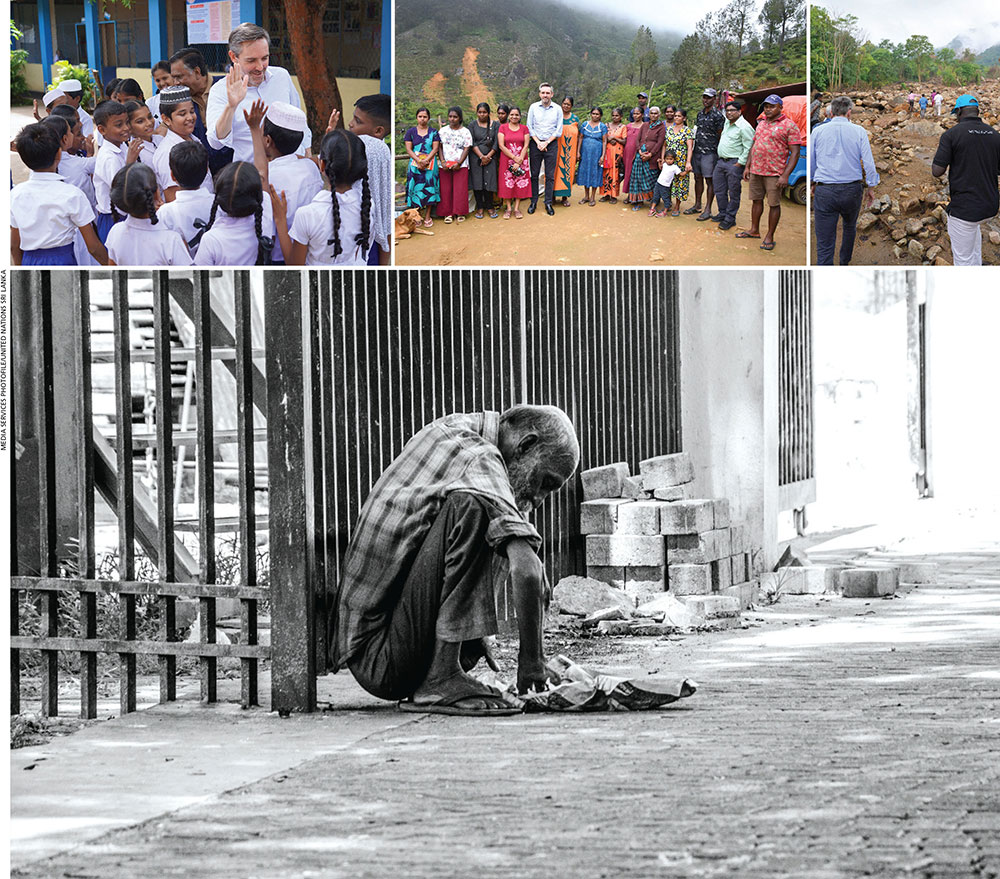
During my visits to communities affected by Cyclone Ditwah, I saw how severely children across all 25 districts had been impacted due to damaged school infrastructure, disrupted learning and months of progress lost. There are also gaps in sectors that are critical for growth, such as industry and infrastructure.
What this highlights is that sustainable development progress cannot be taken for granted. It requires deliberate prioritisation, particularly in areas where progress has not kept pace, and those that affect livelihoods and long-term growth.
Moving forward will require a broader effort, bringing together government, development partners and the private sector, to drive investment, support innovation and accelerate progress in areas such as energy, agriculture, climate resilience and the digital economy.
Q: How effectively has Sri Lanka aligned its national policies with the Sustainable Development Goals (SDGs), where do the most significant gaps persist, and what more must be done to ensure that its recovery path delivers equitable and sustainable growth?
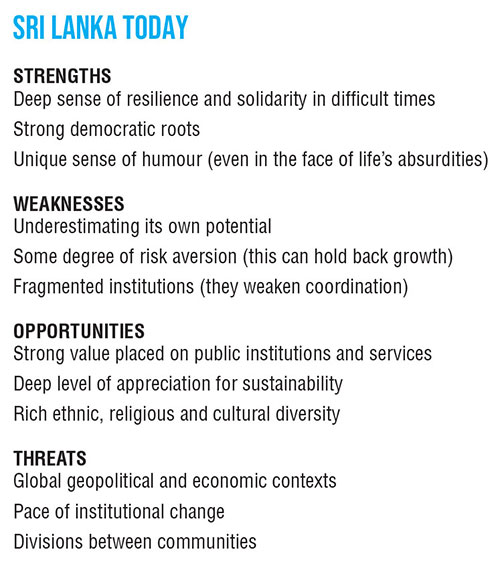
A: Sri Lanka has aligned its national policies with the SDGs. Systems are also in place to track progress, including a national coordination mechanism and relatively strong data.
The challenge now is less about alignment and more about implementation.
Progress has not been consistent, particularly at provincial and local levels, where national priorities are not always fully translated into action. Frequent institutional changes have also made it harder to sustain momentum over time.
The economic crisis has further set back progress, especially in areas such as food security, decent work and inequality. Vulnerability has increased, particularly among low income households, women, informal workers and rural and estate communities.
At the same time, limited fiscal space has constrained investment in health, education and social protection – sectors that are central to achieving SDGs and an inclusive recovery – while climate risks continue to expose communities already under strain to further shocks.
Looking ahead, recovery needs to be firmly anchored in the principle of leaving no one behind. That means protecting social spending, strengthening social protection systems, and ensuring that reforms translate into real improvements in jobs, incomes and access to services.
It also presents an opportunity to steer recovery towards a more resilient and sustainable economic model – including through green growth and more diversified sources of income.
Sri Lanka’s progress in renewable energy for example, points to a viable pathway – one that addresses both the climate imperative and the country’s chronic vulnerability to imported energy price shocks.
The task now is to turn strong policy alignment into results through more effective and accountable institutions, better coordination, and a clear focus on delivery, inclusion and accountability.