
FMCG SECTOR

CONSUMER TRENDS
Compiled by Yamini Sequeira
VALUE IS THE NEW FLAVOUR
Daminda Gamlath traces retail trends in the consumer food and beverage sector

The consumer foods and beverage sector has entered a phase of measured recovery, supported by gradually improving consumer confidence and a pick up in retail activity. Demand has begun to stabilise following a prolonged period of contraction.
“The rebound has improved consumption, though the recovery has been uneven,” explains Daminda Gamlath.
“Staples likely experienced the fastest recovery, followed by packaged foods, as spending gradually recovered. Discretionary beverage categories however, are improving more selectively – consumers remain highly value conscious, and continue to favour affordable packs, promotions and products that offer clear value,” he avers.
Gamlath continues: “Resilience within the sector has improved compared to the peak of the [economic] crisis. However, insulation from macroeconomic pressures remains limited. Imported inputs continue to expose manufacturers to currency volatility while elevated energy costs and persistent logistical challenges weigh on cost structures.”
Moreover, he explains that resilience now depends on agile sourcing, disciplined pricing, productivity and speed: “Market leadership remains concentrated among established players with strong distribution networks, scale advantages and brand visibility.”
On the other hand, the competitive landscape is changing, shaped by the growing presence of challenger brands and niche entrants, Gamlath notes.
“Soft serve ice cream, particularly from Chinese origin brands, is emerging as a trend driven by novelty and affordability. Smaller pack sizes are also putting pressure on larger formats, as consumers manage spending more carefully. In beverages, smaller and cottage players are capturing lower income segments through accessible pricing,” he reveals.
In his view, competition is no longer defined by scale alone; speed, pricing precision and niche identification are becoming equally important. The incumbents remain dominant, yet their advantage is narrowing in segments where agility can outweigh size.
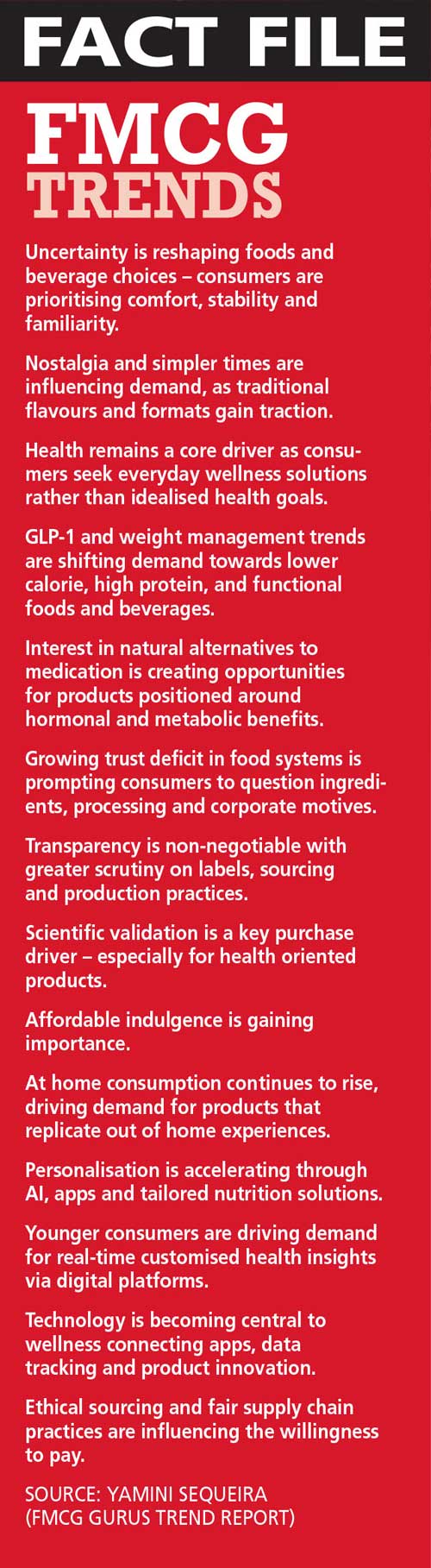
REDEFINING VALUE Consumer perceptions of value have undergone a meaningful shift.
“Price continues to influence behaviour but no longer operates in isolation. Purchasing decisions are now filtered through multiple considerations including quality, trust, health and convenience,” Gamlath explains.
He notes that “value today is multidimensional. Price remains important but consumers also prioritise quality, health relevance, convenience and brand trust. The most compelling proposition is not necessarily the cheapest but the one that delivers the highest perceived benefit across these factors.”
This shift is reflected in product formats and purchasing patterns. Smaller pack sizes have gained prominence as households manage cash flows more carefully while clearer price points have become critical to improving accessibility.
Private labels have also expanded their presence, particularly within modern trade channels, offering lower priced alternatives that meet acceptable quality expectations.
Even in a price sensitive environment, brand equity continues to matter. Trusted brands retain an advantage wherever consistency and quality influence decision making. Therefore, the balance between affordability and assurance has become central to consumer choice.
CONSUMPTION PATTERNS Distribution and consumption channels are undergoing structural change. Traditional trade remains dominant but its influence is being complemented by newer channels.
“Digital commerce, food delivery platforms and quick service consumption models are reshaping how products are discovered, purchased and consumed. While they remain smaller than traditional trade, their influence on future growth is significant,” Gamlath observes.
Modern trade continues to expand its role through improved in-store experiences, broader assortments and stronger brand visibility. At the same time, omni channel strategies are becoming increasingly relevant, enabling consumers to move seamlessly between physical and digital touchpoints.
He elaborates: “Convenience is emerging as a defining factor, particularly in urban markets. Speed of access, ease of purchase and availability across channels are becoming as important as product attributes.”
Product innovation is also being shaped by health, wellness and functional benefits.
Gamlath stresses that “health oriented propositions are no longer peripheral. Reduced sugar, natural ingredients and wellness driven products are gaining traction, particularly where local ingredients can be used to create authentic, contemporary offerings.”
This trend is not limited to formulation; it extends to positioning, packaging and communications, with brands increasingly required to demonstrate not only what they offer but why it matters in the context of consumer wellbeing.
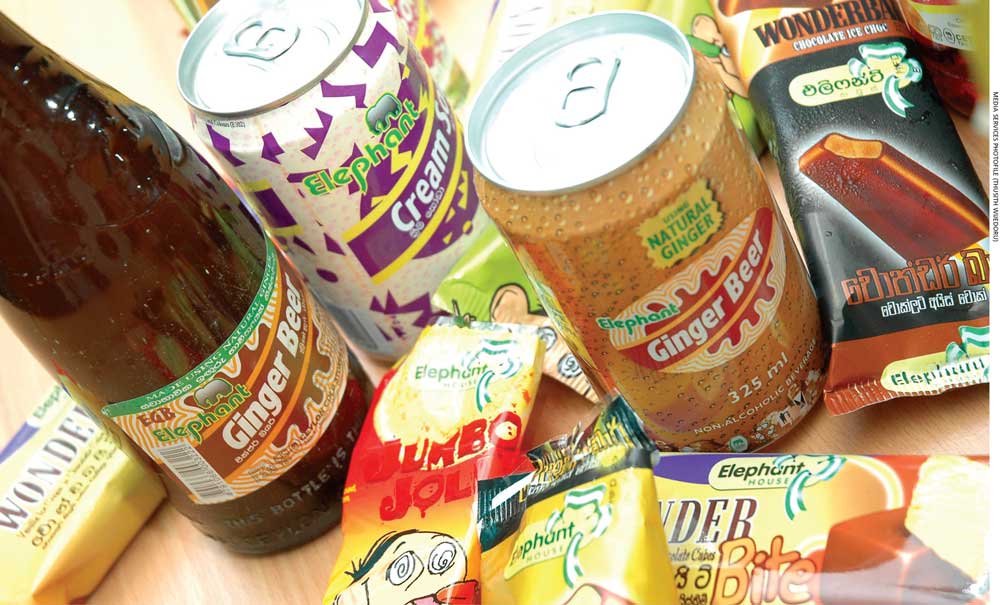
“Sri Lanka’s access to natural ingredients and traditional food knowledge provides a distinct advantage in this space. When translated effectively, these attributes can support both domestic relevance and export potential,” he affirms.
LOCAL ADVANTAGE Local manufacturers continue to hold a competitive edge rooted in proximity, cultural relevance and market understanding.
“Local players understand flavour preferences, seasonality, pricing sensitivities and consumer behaviour at a deeper level. These insights enable faster innovation and more agile responses to market demand,” Gamlath explains.
Speed to market enables local brands to promptly respond to shifts in demand while cost agility allows them to remain competitive in constrained purchasing environments. These advantages are especially relevant in a market where conditions can change rapidly.
Multinational brands continue to retain aspirational value in certain segments. However, local brands are strengthening their position by combining authenticity with structured execution. Emotional connection, supported by relevance and consistency, is becoming a key differentiator.
MARKET EXPANSION Sri Lanka’s domestic market presents inherent limitations in scale. As a result, long-term growth requires expansion beyond national borders.
Export led strategies remain important but they must be approached with a clear understanding of cost structures and competitive positioning. “Export expansion is important but not every category can be served competitively through direct exports. Cost, freight and supply chain pressures must be carefully evaluated,” he says.
In categories where direct exports are less viable, market led production models may offer a more sustainable pathway. This approach is already visible in overseas operations, enabling closer proximity to end markets and improved cost efficiency.
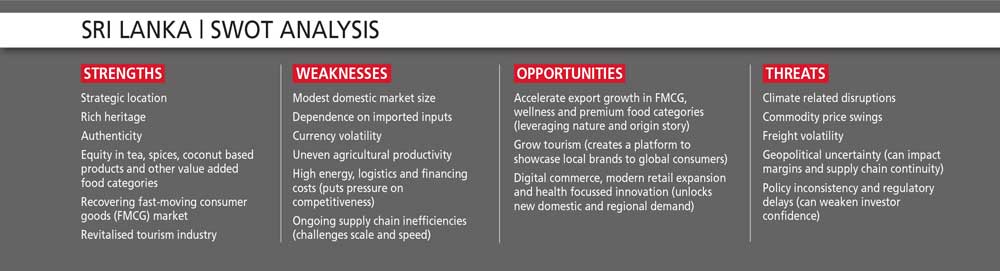
And rising input costs continue to define the operating environment: energy, raw materials and logistics remain key pressure points, requiring companies to adopt more disciplined and strategic responses.
“Companies are focussing not only on price adjustments but also on optimising pack price architecture, improving productivity, strengthening procurement discipline and increasing local substitution. Premium product offerings are also being used to protect profitability while maintaining accessibility,” Gamlath adds.
Climate related disruptions have introduced another layer of complexity, affecting supply chains and raw material availability. This has elevated the importance of diversification, supplier development and improved forecasting.
He concludes: “The next generation of brands will be built on product strength, deeper consumer understanding, sharper segmentation and more precise digital engagement. As the sector evolves, competitive advantages will increasingly depend on the ability to integrate product, pricing, distribution and insights into coherent strategies.”