ECONOMIC POLICY
BUILDING GREATER RESILIENCE
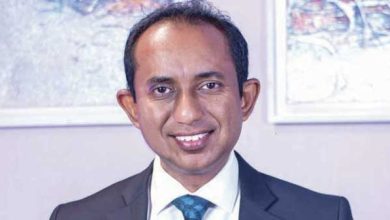
Arani Rodrigo-Weerasekera examines Sri Lanka’s path to sustained growth

Q: How would you assess Sri Lanka’s current recovery trajectory – and what will be critical to sustaining it?
A: The economy is broadly moving in the right direction. Sri Lanka has demonstrated considerable resilience in navigating a series of external and domestic shocks from shifts in international trade policy and the impact of Cyclone Ditwah, to the conflict in the Middle East and emerging trade restrictions related to forced labour.
These developments highlight the increasingly complex environment in which the economy operates.
The policy direction is encouraging, with a focus on sustaining growth, accelerating digitalisation, improving competitiveness and expanding access to world markets. And the fundamental trajectory is sound.
However, the more important question is whether we are moving quickly enough.
Sri Lanka has sizeable ground to make up with the crisis setting back investment, productivity and development. The priority now must be to accelerate reforms, investment and productivity improvements, enabling the economy to move beyond recovery towards sustained and broad based growth.
Q: So where do you see the greatest scope for government spending to have a meaningful economic impact without putting pressure on fiscal stability?
A: The greatest scope is for government spending to be used strategically to crowd in private investment rather than place pressure on public finances.
Sri Lanka has pressing investment needs across infrastructure, productive capacity and new industries, and the government’s role should be to create conditions that enable private sector participation. This requires a predictable, transparent and business friendly investment environment.
Advancing reforms, including the Public Private Partnership (PPP) Act and stronger investor protection frameworks, would provide clarity and confidence to domestic and foreign investors.
Public spending should also prioritise enabling infrastructure and digital systems that reduce the cost of doing business and improve market access.
Regulatory reform is equally critical.
Businesses often face delays and costs arising from fragmented procedures, overlapping requirements and bureaucratic processes, particularly in trade, exports, startups and investment approvals. While digitalisation can help address these constraints, it must be accompanied by efforts to simplify and modernise regulations.
Targeted incentives can help attract investment into priority sectors while structural reforms are implemented. However, the objective should be to build an ecosystem where investors choose Sri Lanka because it is competitive, predictable and efficient.
Ultimately, limited fiscal space should be used to remove constraints on private investment. If government spending can unlock greater private capital, it can support growth without placing unsustainable pressure on public finances.
Q: What areas do you see as having the greatest potential to attract investment, expand exports and drive Sri Lanka’s next phase of growth?
A: Sri Lanka has potential across several sectors with tourism and agriculture offering immediate opportunities. Both have demonstrated resilience and organic growth, but now require greater investment, technology, digitalisation and targeted development to move to the next stage.
The IT and business process outsourcing (BPO) sectors also present considerable opportunities, having developed organically in recent years. Continued investment in digital skills and public sector digitalisation can strengthen their ability to expand and compete internationally.
SMEs also have the potential to expand, create employment and enter export markets but need a more enabling environment. Simplifying regulations, accelerating digitalisation, improving access to information and strengthening connections to international markets can help them scale.
Q: How important will deeper regional economic integration and access to larger markets be for Sri Lanka’s next growth phase?
A: Regional economic integration is critically important to Sri Lanka, yet remains relatively under-discussed.
While other regions have deepened economic ties, South Asia remains fragmented. Stronger economic integration could improve resilience through the pooling of resources, access to larger markets and support during times of crisis.
For a country of Sri Lanka’s scale, navigating an interconnected and uncertain global economy on its own may not be sustainable. Regional integration could expand trade, attract investment and strengthen supply chains.
Countries with smaller domestic markets have shown that they can remain competitive when embedded within a broader regional economic ecosystem.
That said, integration also brings challenges.
Greater exposure to competition means domestic businesses would need to meet higher standards of productivity, quality and regulation. There is also a risk that shocks affecting one country could transmit across the region.
Q: How should Sri Lanka prepare for external economic and geopolitical shocks?
A: Sri Lanka has made progress in building buffers since the economic crisis, strengthening its ability to withstand external shocks.
However, these buffers need to be continuously reinforced by addressing regulatory and institutional loopholes without adding complexity while reducing the economy’s underlying exposure to external risks.
We also need to strengthen mechanisms that can mitigate the impact when shocks occur.
Resilience is not simply about recovering from each shock; it is about addressing the vulnerabilities that leave the economy exposed in the first place. The priority should therefore be to strengthen the economy’s foundations and build greater resilience over time.