THE BRIDGE THAT BUILT A RIVER
HOW FICTION RESTRUCTURED THE RIVER KWAI BY PRANITH WIRASINHA
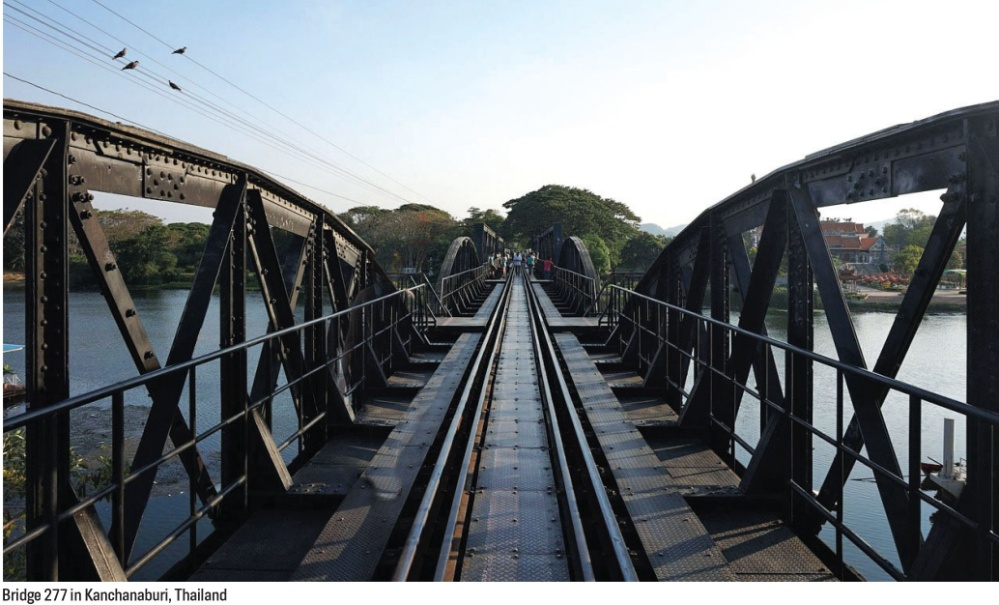
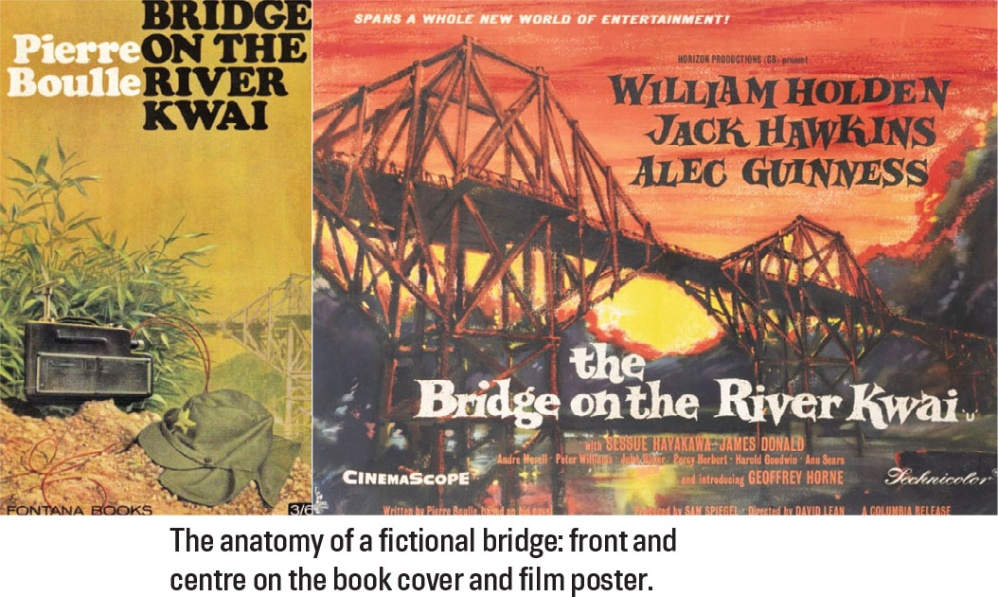
In the late 1950s, tourists from the West began arriving at the hamlet of Kanchanaburi, a 100 kilometres north of Bangkok. They came in search of the ‘real’ Bridge over the River Kwai, only to be told by confused locals that it had never existed (Pülm, 2021). This pilgrimage was a direct product of post-war pop culture sparked by Pierre Boulle’s 1952 novel The Bridge on the River Kwai. The story is based on the experiences of British, Australian and Dutch POWs who were forced by the Japanese to build a bridge through the jungles of Thailand during the Second World War. The story was later adapted for the screen by filmmaker David Lean, with principal filming taking place in Ceylon along the banks of the Kelani River in Kitulgala. The result was the highest grossing film of its time and a story immortalised for years to come (IMDb, 2023). The rest was not history – it was history rewritten, one where governments renamed rivers and reinterpreted landmarks to align with a literary and cinematic myth, granting longevity and new meaning to built spaces in response to the demands of 20th century tourism.t the centre of this altered landscape is a single piece of wartime infrastructure: Bridge 277. Part of the strategic Siam-Burma Railway network, the bridge formed part of Japan’s attempt to link Thailand and Myanmar as it advanced towards India during the Second World War. Dubbed the ‘Death Railway’ by those forced to work on it, its construction relied on the labour of over 60,000 Allied prisoners of war and hundreds of thousands of conscripted Asian civilians, many of them Malay Tamils. Their combined efforts resulted in the completion of a temporary wooden trestle bridge in February 1943. This was followed a few months later by the permanent steel and concrete Bridge 277, built using steel sourced from Japan’s colony in Java (Malloy, 2022).
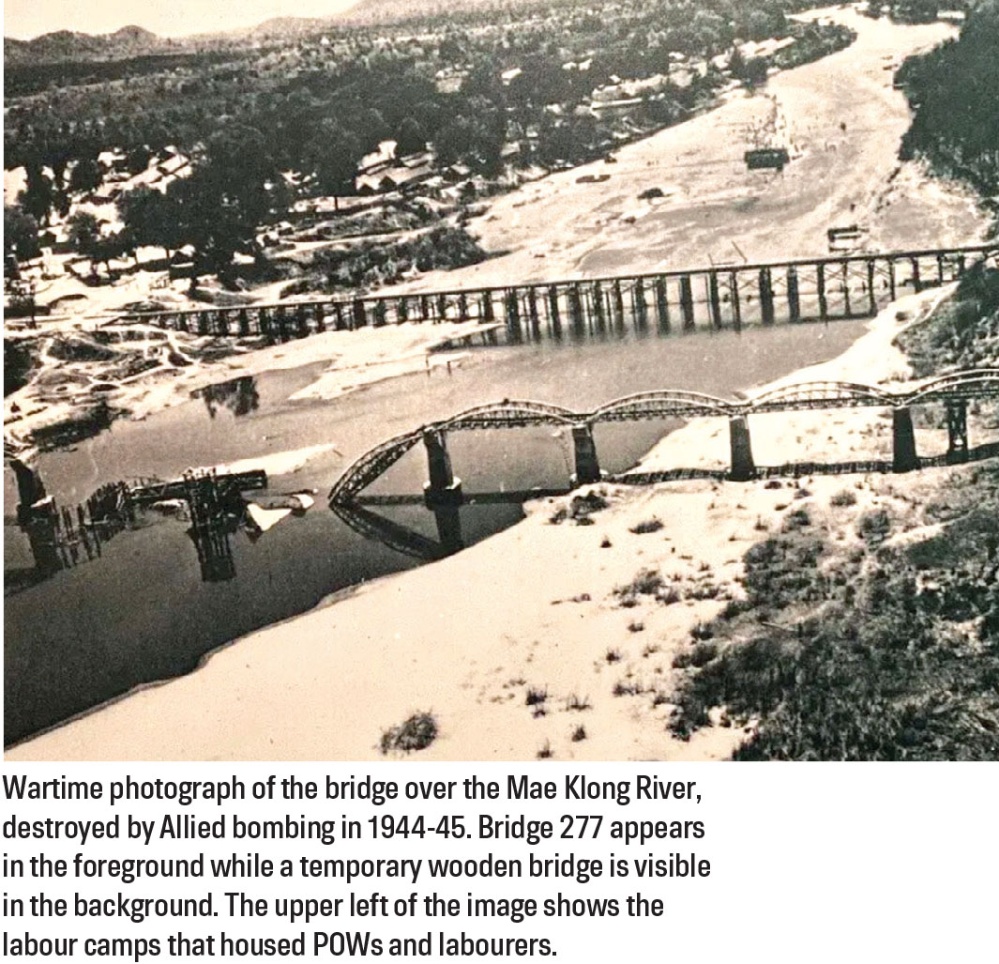
This coexistence of an ephemeral timber build alongside a permanent industrial monument highlights the frantic, shifting logistics of wartime construction. Yet Boulle’s fictionalisation of the episode completely distorted this physical reality when he mistakenly centred the plot of his novel on the wrong river. While the Khwae Noi tributary – which some British POWs referred to as the Kwai – did run parallel to the Siam-Burma Railway, Bridge 277 actually spanned the much larger Mae Klong River.
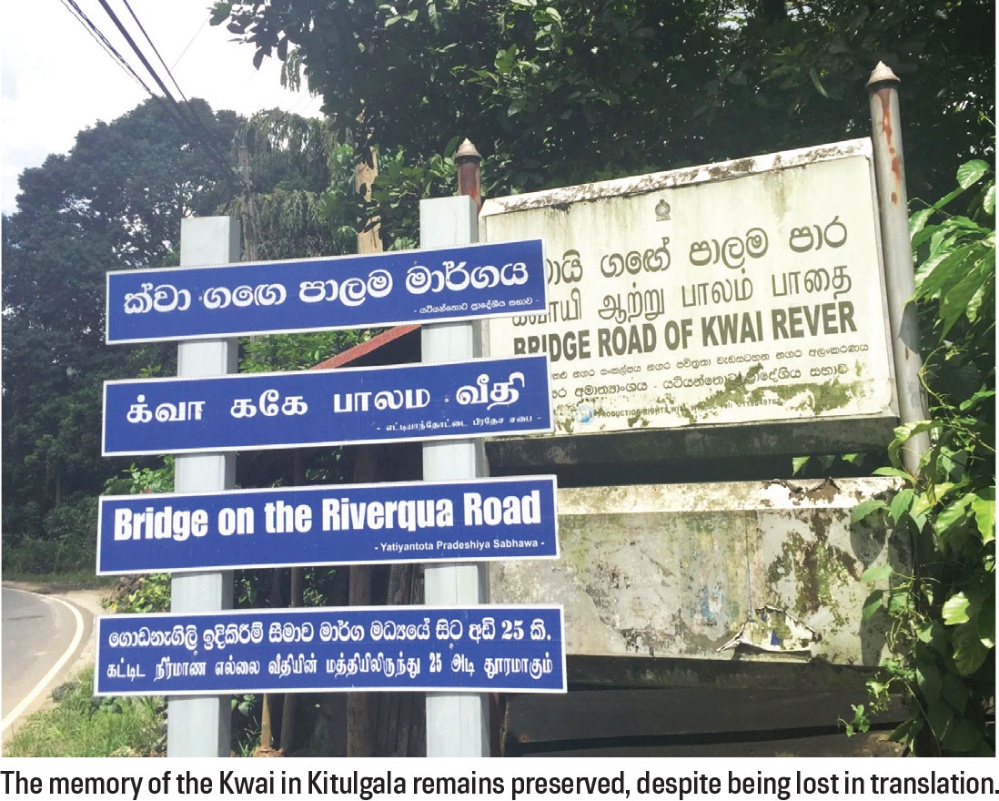
Following the success of Lean’s subsequent film, the pop culture train came calling. However, no matter how many tourists arrived looking for a bridge over the River Kwai built by Allied POWs in rural Thailand, they found no such place. Rather than let reality disappoint a lucrative influx of Western tourists, the Thai government chose to align its physical geography with Hollywood’s layout. Despite the fact that even former prisoners of war who had worked on the Death Railway were unfamiliar with the River Kwai as described in the novel, Thai authorities officially renamed a section of the Mae Klong River the ‘Khwae Yai’ in 1960, recreating the geographical setting associated with the bridge popularised through the jungles of Ceylon (Pülm, 2021).
This deliberate alignment of geography, history and memory with pop culture reinterpreted the landscape of a rural village, alongside the collective memory of Death Railway survivors, to legitimise the demands of tourism.
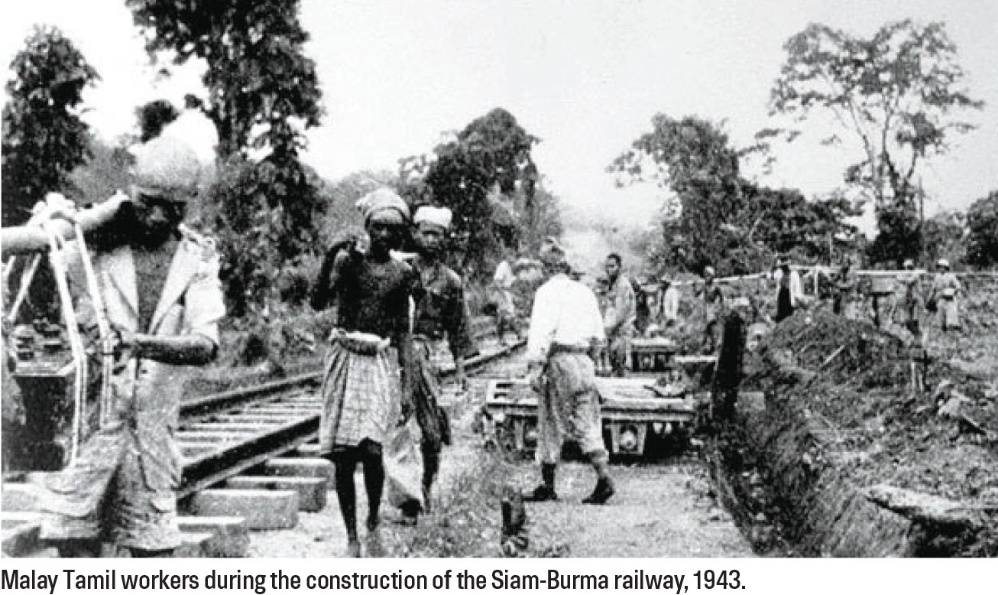
Where a physical landscape was altered by giving into popular demand, the collective memory tied to the building of the railway was whitewashed when the authorities, alongside Boulle and Lean, entrenched the Eurocentrism of the Death Railway narrative. While Allied POWs were treated harshly – with around 12,000 succumbing – fatalities among the indentured Asian civilians are estimated between 80,000 and 100,000, with their lives treated as expendable and their deaths going largely unrecorded (Saxena, 2025). Although the opportunity existed to reflect the historical memory of the Allied prisoners of war alongside those of the indentured Asian labourers, thereby providing audiences with a more objective account of the victims and the cruelty of the Japanese, none saw reason to do so. David Lean, despite shooting his film in Ceylon where he could have drawn parallels between the Malaiyaga Tamil experience on the plantations and that of the Malay Tamils in Thailand, unsurprisingly paid no attention to the matter, despite casting Kitulgala natives in certain sections of the film. The result was an established narrative of European suffering in unfamiliar, tropical conditions, despite the far greater scale of suffering and loss experienced by indentured Asian labourers.
Even in Sri Lanka, audiences found greater affinity with the blockbuster cast and the sheer magnitude of a Hollywood production being filmed on their shores (Roberts, 2021). In May, the Thai government invited the Sri Lankan Ambassador to Thailand to lead the commemorations at the Wat Thaworn Wararam Memorial, one of several memorials dedicated to the Asian labourers. It was only the second such commemoration since 1945 (Embassy and Permanent Mission of Sri Lanka, Bangkok, 2026).
Informed by the lease of life offered by Boulle’s novel and Lean’s subsequent adaptation, the bridge over the rechristened River Kwai has since taken on a life of its own. Despite its sombre history, the atmosphere of the village has become more festive than reflective. The eerie silence of a landscape which has witnessed tragedy of such scale usually invokes deep introspection. The gates of Auschwitz or the fields of Choeung Ek come to mind here (Beyond the Bucketlist, 2025). Yet even with the presence of genuine wartime infrastructure in the bridge and the railway, alongside numerous memorials to those who were killed here, Kanchanaburi’s solemn geography leans on a narrative of history founded on a pop culture phenomenon (Pülm, 2021). Its identity as a destination for international tourism is best explained through the somewhat surreal annual River Kwai Festival celebrated every November (Pülm, 2021).
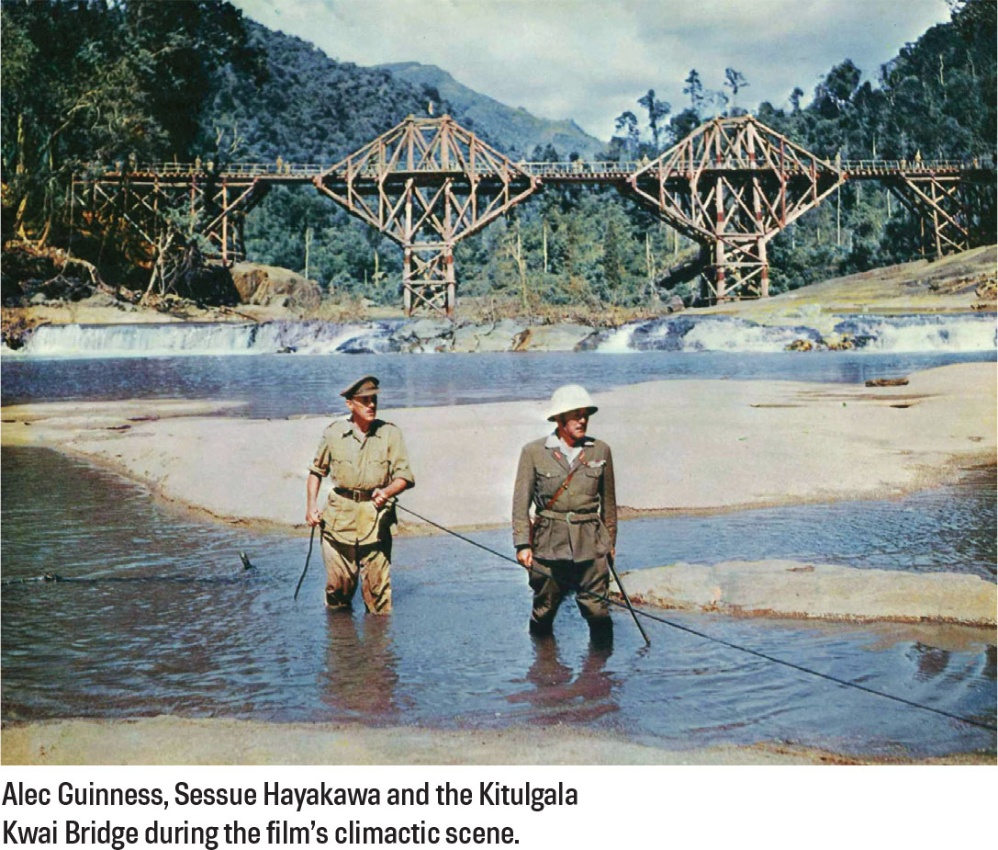
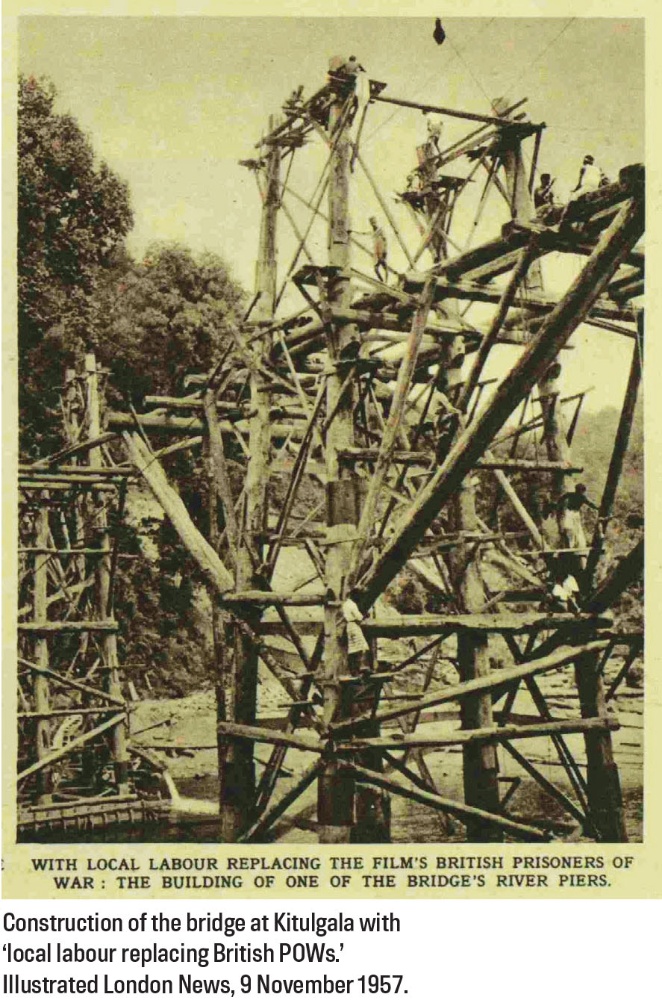
The confusion over which bridge stood on which river matters little in Kitulgala, where, in 1957, the bridge built on its banks became the backdrop to one of cinema’s most memorable moments. The anatomy of the Kitulgala bridge – a timber based double cantilever modelled after the Forth Bridge in Scotland – has permanently informed the public’s perception of a piece of historic infrastructure through its popularisation on book covers and film posters. It’s easy to imagine tourists in Kanchanaburi consuming this romanticised image amid thick foliage and then being disappointed by the dull, industrial grey steel bridge spanning the Mae Klong River in a little Thai town (Schmalz, 2016). This stark contrast highlights the deep disconnect between function and fiction: the strategic functionality of a bridge – especially when dictated by the brutal, logistical demands of war – set against the aesthetic requirements of a big budget Hollywood production. The bridge in Kitulgala has since informed not only the perception of an artefact of 20th century history but also the memories of those who witnessed the creation of its fictional counterpart. To this day, Kitulgala’s residents fondly recall the minor casting or production roles they held on set. Here was a construction that granted a space and a community profound longevity and cultural relevance, despite it being built explicitly for its own destruction.
Historical fiction and its role in retelling history is a conversation steeped in constant tension between author and historian. The dynamic becomes all the more strained when a physical space starts to be reimagined and reinterpreted on the strength of fiction rather than the history embedded within its landscape (Burke, 1996). While popularising little-known episodes of human ingenuity, bravery and perseverance, the creative license taken in fictionalising them creates a reality of their own. The River Kwai reveals the real world implications of this phenomenon, demonstrating how easily what is put on screen or text becomes committed to memory through the architecture of an alternate historical reality. It is a transformation of little consequence, except to those who lived through those historical moments or those who have been forgotten by them. When European tourists arrived in their numbers to see the site of one of the 20th century’s great wartime atrocities, most came informed not by the history book but by what they had seen on screen – not in Burma or Bangkok but in Ceylon.
When built spaces are forced to choose between historical accuracy and narrative expectation, narrative almost always wins.