Boundary Gods
THE DEITIES GATEKEEPING BETWEEN BUILT AND SPIRITUAL REALMS BY ARCHT. SUMEDHA KELEGAMA
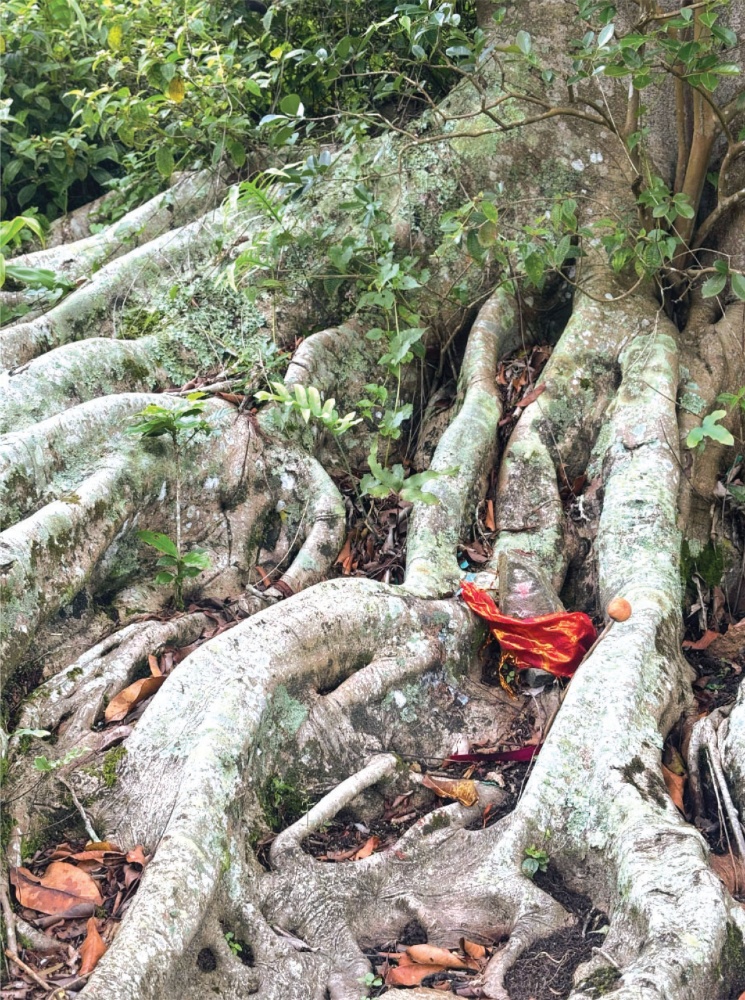
The first thing one notices is the cloth.
A small piece of bright red silk is draped around an unworked stone nestled among the exposed roots of a tree. Against the muted tones of bark, earth and moss, the vivid red distinguishes the stone from its surroundings.
For plantation workers, such shrines mark boundaries within the tea estate. They occupy the liminal ground between cultivated plantation and the landscape beyond, standing along paths where workers begin or end their daily journeys. They offer protection, ensuring safe passage across thresholds understood as both physical and spiritual.
Their material form varies considerably. Some exist as a single stone beneath the roots of an old tree. Others appear as a row of small stones set against a large boulder, painted with kolam patterns. Elsewhere, the deity is enclosed within a modest masonry shrine, gradually acquiring painted or collaged eyes, garlands and offerings over time. Despite these variations in scale and form, each is encountered in much the same way.
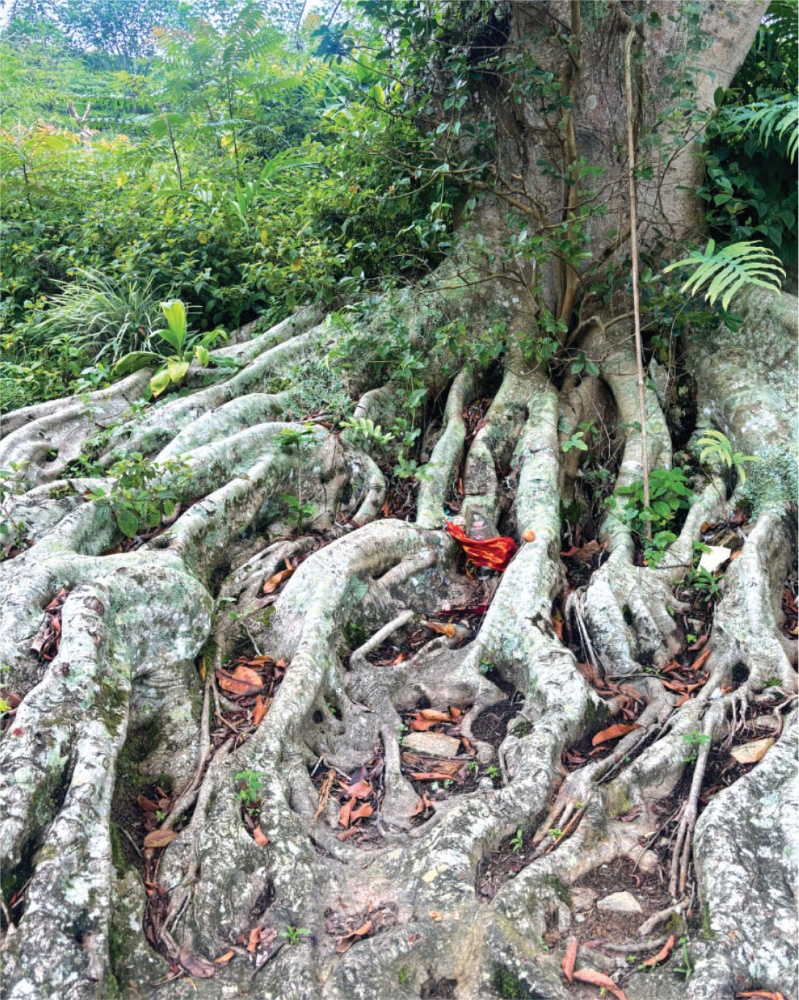
Rather than asking what these boundary gods represent, this essay asks how a spatial condition is produced through their presence – one that precedes architecture as building.
Their significance lies not in physical form alone but in the lived relationship between objects and those who encounter them. The boundary god does not so much define the edge of the estate as the experience of crossing it.
A worker approaching the shrine may slow his or her pace, pause momentarily, leave an offering, or simply acknowledge its presence before continuing. These gestures are brief and habitual, yet they subtly alter the experience of moving through the estate: the journey is no longer continuous but instead acquires a threshold. The shrine does not simply mark the edge of the estate, it gives that edge a particular spatial meaning, continually renewed through the movements of those who pass.
This meaning, however, bears little relation to the physical form of the object that produces it. A small stone may generate a boundary spanning a vast estate while an elaborate shrine may mark passage across a far smaller one. The spatial order it produces is therefore not geographical in any strict sense but experiential; unfolding only through movement, recognition and passage. Neither fixed nor measurable, it expands and contracts with each journey through the landscape.
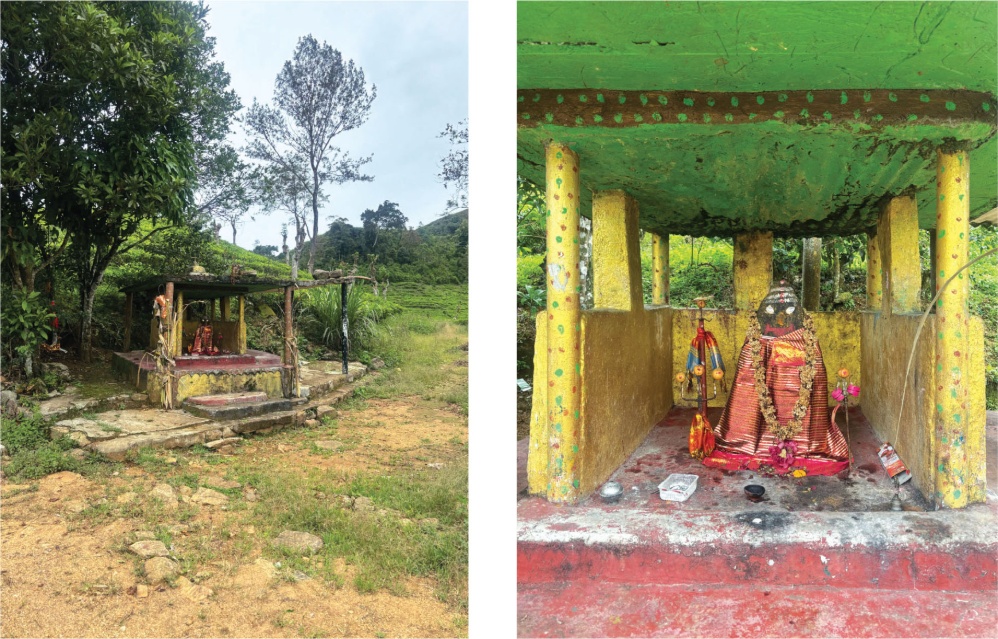
When architecture begins
By this point, the distinction between deity, landscape and architecture begins to dissolve. A stone beneath the roots of a tree, a painted boulder, a modest masonry shrine and the paths that connect them no longer appear as separate elements. Together, they form a single spatial condition through which the edge of the estate is experienced.
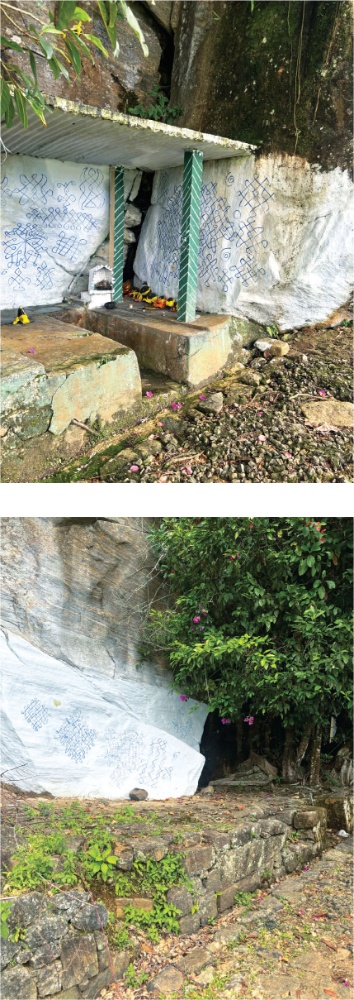
The boundary gods suggest another way of thinking about architecture. Long before a shrine is built, repeated acts of recognition organise movement through the landscape, establishing a threshold that is continually renewed through use. Buildings may eventually emerge around the deity, formalising its presence within the landscape but they do not create this relationship; they give material form to a spatial order that already carries architectural significance.
Seen in this way, the shrine is not the origin of architecture but one possible expression of it. What gives the shrine its architectural significance is not the building itself but the materialisation of a spatial relationship between deity, landscape and those who pass through it. Its extent cannot be mapped in metres but only through the journeys of those who continually reproduce it.
The shrine does not create the boundary; it formalises a boundary that has already been constituted through repeated acts of crossing, recognition and protection. The boundary gods therefore suggest that architecture can emerge from everyday acts of ritual long before it becomes a building.
Note:
The conceptual framework of this essay is informed by Edmund Husserl’s concept of intentionality, Henri Lefebvre’s theory of the social production of space and Tim Ingold’s account of the lived, walked boundary. These ideas are not applied as explanatory models but as ways of understanding how architecture emerges through lived practices.