
STATE OF THE NATION

VIEWPOINTS
A BRIDGE BETWEEN RECKONING AND REFORMS
Wijith DeChickera isn’t confounded by either tales of tragedy or triumphalism but discerns a better direction towards building public trust
Sri Lanka today stands suspended between two competing narratives. One articulates recovery: inflation somewhat brought to heel, reserves painstakingly being rebuilt, those debilitating queues relegated to unpleasant memories, tourism on the cusp of a revival – perhaps on the back of the island’s newfound top slot in the wellness sector, exports holding their own to some degree and confidence tentatively returning to the markets.
The other however, is niggling and is reminiscent of the sunshine story gang that beneath these welcome indicators lies a nation still struggling with the aftershocks of economic collapse, political distrust, social fatigue and institutional fragility.
Neither narrative is wholly true – and nor is either utterly or entirely false. Only going forward will reveal which of these versions stands authenticated.
Much will depend on merely what happens beyond our shores.
The uneasy calm and subsequent return to sporadic hostilities that followed the round of putative truces and tentative ceasefire agreements in the US-Israel war on Iran have all the characteristics of conflicts driven by personalities over principles: volatility, uncertainty, complexity and ambiguity (VUCA).
For a small import dependent economy such as Sri Lanka, these are not distant geopolitical abstractions; they’re immediate economic realities with very real ramifications. Every renewed disruption in global oil supplies rapidly filters through to domestic fuel prices, transport costs, electricity generation, and the cost of living and dying in paradise.
Meanwhile, the energy markets remain jittery. Shipping insurance is sailing in stormy seas. Freight charges have skyrocketed. Export competitiveness is under pressure. Tourism, which is so dependent on perceptions of regional stability, could face further headwinds.
Against such VUCA, Sri Lanka’s IMF driven reforms programme remains the ship of state’s principal economic anchor.
Whatever ideological reservations may persist, the International Monetary Fund has restored a modicum of fiscal discipline after years of profligacy and excess by sundry governments. Revenue collection has improved, monetary stability has returned despite the Sri Lankan Rupee’s slide and external creditors now engage constructively.
The deepest measure of national recovery lies not only in robust reserves or healthier balance sheets, but stronger institutions and renewed public trust
But while international confidence (though still cautious) has slowly re-emerged, stabilisation alone is not tantamount to progress and prosperity.
An interventionist UN agency can help restore macroeconomic order. But it cannot in and of itself create inclusive growth, rebuild sundered public trust, reform an entrenched political culture or eliminate systemic corruption – they remain domestic responsibilities, and challenges requiring political courage and social cooperation rather than economic savvy or technocratic competence alone.
Indeed, this may be the greatest challenge confronting the incumbent administration as it approaches the terminus of its second and start of a third year in office.
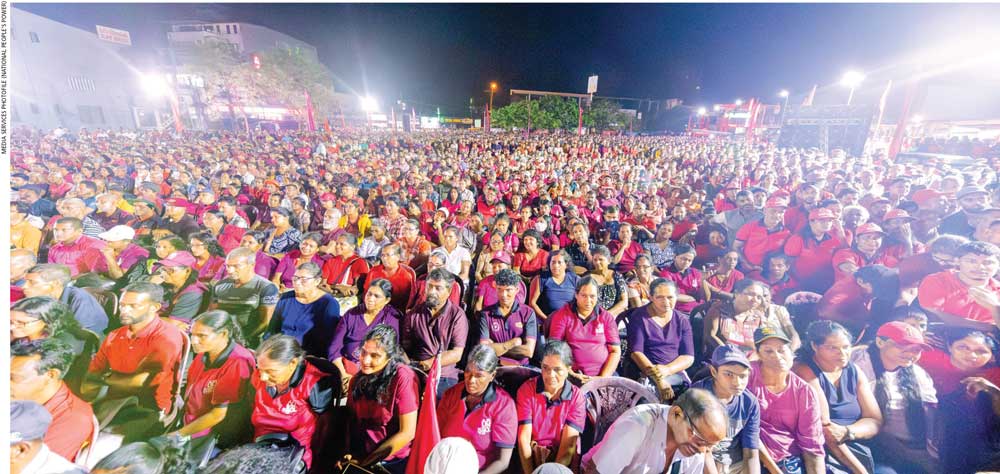
This government enjoys an unprecedented electoral mandate. Such political capital is both a cardinal opportunity and a wasting asset.
Citizens who voted overwhelmingly for systemic change did not merely seek radical budgets or an ameliorated balance of payments. They expected cleaner, more competent governance; greater accountability; more transparent and accountable institutions; and a tangible break from decades of patronage politics.
Therefore, economic recovery sans institutional reform risks becoming merely another chapter in Sri Lanka’s familiar cycle: crisis, rescue, complacency and relapse. That is why warnings of a second sovereign default – and there have been too many from realistic and responsible quarters to ignore or neglect – deserve careful attention… but not undue alarm.
Those predicting another collapse often underestimate the painful lessons learned since 2022.
Fiscal rules and regulations are now stronger than ever before. Monetary management is seemingly more disciplined and international oversight quite rigorous. Policymakers themselves seem to understand, perhaps more than previous regimes, the catastrophic consequences of abandoning reform midway.
However, optimists should resist triumphalism.
Public debt remains extraordinarily high. External shocks operate largely beyond Colombo’s control. Export diversification is inadequate, productivity growth hovers modestly and poverty (though less visible than in crisis times) still burdens many households. And young professionals continuing to seek better prospects overseas narrate a sorry continuing story.
Recovery – and this is by no means a doomsday prophecy – remains reversible. History suggests that nations rarely fail because they lack economic expertise or prescriptions. Often, they falter because political incentives encourage short-term popularity over long-term prudence.
Sri Lanka knows this better than most countries. So the more profound question confronting the government is not whether it should prioritise economics or civics; it must do both, judiciously combining good fiscal sense with good governance.
Economic management without justice breeds resentment. Justice without economic opportunity generates frustration. Anticorruption measures sans administrative reforms disappoint and deliver openings for counterproductive political agitation. Constitutional reform lacking institutional integrity changes only cosmetics.
Our country’s true agenda and best national interest cannot afford such unresolved dichotomies leading to false choices.
So the government’s second year should not merely be about staying the IMF course. It should be about demonstrating that fiscal prudence and social justice are not competing visions but complementary themes. That governance reform is not an optional luxury after stabilisation but its necessary present companion.
And that the deepest measure of national recovery lies not only in robust reserves or healthier balance sheets, but stronger institutions and renewed public trust.
The deepest measure of national recovery lies not only in robust reserves or healthier balance sheets, but stronger institutions and renewed public trust