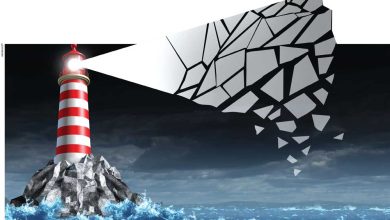
THE BIG PICTURE

MUCH ADO ABOUT EVERYTHING
Is whether we are under the pump or making hay while the sun shines a matter of conjecture?
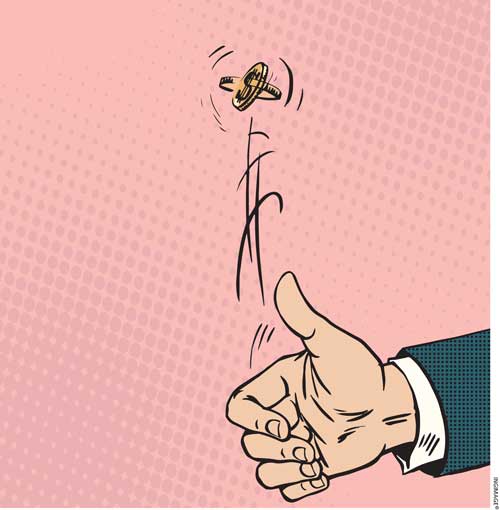
There are times – such as when the going gets tough or even rough – when matters of the state become too complicated for Tom, Dick and Harry to pontificate about. On which side of the coin the truth lies is best left to the experts to decipher and report on.
In this edition of LMD, Dr. Jehan Perera tackles the vexed issue of the 22nd Amendment with a sense of balance, not decrying it but raising the ‘what ifs’ as well as why it makes sense.
He writes: “The 22nd Amendment needs to be judged not only by its stated purpose but also by what follows from it. It offers an opportunity to strengthen continuity in the justice system. But continuity can strengthen institutions only if it is accompanied by independence.”
And as he says, “eventually, the judges carry the greatest responsibility of all. Through their judgements, they can demonstrate that they’re beholden to no political authority. That will be the most convincing answer to the critics of the amendment, and the strongest assurance to the country that stability and accountability can advance together.”
We hope therefore, that the future of justice and fair play lie in independent jurisdiction…
Likewise, the state of the economy has become a topic of wide-ranging debate, amid what seems like a renaissance on the face of it.
But a handful of ‘what ifs’ are worthy of consideration – such as the impact of geopolitical tensions around the globe that invariably affect nations such as ours and the fact that 2028 will be a watershed year on the debt repayment front.
LMD’s economic columnist Shiran Fernando writes in this issue that the challenge for the next phase is to institutionalise the economic revival rather than mistake a particularly strong year for “a new permanent normal.”
And as we approach the fiscal and economic red-letter day, when Budget 2027 is presented in parliament on 12 November, he asserts that the test should not be whether it produces “another spectacular headline surplus.”
Instead, Fernando believes the question is whether it “converts the extraordinary fiscal gains of the past two years into a durable fiscal system that will support growth.”
On this score, we wait in hope…
And last but by no means least, the anti-corruption brigade has been in overdrive in recent weeks – and as one would expect, given that the focus at this time is on opposition ranks, the war of words on either side of the aisle and on platforms that appear to be made for election mumbo jumbo has reached a crescendo.
Meanwhile, corruption watchdog Transparency International Sri Lanka (TISL) has filed a petition in the supreme court, challenging the proposed Anti-Corruption (Amendment) Bill 2026.
It warns that the tabled amendments are akin to a “major policy regression” and undermine constitutional safeguards, because they infringe on the sovereignty of the people, restrict civic rights and impinge on judicial power.
Indeed, there are two sides to a coin – heads (for independence) or tails (for politicisation)?
– Editor-in-Chief