THE LEARNING CURVE
PART OF THE EARTHLY PARCEL
Ruwandi Perera notes that we are not the centre of the universe after all
Biblical proclamations aside, humans have always positioned themselves as supreme and placed their race on top of the world. They also consider themselves to be the custodians of the world’s ecosystems and all life forms in them.
Consider all the times we have used or heard the phrase ‘we have to consider human life above all else.’ Whenever there is an incident or emergency concerning humans and another living being – be it animals, plants or even terrain – we always place the life of the human being above all else.
That’s how it is, only because of religious leaders, philosophers and pioneering members of human civilisation.
But what if this isn’t the case?
The reasons for the conception and continuation of anthropocentrism – thinking that humans are the most important entity in the universe – could be religious, philosophical or hubris. Perhaps we’ve been on top of the hierarchical order due to our brain power or because we have souls – some believe that other beings don’t.
Whatever the reasons, the repercussions haven’t all been good as we haven’t done a great job with our supremacy.
On the nature front, we have watched countless animal and plant species fade into extinction; and in some instances, their existence wasn’t even well known. We have depleted our fresh water sources and forest cover, and polluted the air, sea and land. In some areas, the situation is beyond restoration.
On the socioeconomic front, we have waged world wars that have led to the loss of countless lives and livelihoods, and we continue to fight. We waste tons of food while ignoring those who are dying of hunger. And we’ve widened the gap between the uber rich and those living in extreme poverty.
It’s not that we haven’t done any good… we have done loads of it. Yet, if we truly consider ourselves to be the supreme species on the planet and act accordingly, we should be accountable for a lot more than we take responsibility for.
Changing this status quo is nearly impossible but there’s always hope…
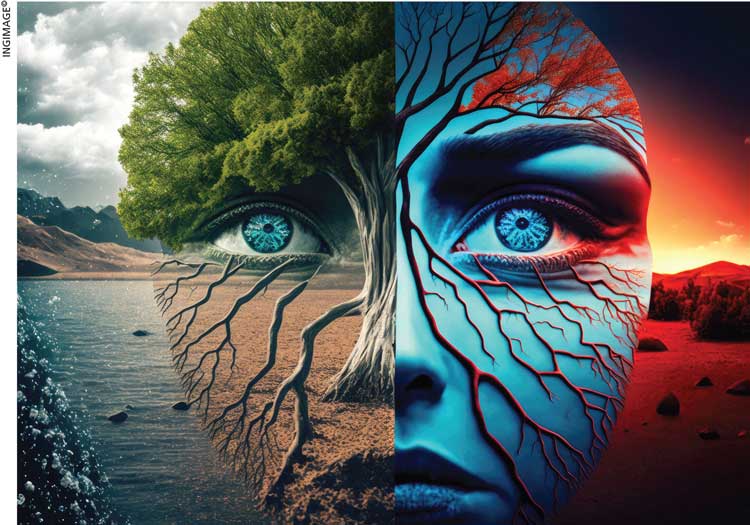
The study of post-anthropocentrism refers to the rejection of human exceptionalism and acknowledgment that we aren’t superior to other beings. It is the realisation that we too are one of many interconnected and interdependent parts that make up the universe.
This has more implications than we can imagine.
For starters, it will mean admitting that we play a role as important as that played by an animal and realising that we’re as indispensable as the weeds in our garden.
It can also mean that people are far less important than some living beings. A National Geographic article once estimated that a single humpback whale is worth more than US$ 2 million over its lifetime, considering its ability to capture carbon and sink it to the ocean floor when it dies. That’s a considerably more significant contribution compared to what many people make over a lifetime.
Learning the critical philosophy of post-anthropocentrism requires an early start. This can be achieved by educating children on the fact that all beings are interconnected and interdependent, and encouraging them to respect all species – beginning with the plants in the garden.
For adults, this might require some unlearning first since we are so used to being in command, whether it’s in relation to our pets or plants. It calls for repositioning our mindsets to understand how we actually fit into the scheme of things – and this change in thinking has the potential to flow into other areas too.
It can even impact other aspects such as the arts.
Most of the movies, books, plays and songs written revolve around human perspectives. Even a story about an animal is told through a human-like lens. Realising that we aren’t always the protagonists will change how we tell stories.
So how does one learn to think in a post-anthropocentric way?
We need to question the obvious and look beyond the ‘what?’ – and search for the ‘why?’ and ‘how?’ Post-anthropocentrism will endure only when we practice humility; it will succeed when we behave in a respectful manner to all living things, at least for the sake of saving the planet and being saved along with it.