STATE OF THE NATION
VIEWPOINTS
FEELING THE LAW’S HEAT IN THE DARKNESS
Wijith DeChickera notes that Christmas is coming and some geese are getting fat – or is it someone’s turkey that’s being cooked?
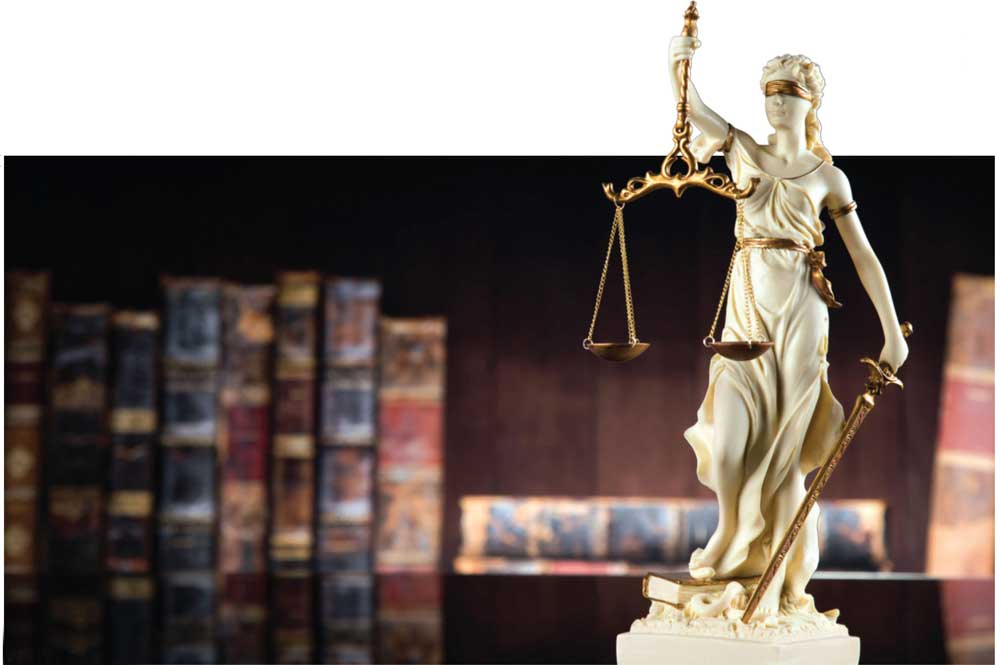
As year-end approaches, Sri Lanka’s political aviary remains restless. But is this a feast of accountability or another serving of political theatre?
In Colombo’s cocktail circuits, the question is not about who will be arrested next but whether a country long accustomed to watching powerful people evade accountability is finally witnessing justice take flight.
A powerful family, once the undisputed peacocks of Sri Lankan politics, now finds several of its members under close legal scrutiny.
An heir apparent faces proceedings involving alleged bribery in several financial scandals. And a former first lady was arrested over an allegedly shady Rs. 10 million transaction. A once powerful brother faces inquiry over the acquisition of property in the south. A son and a cousin of the clan’s paterfamilias feature in separate proceedings involving alleged misuse of state resources.
These are serious allegations involving public money, alleged corruption and possible abuse of political influence. They deserve neither sensationalism nor a convenient political blindfold.
Yet, allegations are not convictions; arrest and remand are not findings of guilt. The accused remain entitled to presumption of innocence and fair trials, no matter the indignation of a once bankrupted nation.
There is also the larger question hovering above the crowded birdcage: has the National People’s Power (NPP) government finally set the wheels of justice turning or is it merely claiming credit for movements initiated by its predecessors?
The opposition has a point, at least chronologically. Many of these cases originated under previous governments. Some investigations into financial dealings, state expenditure and abuses of office date back to the 2015-2019 period.
While the NPP didn’t manufacture these allegations, it cannot legitimately claim to have laid every egg now manifesting in the nest. Its strongest claim is not uncovering each alleged wrongdoing but allowing investigations and prosecutions to advance without executive interference in judicial workings.
The government’s publication of a list of 50 cases involving politicians and other prominent figures offers a basis for examining that claim. And recent developments including moves towards indictments in the Airbus matter suggest instrumentality beyond mere circulation of old files.
That is significant in a state once noted for impunity for the high and mighty, though not yet conclusive. There is a difference between investigative acceleration, prosecutorial readiness and judicial determination.
The first two can be influenced by the priorities and resources of the executive while the third belongs to the courts, whose decisions must be respected without political instruction, speculation or second-guessing.
Nor should the opposition’s warning about a political witch-hunt be dismissed out of hand. The NPP has an obvious political incentive to demonstrate that its anticorruption promises are being honoured.
The spectacle of former rulers answering questions about their conduct is politically potent. But political advantage does not of itself make a prosecution illegitimate any more than political embarrassment proves culpability.
So the proper test is consistency.
Birds of a feather may flock together but the guilt of any party or person cannot be established by association, surname or political ancestry. Each case must stand on its own evidence. A government that prosecutes its opponents while sheltering its own or allies would merely be changing the occupants of the nest, not reforming it.
There is also a danger in confusing the public’s appetite for comeuppance with the requirements of the law. A lame duck may be politically diminished but that does not make it criminal. Conversely, a once proud peacock should enjoy no exemption from scrutiny simply because it strutted through the corridors of power.
Then there is the fiasco of the scheduled power cuts of the recent past… under an administration that promised smart deals and efficient electricity supply – now, besmirched by the same soot that it used to tar the governments of the day when its own new brooms then did not sweep so well!
Are all these arrests also ‘scheduled’ to distract the public and keep them (literally) in the dark?
We the public continue to pay the price for subpar governance.
Sri Lanka in a dark December needs something more durable than the satisfaction of seeing yesterday’s cynical and allegedly corrupt rulers come a cropper in today’s headlines. It needs independent investigations, competent prosecution, impartial adjudication, meaningful asset recovery and safeguards against future abuse.
There must also be uninterrupted power to the people!
Christmas may indeed be coming, and the political turkeys who once ruled the roost are now feeling the heat. But the measure of success will not be how many feathers are ruffled before the year ends. It will be whether the law completes its work fairly and credibly – and whether the public purse is better protected while this flock is in power – and still muddling through.
For a republic weary of political impunity, that would be something worth celebrating. Not a turkey roasting on a partisan spit but a justice system finally flying high on its own wings. But if justice prevails in darkness, it’s our goose that’s being cooked.
For a republic weary of political impunity, that would be something worth celebrating … but if justice prevails in darkness, it’s our goose that’s being cooked