
STATE OF THE NATION
VIEWPOINTS
MOVING HOUSE FROM CHANGE TO CATALYSIS?
Wijith DeChickera assesses the NPP’s reforms and delivery on promises made following its two years in high office – as well as the road ahead
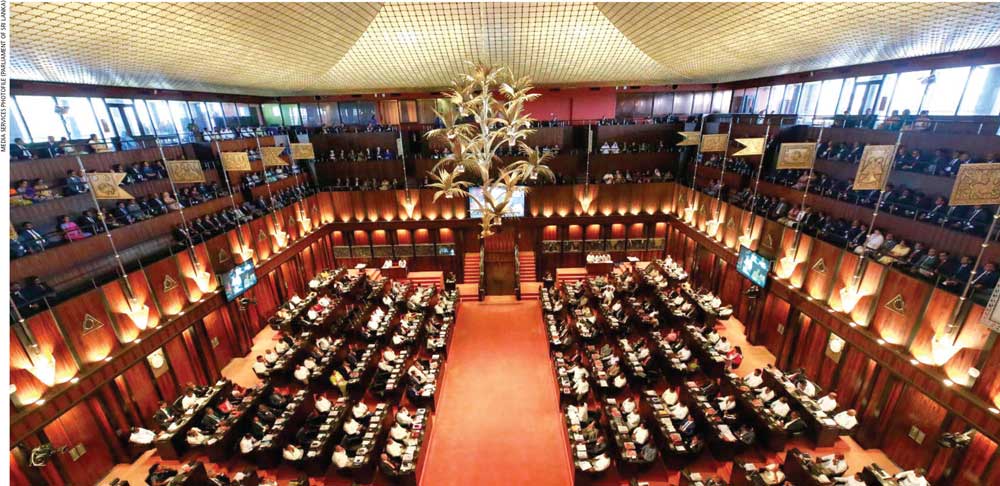
When Sri Lanka went to the polls in November 2024, it handed the National People’s Power (NPP) an extraordinary mandate: 159 of parliament’s 225 seats. The gift was a will to power, coming as it did in tandem with an NPP presidency.
It was not merely a licence to govern but an invitation to break and remake the way Sri Lanka had been ruled.
Two years later, the record is neither the outright triumph claimed by its admirers nor the dismal failure alleged by its detractors. It is a more complex admix of substantial legislative activity, meaningful institutional reform and some conspicuous failures to deliver on promises that lay at the heart of the Janatha Vimukthi Peramuna (JVP) led coalition’s political appeal.
The first factor cannot be ignored: the NPP has legislated more than was expected of tyros in power. Parliament passed 26 pieces of legislation in 2025 – including the Proceeds of Crime Act, amendments to strengthen audit and tax administration, labour laws, repeal of former presidents’ entitlements and changes affecting state enterprises.
And by September, another 21 acts of parliament had been enacted.
The Proceeds of Crime Act is particularly significant.
Together with strengthened anticorruption and asset declaration mechanisms, it represents an attempt to build the legal machinery for recovering illicit wealth rather than merely denouncing corruption.
The IMF, under whose aegis we motor along these days, acknowledged substantial progress in Sri Lanka’s governance and anticorruption framework while stressing that implementation remains essential.
There have also been tangible social and democratic gains.
The Aswesuma welfare programme was expanded while local government (LG) elections, postponed under previous administrations, were finally held in May last year. Parliamentary pensions were abolished and presidential privileges curtailed.
As for the economy, the picture is also better than the gloomier predictions of 2024 suggested: growth has continued, reserves have grown and the International Monetary Fund considers implementation of its programme to be generally strong.
There is an important qualification, however…
Much of the macroeconomic stabilisation rests upon an IMF programme inherited from the previous administration. The NPP has largely chosen to continue and implement that framework rather than replace it.
Where then does the sense of disappointment stem from?
It lies principally in the gap between the Marxist or left leaning party’s transformational rhetoric and pace of political transformation.
The executive presidency remains. Yet, abolition of that office and its replacement by a parliamentary system was one of the NPP’s defining constitutional promises.
Provincial Council (PC) elections are pending. The Prevention of Terrorism Act (PTA) has not been repealed. The Online Safety Act (OSA) remains on the books. And a comprehensive truth and reconciliation mechanism has yet to materialise.
And some of the promised mechanisms for accountability – including a comprehensive audit of politically contracted foreign borrowing – remain unfinished.
Moreover, the contrast between promise and delivery is striking.
The government has 159 parliamentary seats; therefore, it has had an opportunity enjoyed by few Sri Lankan administrations to reshape the state without depending on unstable coalitions.
Yet, its most consequential constitutional promises remain promises.
To be fair by the NPP, not every unfulfilled pledge can be called a broken promise. Some are inherently long-term projects: transforming Sri Lanka into a production and export economy, modernising education, expanding renewable energy, restructuring state enterprises and creating a digitally enabled public sector cannot sensibly be completed in two years.
Indeed, the IMF itself describes trade, labour, digitalisation, business regulation and state-owned enterprise (SOE) reform as continuing structural reforms.
A fairer verdict therefore, is neither that nothing has happened nor that the manifesto has been fulfilled to its letter.
Meanwhile, the NPP has built considerable legislative and institutional scaffolding. What remains uncertain is whether it will use that substantial propping up to construct the political and economic transformation for which it received an unprecedented mandate.
That is the real test of the next two to three years.
The electorate did not vote in 2024 merely for a more efficient caretaker of the existing Sri Lankan state; rather, it voted for a different political culture, cleaner government, constitutional reform, social justice and a new economic direction.
On the evidence of two years of working at it so far, the NPP has travelled a respectable distance down that road. But the journey ahead is considerably longer than the government’s supporters sometimes care to admit to its staunchest fanbase or the propaganda brigade is willing to concede to its sincere critics.
And with 159 MPs under its bonnet, there are fewer places left to take detours away from the agreed upon agenda – the social contract was for system change, after all.
The NPP should also use its two-thirds majority to revisit the 22nd Amendment transparently, strengthening judicial independence rather than allowing constitutional surgery to look suspiciously like political chicanery.
So the bottom line as far as the house goes is that the NPP has passed many laws. The question is whether it will fulfil the larger promise that brought it to power: not simply to govern Sri Lanka differently but transform it into something great.
With 159 MPs under its bonnet, there are fewer places left to take detours away from the agreed upon agenda – the social contract was for system change