NATIONAL INSTITUTE OF BUSINESS MANAGEMENT
Q: What are the most noteworthy customer related trends you observe in the sector your company operates in?
A: In the higher education sector, several customer related trends have become prominent. Learners look beyond traditional exam oriented academic delivery and expect holistic, industry relevant lifelong learning experiences that prepare them for real world employment and entrepreneurship.

Director General
The demand for flexible learning pathways ranges from physical classrooms to hybrid. Fully online learning has grown significantly, driven by the need to balance education with work, family and personal commitments.
Additionally, learners now place greater emphasis on outcome based learning, transparent performance measurement and visible return on investment. They expect institutions to demonstrate clear pathways to employability, skill relevance and upward career mobility.
Furthermore, customers expect educational institutions to operate as experience driven service providers – offering personalised guidance, digital convenience and enhanced support throughout the learning journey.
Moreover, the new generation wants to make an impact in society by building around them social capital rather than traditional knowledge capital, which is freely available on digital platforms.
Q: What is your interpretation of hyper personalisation of products and services?
A: It means understanding each learner at an individual level, and designing learning experiences that match their ambitions and aspirations. We no longer look at education through a uniform lens. Learners come with diverse competencies, learning styles and career expectations. Therefore, we must provide tailored learning paths – from academic advising and course selection to mentoring, progress tracking and industry exposure.
This also means leveraging data and digital technologies to deliver predictive support, skill gap analysis, performance insights and customised engagement. At NIBM, we are steering education towards a learner centric model where every learner can shape their own educational journey.
Q: Share a few recent milestones achieved by your organisation…
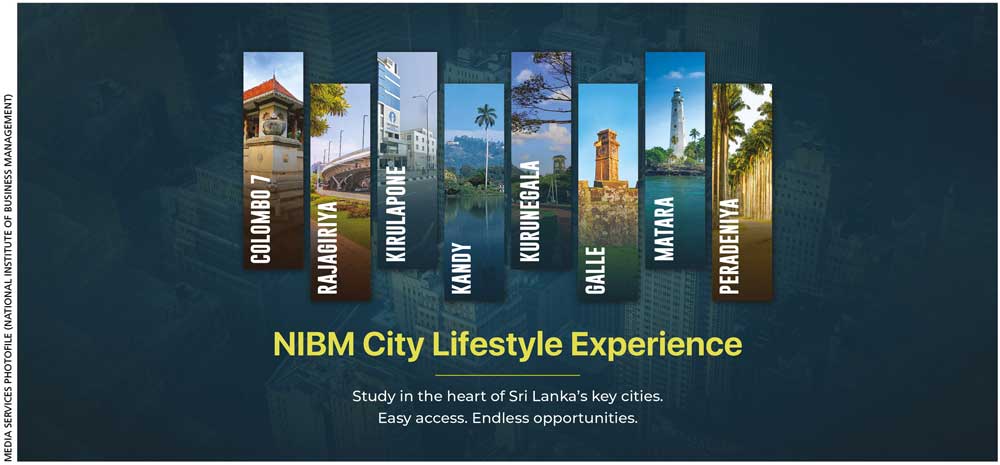
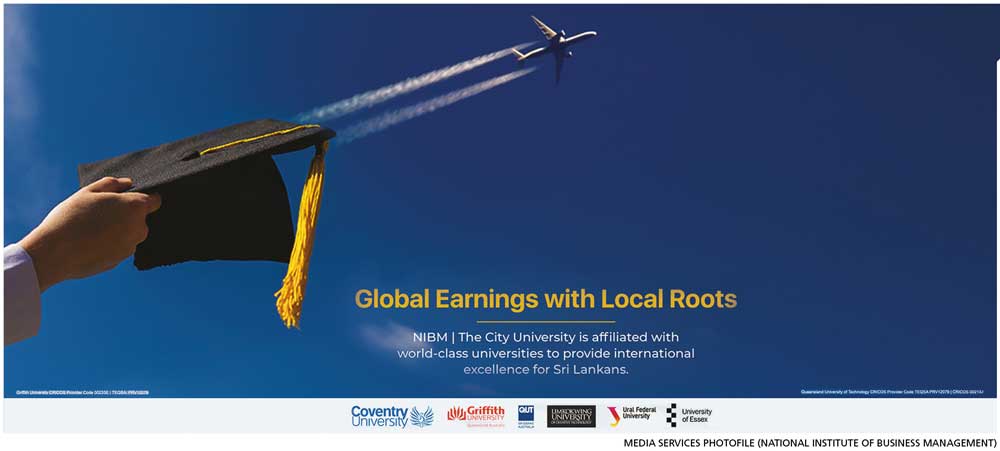
A: Some notable milestones include repositioning NIBM as The City University, offering a comprehensive learning experience in Sri Lanka; in addition setting up of NIBM NEO Ventures Hub at the Trace Expert City to develop opportunities to earn profitable startups with a degree; and expanding global academic partnerships including degree pathways with Coventry University and other internationally recognised institutions.
Moreover, introducing outcome based and industry driven curricula – ensuring graduates are prepared for modern workplaces through practical learning, internships, real world projects and industry mentorship; and elevating learner experience and access including improved learner support systems and greater availability of online resources are a few other milestones.
Q: Given the rapid advances in AI and other technologies, how is the modus operandi of customer service changing?
A: AI is transforming education significantly, from adaptive learning platforms to automated support systems and data driven academic insights. However, together with this transformation comes the responsibility to maintain transparency, ethical data use and learner trust.
At NIBM, we are increasingly shifting towards a service model that is both digitally efficient and ethically accountable. Our systems prioritise secure data handling, permission based analytics and transparent communication.
AI also enables us to provide faster, more personalised service while freeing our staff to focus on higher quality human interaction, academic mentorship and relationship building.
Q: How is the need for sustainability and ethical conduct shaping customer excellence today?
A: Customers – especially younger generations – expect educational institutions to demonstrate integrity, social responsibility and long-term value creation. Sustainability in the education sector goes beyond environmental practices. It includes sustainable learning outcomes, community development, ethical academic delivery and inclusivity.
At NIBM, we embed ethical practices in curriculum design, governance, institutional development and learner engagement. We aim to prepare graduates who contribute positively to society, industry and national development.
AI is transforming education significantly, from adaptive learning platforms to automated support systems and data driven academic insights
Our initiatives in mental health awareness, employability enhancement, digital inclusion and community outreach are examples of how customer excellence is increasingly aligned with ethical responsibility and societal impact.
Q: Are Gen Z consumers truly different from their predecessors?
A: Gen Z learners are fundamentally different in their approach to education and personal growth. They’re digital natives and are outcome driven, entrepreneurial and highly informed. They seek instant access and clarity of value in every service.
Unlike previous generations, Gen Z expects flexible learning that is hands-on, technology integrated and practical; institutions that offer purpose, not only credentials; continuous feedback, transparency and measurable progress; platforms that allow self-paced advancement and career acceleration; and the opportunity to innovate, build and express individuality.
The demand for micro credentials is increasing in their educational journeys.
Q: What are the challenges faced by your sector, in the context of customer excellence?
A: Rapid technological disruptions require continuous curriculum enhancement to ensure relevance, agility and alignment with future careers. Rising learner expectations mean institutions must invest in digital transformation, data driven insights and modern service delivery.
Increasing competition from global online learning providers has elevated the need to differentiate based on experience, value creation and employability outcomes. The need is to balance human touch with digital efficiency, ensuring technology enhances – not replaces – the mentoring and academic relationships at the core of education.
The economic pressures are on learners and families – making affordability, return on investment and access significantly more important than before.
- Telephone: 7321000
- Email: dg@nibm.lk
- Website: www.nibm.lk