
LAUNCH OF THE U L KADURUGAMUWA LEGACY SERIES
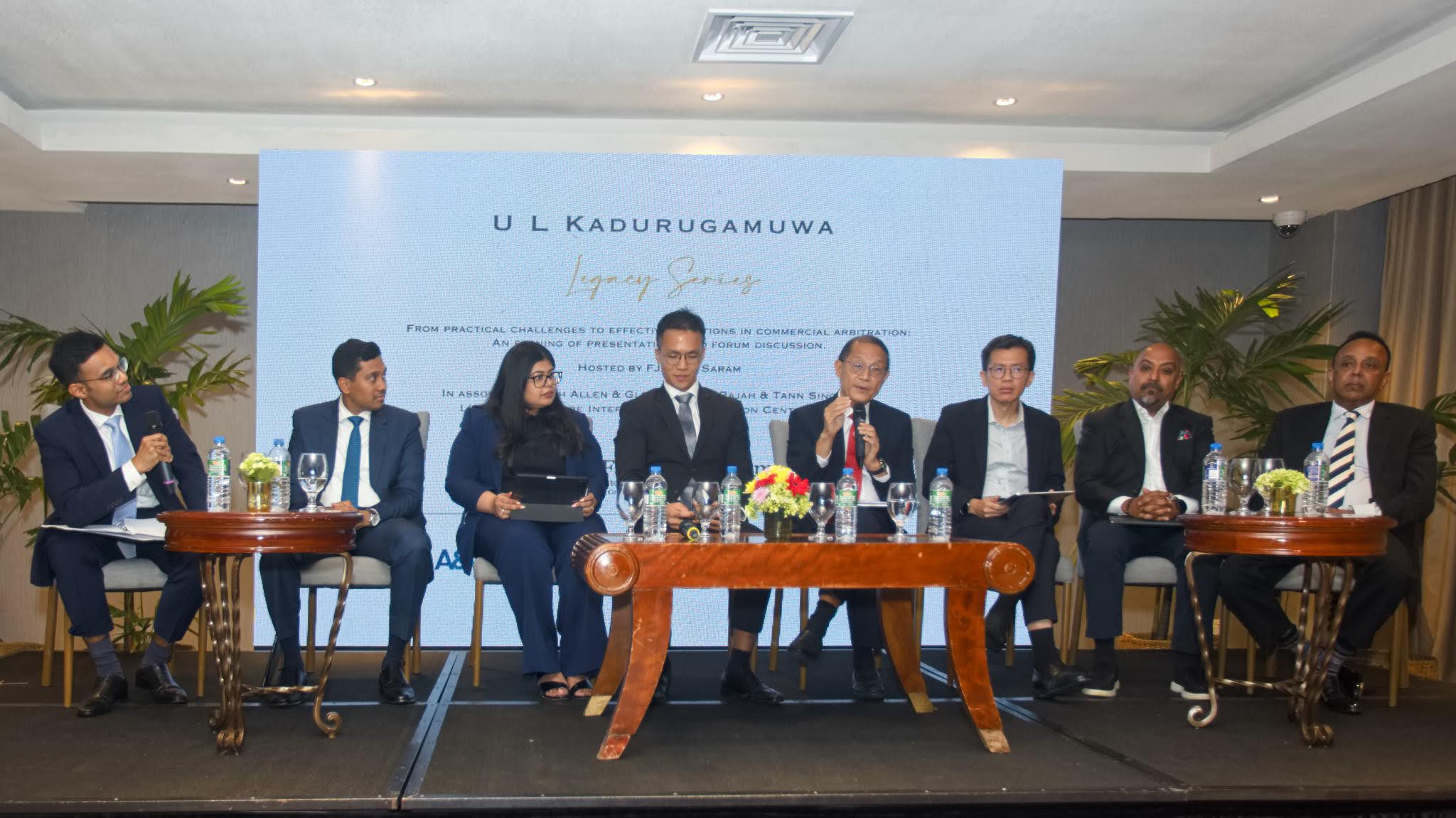
The U L Kadurugamuwa Legacy Series, a new thought leadership platform, was launched by FJ&G de Saram in its 185th anniversary year to honour the legacy of the late U. L. Kadurugamuwa, a former Precedent Partner of the firm.
The inaugural session, held at the Hilton Colombo, brought together members of the judiciary, leading practitioners, arbitrators, clients and other distinguished guests for an evening of discussion on “From Practical Challenges to Effective Solutions in Commercial Arbitration.”
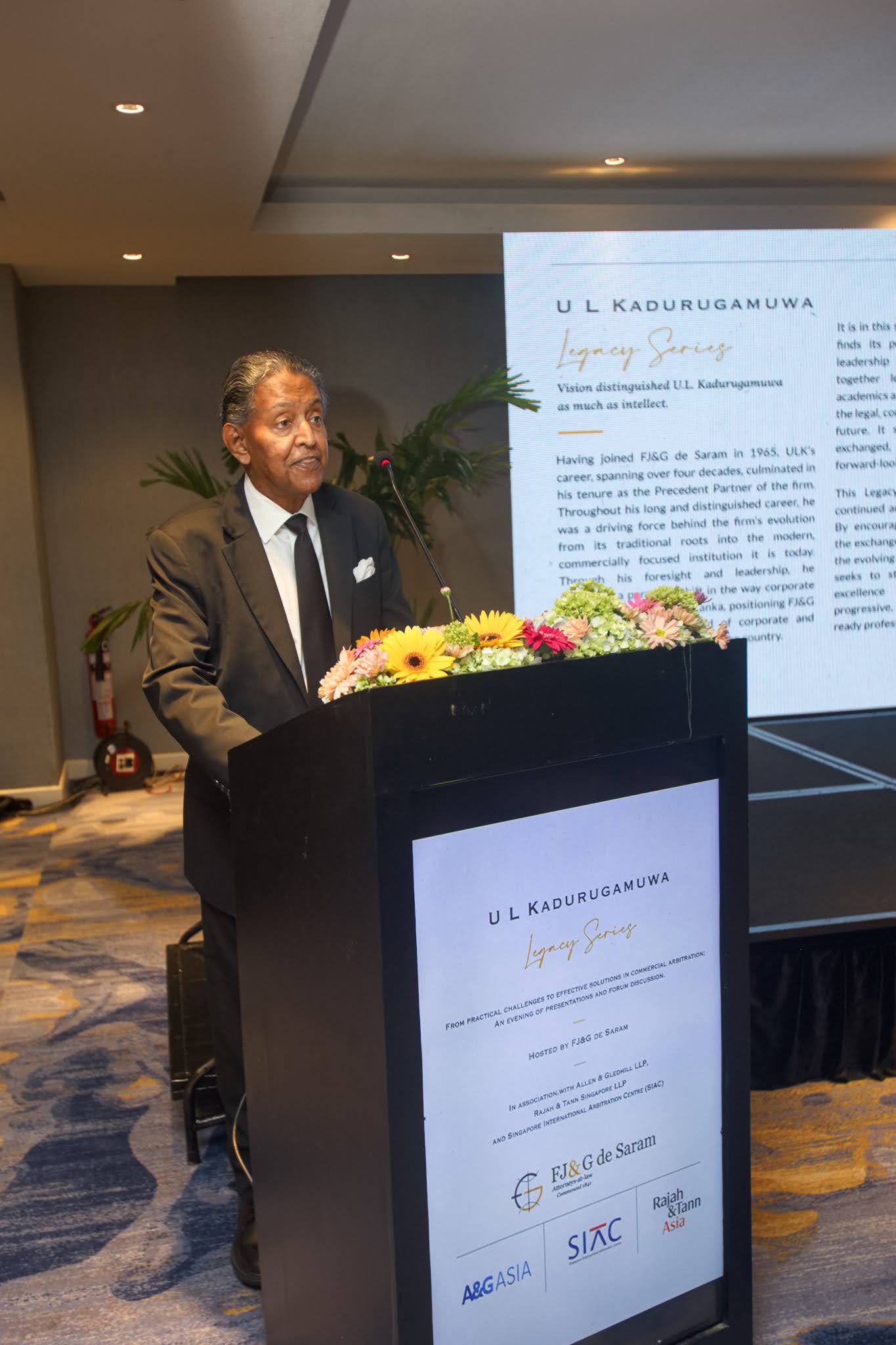
The event commenced with opening remarks by the firm’s Precedent Partner, Ayomi Aluwihare, followed by an address by the Guest of Honour, Dr. K. Kanag-Isvaran, President’s Counsel, who paid tribute to Mr. Kadurugamuwa’s outstanding contribution to the legal profession and to FJ&G de Saram.
Describing him as “a mentor and a guiding force”, Dr. Kanag-Isvaran observed that “the true teacher leaves behind a way of thinking, a standard of conduct, and a spirit of excellence that others carry forward”, adding that “this is the legacy that is being carried forward with its inauguration today.”
Dr. Kanag-Isvaran also highlighted Mr. Kadurugamuwa’s pioneering role in advancing alternative dispute resolution in Sri Lanka through his contributions to the establishment of the Institute for the Development of Commercial Law and Practice (ICLP), the enactment of the Arbitration Act No. 11 of 1995, and the establishment of both the ICLP Arbitration Centre and the International Alternate Dispute Resolution Centre (IADRC).
The inaugural session featured a distinguished panel of experts from Allen & Gledhill, Rajah & Tann, and the Singapore International Arbitration Centre (SIAC). The discussion provided valuable insights into emerging trends, practical challenges and effective strategies in commercial arbitration, with a particular focus on jurisdictional challenges in multi-contract disputes, transnational issue estoppel and the role of supervisory courts, and the growing significance of emergency arbitrators in addressing urgent applications for interim relief.

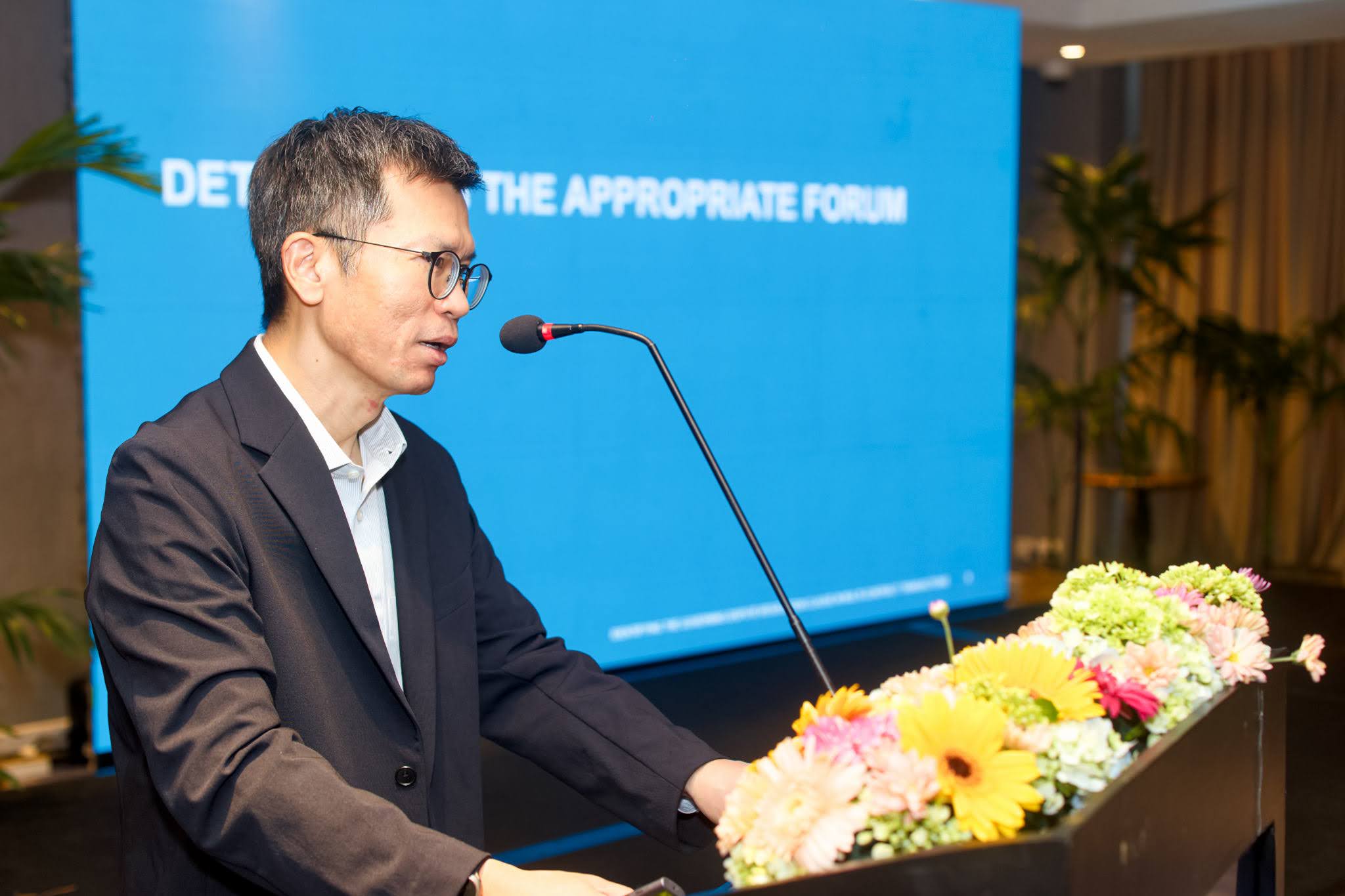
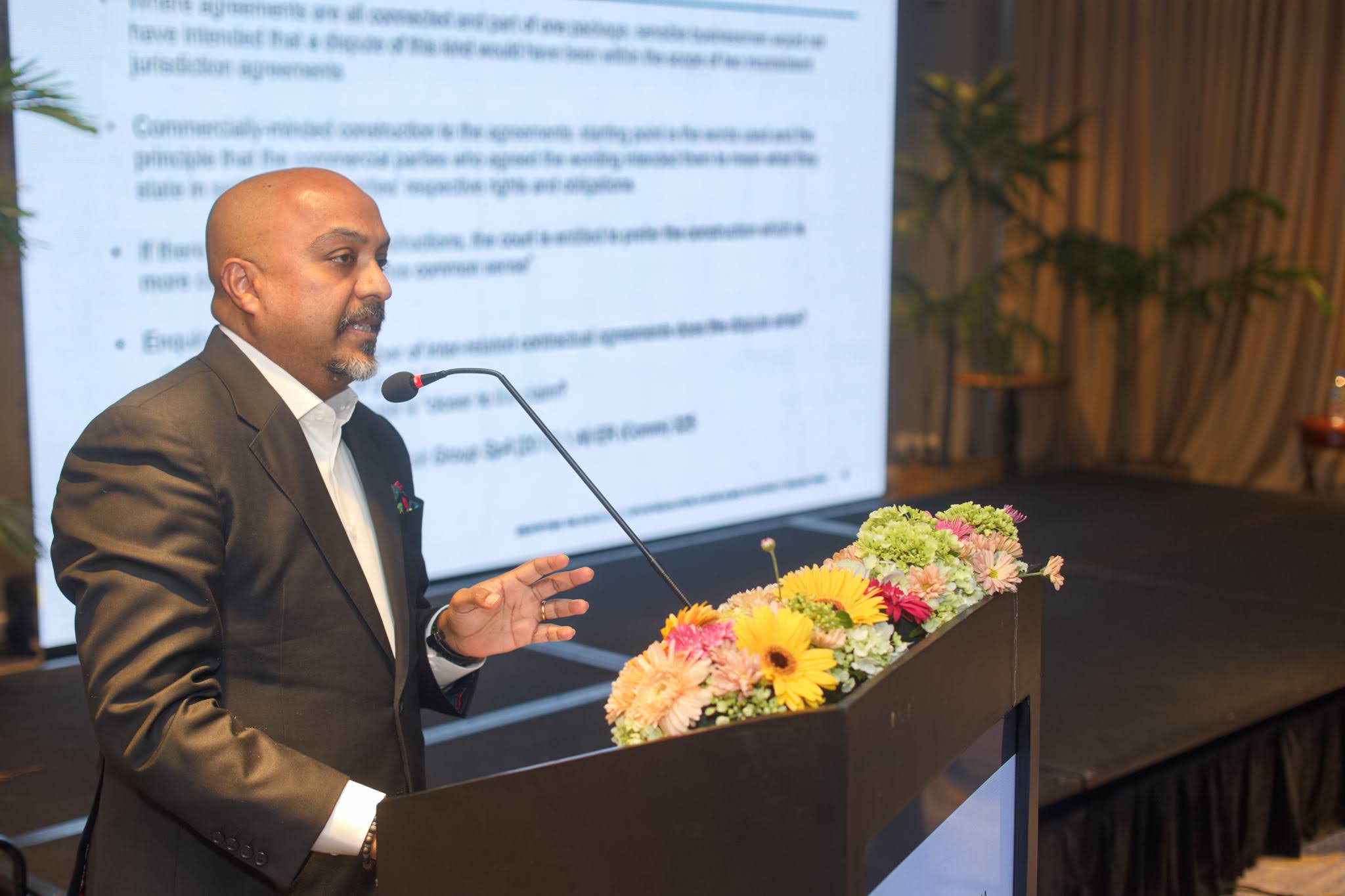
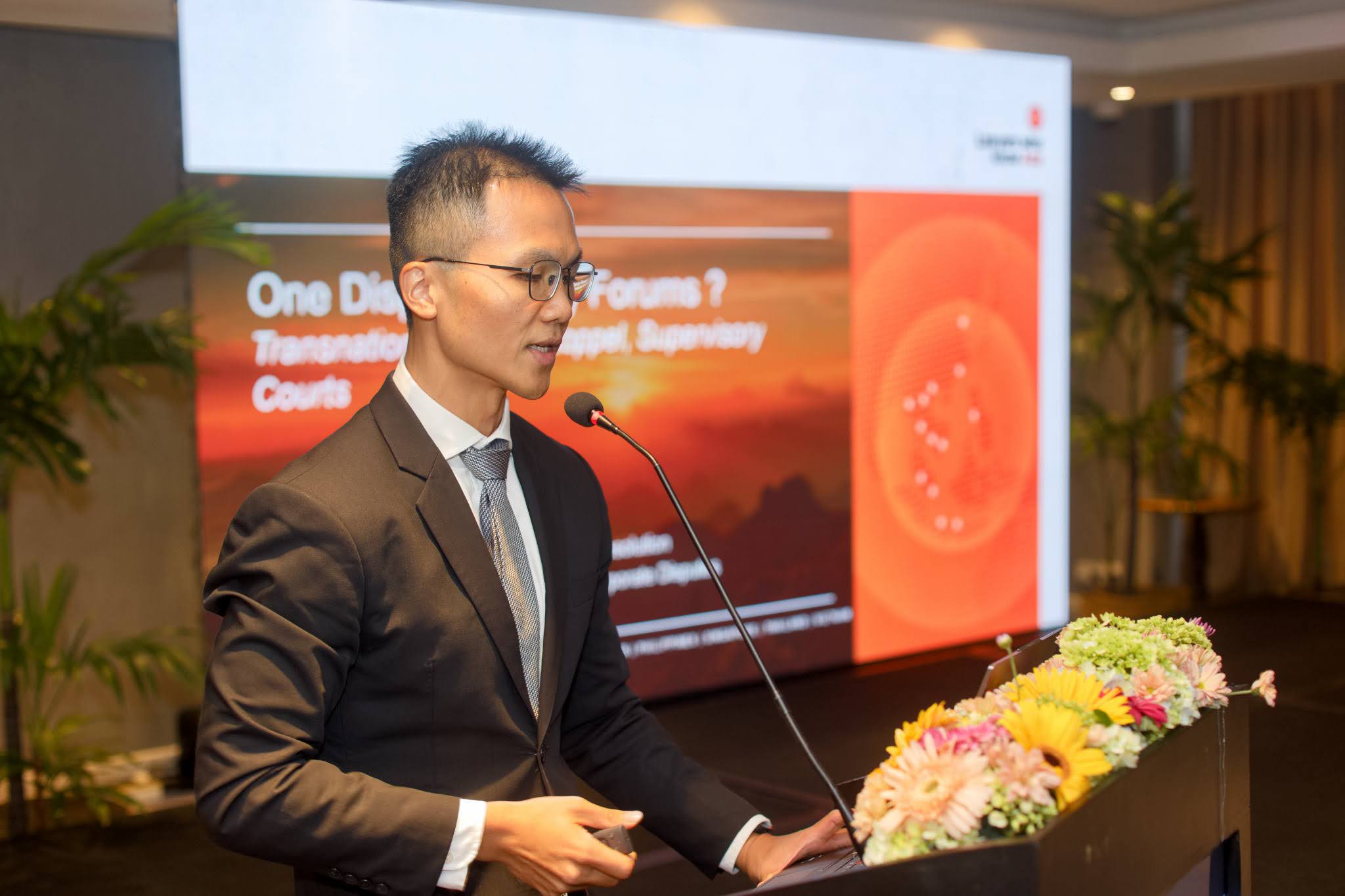
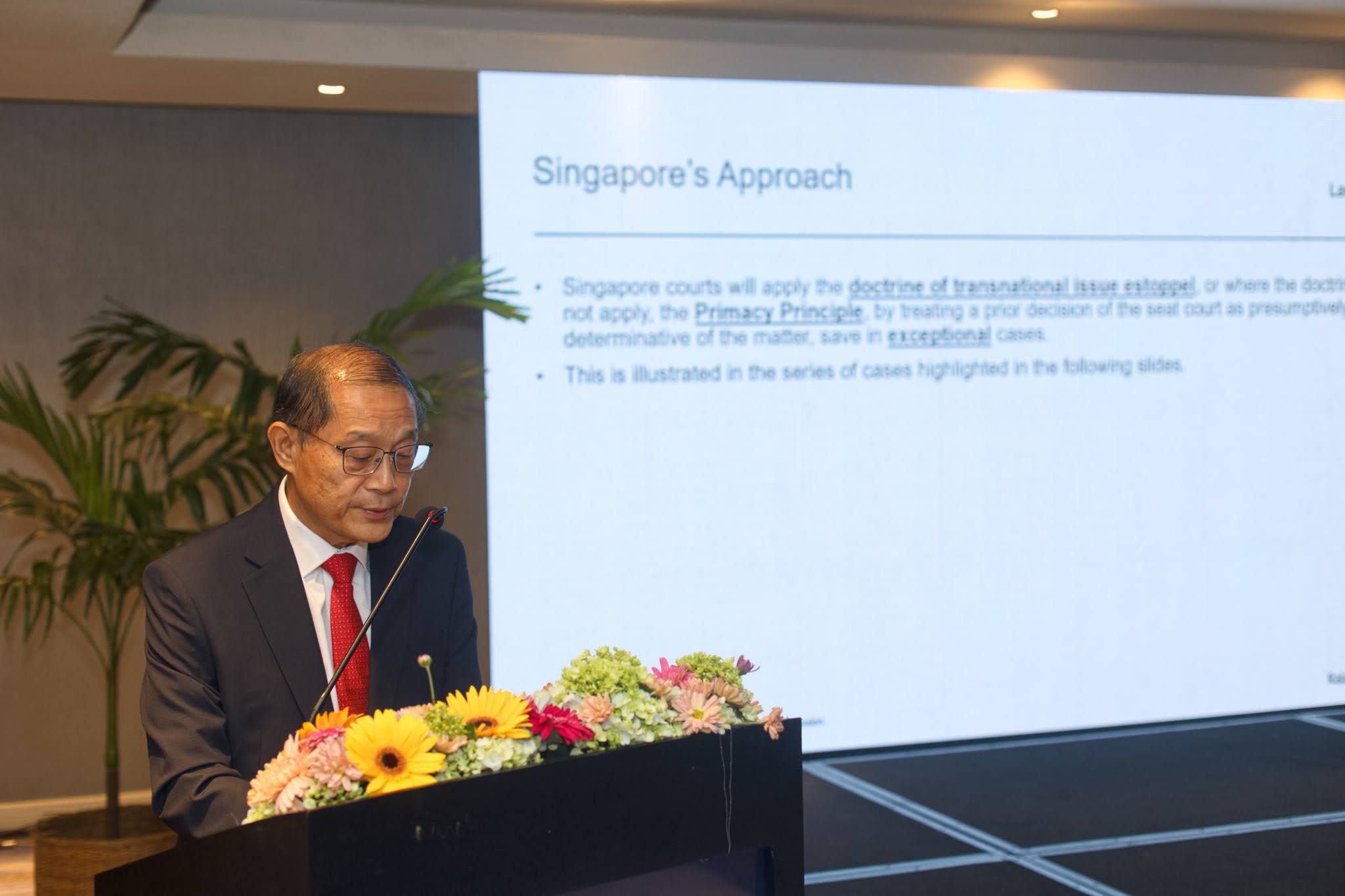

The first session focused on jurisdictional challenges in multi-contract transactions. Modern commercial deals rarely rest on a single agreement. Financing arrangements, shareholder agreements, supply contracts and services agreements often operate together as part of the same transaction. The discussion examined what happens when a dispute emerges and these contracts point to different dispute resolution mechanisms, or when only one contract contains an arbitration clause. Drawing on real-world cases, the session highlighted the risks of fragmented dispute resolution, parallel proceedings and inconsistent outcomes, underscoring the importance of carefully aligning dispute resolution provisions across all transaction documents from the outset.
Equally insightful was the session on Transnational Issue Estoppel and Supervisory Courts, which explored the critical role national courts continue to play in international arbitration. While arbitration is often viewed as a private dispute resolution process, courts remain central to its effectiveness. The discussion considered how courts supervise arbitrations seated within their jurisdictions, including challenges to arbitral awards, while also acting as the gateway for the recognition and enforcement of foreign awards. For businesses operating across borders, the session served as a reminder that a successful arbitration often depends not only on the tribunal’s decision, but also on how courts in different jurisdictions respond to it.
Representatives of SIAC provided an overview of the recently introduced SIAC Rules 2025, highlighting developments designed to enhance efficiency and responsiveness in commercial disputes. Particular attention was given to emergency arbitration, interim relief, preliminary determinations and the early dismissal of unmeritorious claims or defences. The presentation illustrated one of arbitration’s greatest advantages for businesses: flexibility. Parties are able to shape the procedure that best suits their commercial needs, while benefiting from institutional frameworks that are designed to deliver faster, more effective and commercially practical dispute resolution outcomes
The successful inaugural session marked the beginning of a long-term platform dedicated to advancing thought leadership and professional dialogue. The Series aims to continue convening leading practitioners and experts to explore emerging issues and contribute meaningfully to the development of the legal and business communities.