ASHRAFF ASSOCIATES HOSTS STRATEGIC RISK SYMPOSIUM FEATURING GLOBAL RISK EXPERT DR. DAVID RUBENS
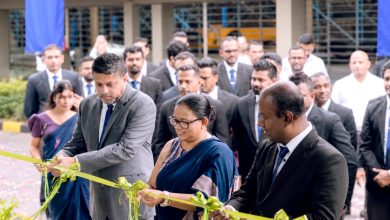
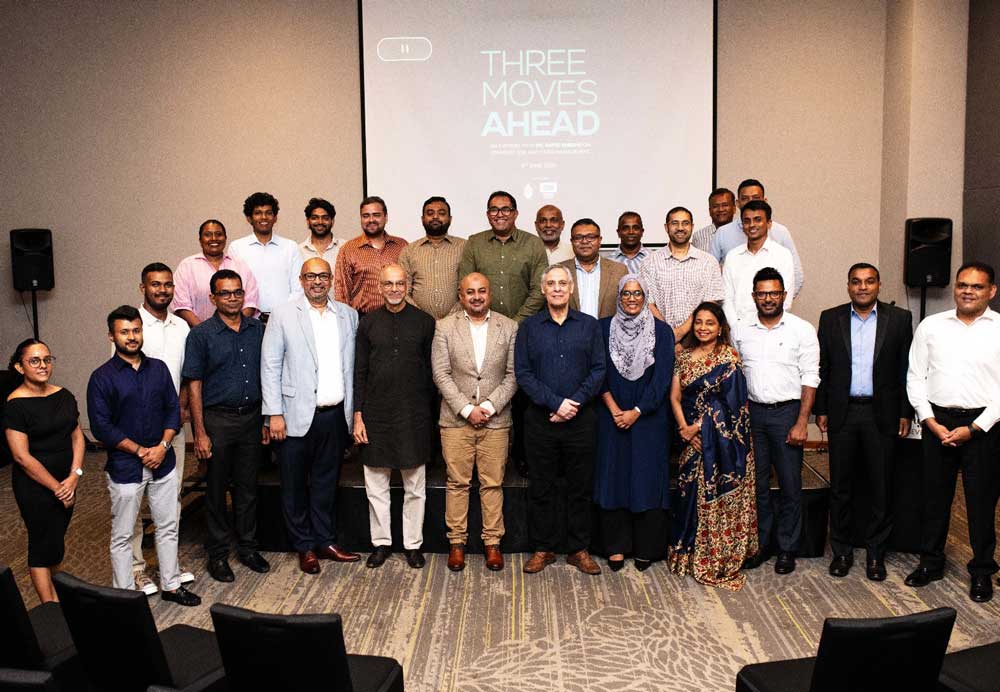
Colombo, Sri Lanka – June 2026 – Ashraff Associates recently hosted an exclusive symposium titled “Three Moves Ahead: A Discussion with Dr. David Rubens on Strategic Risk and Crisis Management” at Jetwing Colombo Seven, bringing together leaders from Sri Lanka’s public, private and professional sectors to examine the evolving landscape of risk, resilience and crisis management in an increasingly uncertain world.
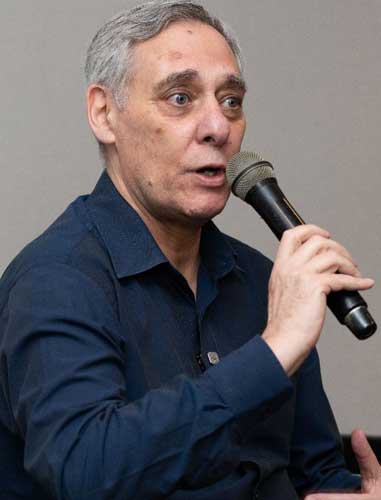
Moderated by Dr. Amjad Mohamed-Saleem, the event featured internationally recognised strategic risk specialist Dr. David Rubens, Executive Director of the Institute of Strategic Risk Management (ISRM), whose insights challenged conventional approaches to crisis management and organisational preparedness.
The discussion explored how traditional risk management models are becoming insufficient in a world characterised by geopolitical instability, technological disruption, societal vulnerabilities and unprecedented complexity. Dr. Rubens highlighted the need for organisations to move beyond crisis response and towards building adaptive resilience capable of withstanding emerging and often unpredictable challenges.
A key theme throughout the discussion was the distinction between “lessons identified” and “lessons learned,” emphasising that organisations often document lessons following a crisis but fail to institutionalise the changes required to improve future outcomes.
The symposium also examined how the global response to the COVID-19 pandemic exposed limitations in conventional crisis management approaches. Participants were encouraged to consider how future risks may emerge from areas that remain invisible today, particularly in the context of rapidly advancing technologies such as Artificial Intelligence.
Among the key takeaways from the discussion were:
– The importance of asking fundamental organisational questions during periods of disruption, including “Who are we?”, “What do we do?” and “What sort of organisation do we need to become in the future?”
– The need to build resilience as a strategic capability rather than relying solely on crisis response mechanisms.
– The growing importance of consequence management and understanding systemic vulnerabilities.
– The concept of “recovering forward” by using crises as opportunities to emerge stronger and more adaptive.
– The importance of fostering whole-of-society resilience through collaboration between government, business, professional bodies and communities.
– The recognition that organisations must prepare for risks that cannot yet be fully identified or predicted.
Speaking during the event, Dr. David Rubens said: “The challenge facing organisations today is not simply managing known risks. It is developing the ability to operate effectively in an increasingly complex environment where the most significant risks may not yet be visible. Resilience is no longer about returning to normal; it is about adapting, learning and recovering forward.”
Furthermore, he added, there is a need for strategic risk literacy and also understanding that it is not about implementing programs in silos but needing an interconnected approach to your crisis and risks management.
The event attracted a diverse audience comprising senior executives, policymakers, risk professionals, academics and business leaders, creating a platform for meaningful dialogue on the future of strategic risk management and organisational resilience in Sri Lanka.
As organisations worldwide navigate increasingly interconnected risks, the symposium underscored the importance of agility, preparedness and collaborative thinking as critical components of long-term sustainability and success.
About Dr. David Rubens
Dr. David Rubens, D.SyRM, CSyP, F.ISRM, is the Founder and Executive Director of the Institute of Strategic Risk Management (ISRM), a global professional body dedicated to advancing strategic risk, resilience and crisis management capabilities among practitioners, academics and policymakers. Widely recognised as a leading authority on the strategic management of complex risks and crisis environments, Dr. Rubens has advised governments, multinational organisations and senior leadership teams across Europe, the Middle East, Africa and Asia.
Holding a Doctorate in Security and Risk Management from the University of Portsmouth, his work focuses on decision-making in complex environments, organisational resilience, critical infrastructure protection and the management of large-scale crises. He has held academic appointments with leading international institutions, including the United Nations University for Peace European Centre for Peace and Development, and has lectured on strategic leadership, security management and crisis governance across multiple global programmes.
Dr. Rubens is the author of Strategic Risk and Crisis Management: A Handbook for Modelling and Managing Complex Risks and has been recognised internationally for his contributions to the security and risk profession, including being named the IFSEC Global Security Thought Leader of the Year. Through the ISRM’s global network, he continues to champion innovative approaches to resilience, complexity, preparedness and strategic risk management in an increasingly uncertain world.
Media Contact; Rukshica Perera
Email: rukshicap@gmail.com
Telephone: +94773515086