STATE OF THE NATION
TIMING AND JUSTICE ARE TWO SIDES OF A COIN
Wijith DeChickera looks back at recent arrests and yet looks forward to a future of greater peace with justice beyond mere politicking
In the theatre of politics, opinions swing wildly over crises near and far-off. Was the US in the right to nuke for regime change in Iran or a puppet on Israel’s agenda?
At home too – between the Easter Sunday attacks, a coal scandal, arrests and allegations of political witch-hunts – our collective attention oscillates between outrage and scepticism, demands for accountability and laments over realpolitik.
That mix of fear, frustration and suspicion is not unique to Sri Lanka. Yet, our history has taught us to read such moments with caution.
The recent arrest of retired Major General Suresh Sallay (a former state intelligence service chief) over the 2019 bombings rekindled not only memories of that apocalyptic day but concerns about timing and motive.
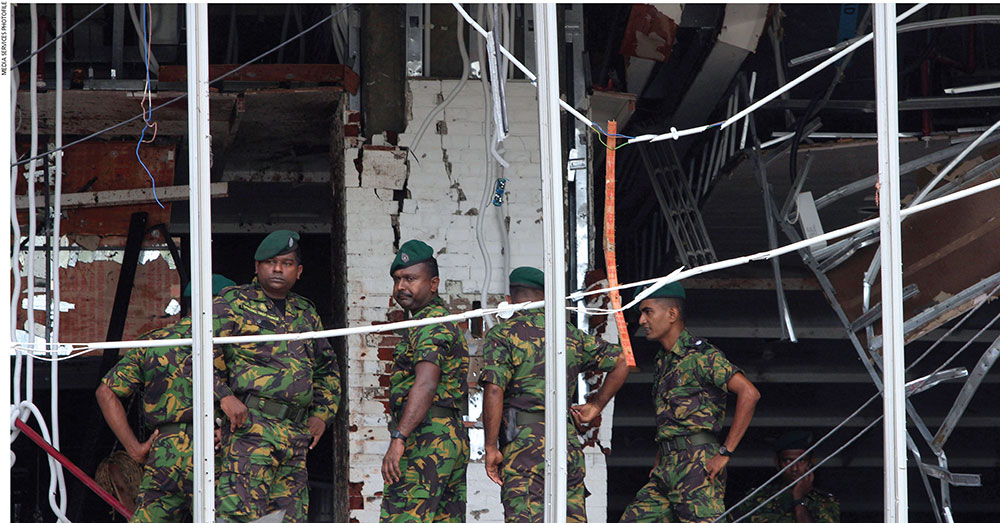
Black Easter – a bloody atrocity killing over 275 people and maiming many more – never shook off charges of governmental negligence and conspiracy theories about the complicity of key political actors.
The arrest under the Prevention of Terrorism Act (PTA) was framed by the Criminal Investigation Department (CID) as a step towards accountability under the National People’s Power (NPP) government, which swept into power on the back of promises to bring the perpetrators of the carnage to justice.
Yet, in the court of public opinion, questions loom large: is this a genuine pursuit of justice or an opportunistic diversion from political headwinds unfavourable to an incumbent administration under pressure?
Such considerations are hardly new in Sri Lanka’s sociopolitical ecosystem. They are an echo of earlier epochs when prosecutions were expedited not as instruments of truth but tools of political messaging.
Even the Batalanda Commission report of the 1990s – on unlawful detention and torture during the 1987-1989 Janatha Vimukthi Peramuna (JVP) insurrection – languished in limbo for decades until it was revived in recent discourse at a politically sensitive time for the JVP led government, then newly ensconced in power.
Critics saw it less as closure – a consummation devoutly to be wished for scores of families who lost loved ones during the implosive southern holocaust – than as a lever in contemporary political rivalries. Proponents of the political move insisted it was a long overdue reckoning.
One need not romanticise violent rebellions against state authority – even if it is authoritarian – to recognise that Sri Lanka’s political narrative is a tangled web of accountability in the present, rewriting the past and opportunistically postponing judgement day for the future.
The JVP, rising from the crucible of an insurgency in 1971 and a latter-day insurrection, was successively proscribed, decommissioned, co-opted and mainstreamed into electoral politics – a precarious journey fraught with accusations, counter accusations and claims of historical grievance.
Fast forward to today’s milieu… and the mendacity is more subtle. Critics of the JVP led NPP government’s approach to high profile legal action taken (a slew of cases and an unprecedented number of prosecutions of past crimes for pernicious corruption) observe that timing matters as much as substance.
And whether it’s Sallay’s arrest, corruption probes against erstwhile state officials and political appointees or the handling of other scandals threatening to tar the JVP, there is an uneasy sense that something is not right.
Moves to prosecute past crimes and selected members of previous regimes appear calibrated to deflect unwelcome attention from contemporary controversies – from skeletons (or lack of backbone as well a diploma) in the a short-lived speaker’s closet to prime ministerial faux-pas over a plethora of admittedly minor political misadventures.
The jury is still out as to whether such prosecutorial flamboyance is to pre-empt political opponents from regaining the upper hand, stymie the court of public opinion from delivering a perhaps premature judgement against a regime slowly growing out of favour in the face of policy fiascos or simply due process serving a clear judicial purpose.
Such perceptions erode trust in institutions long beleaguered by cynical manipulation, feeding the public’s cynicism that makes politics seems transactional rather than principled.
Yet, to dismiss all such efforts and initiatives on the part of the government as political theatre would be equally misleading and may even be doubly unfortunate for the common good.
In a polity accustomed to impunity, where elite circles have operated above the rule of law for decades – and in the case of dynasties, for generations – even the threat of accountability can be disruptive.
The deeper question is not whether prosecutions occur but whether they constitute a consistent and transparent commitment to justice. In the long arc of Sri Lankan politics, accountability has often bent towards the politically expedient – a pattern that resonates whether the actors are presidents, field marshals or reformed rebels.
As the nation marks the seventh anniversary of the Easter Sunday massacre this month, the test for the NPP – if it is sincere in its reformist claims – is to demonstrate that its pursuit of past wrongs is governed by evidence, due process and a true passion for peace with justice… not score settling or a lame attempt to cover up lamentable lacunae.
The test for us as a polity is whom we choose to cheer.