YOUTH FORUM
Compiled by Nicola Jayasundera
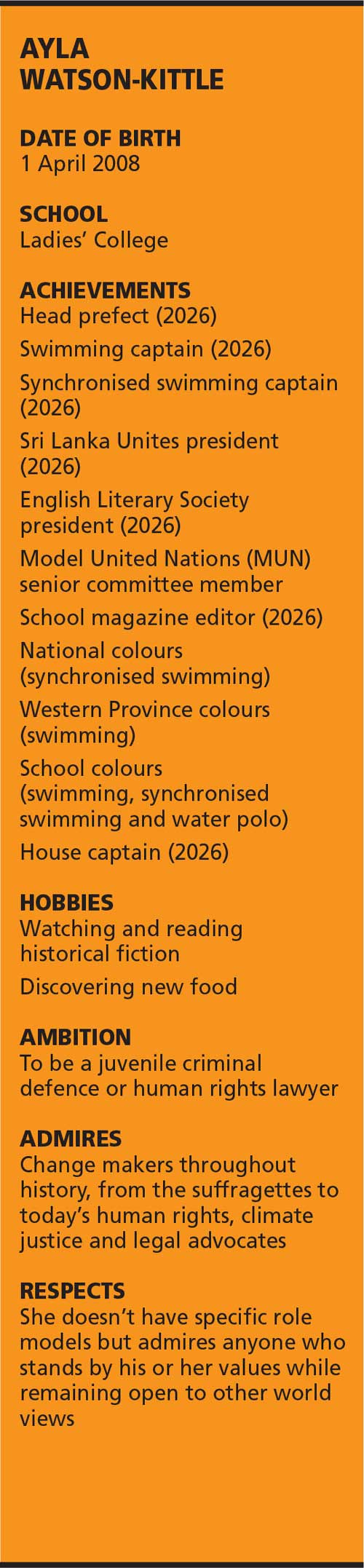
A CLARION CALL FOR CHANGE
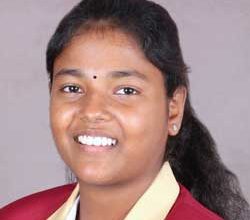
Ayla Watson-Kittle weighs the pros and cons of the nation state today

Q: What’s the good, the bad and the ugly in Sri Lanka?
A: The good is definitely the attitude and resilience of our people. The country has faced crisis after crisis, yet remained strong and hopeful. Our hospitality, openness and positive attitude towards everyone – from fellow Sri Lankans to visitors – are integral to the culture and qualities I am proud of.
The humanity and empathy of our people, and their tendency to prioritise wellbeing and happiness over profit, are admirable and offer lessons to many societies. The open-mindedness and growing flexibility of Sri Lankan youth also bode well for the future.
Meanwhile, the bad is the hand out culture prevalent in Sri Lanka, along with a general lack of initiative and drive to better oneself and the country. This laid-back attitude may seem positive but often results in people doing the bare minimum, hindering development and slowing progress.
And the ugly is the high level of corruption rooted in every level of society – from government to schools – with bribery, nepotism and underhandedness colouring all segments of society. It has become so accepted that corruption is seen as the status quo with little done to oppose it.
Although tensions from the conflict are slowly fading in more urbanised areas, the hurt caused has never been truly addressed by any side. Many wounds remain, limiting reconciliation.
Q: And what are the challenges facing the nation at this time?
A: A major challenge is the lack of enthusiasm among youth and those entering the local labour force with many opting to work overseas. This is causing Sri Lanka to lose talented individuals. A long held inferiority complex with many believing the country’s education system and job opportunities are substandard contributes to this.
Disappointing governments, the drawn-out economic crisis and continued corruption have also diminished enthusiasm towards politics. Many are becoming resigned to the status quo, which could be harmful if political apathy continues to affect the nation’s youth.
A major challenge is the lack of enthusiasm among youth and those entering the local labour force
Q: So what are the challenges facing young people in Sri Lanka today?
A: Although the country has free education, access to quality teaching and higher education remains limited. With only a few highly competitive universities, many youth lack the opportunities necessary for progress.
The education system, though advanced in some fields such as medicine, focusses heavily on rote memorisation rather than independent thinking and problem solving, leaving many key skills underdeveloped.
Q: And how can our youth contribute to national progress?
A:The first step is education. Increasing general knowledge, awareness of domestic and global issues, and political literacy islandwide – from the city to rural areas – will be key.
Sri Lankan youth have grown up in a relatively peaceful time, away from the divisions of the war years. This has created a more open-minded and united generation that can help drive change, educate the older generation and use its franchise wisely.
Q: What type of leadership do you think the world needs right now?
A:The world needsleaders who truly act as spokespeople for their citizens, prioritising human rights and international law over profit based geopolitics.
Q: How has the advent of AI and technology shaped your view of the future?
A:Artificial intelligence and rapid technological progress are a two-sided coin. Easier access to information and support with daily tasks are definite positives, and AI can be used in powerful ways.
However, growing overreliance on AI could undermine creativity and independent thinking, which is dangerous for the future. Job losses are another issue, making people feel less secure in many aspects of life.
Q: As a young person, what are your hopes for and concerns about the future?
A: My hope is for a change in political systems, in Sri Lanka and worldwide, with people understanding root causes of issues and addressing systematic failures, rather than encouraging divisions and victim blaming.
My concerns include the breakdown of international law including human rights and respect for sovereignty; the loss of independent thought due to reliance on AI; the possibility of conflict over dwindling natural resources; and the urgent unresolved issue of climate change.
Q: And last but not least, if you could launch a project or movement in Sri Lanka, what would it be – and why?
A: I would launch a movement to raise awareness about the sexual abuse prevalent in rural areas, lack of resources available to victims and inadequacy of the judicial system. This is an issue with long-lasting impacts, which are often overlooked.