
TESTIN RESILIENCE
willingness to be told it is wrong
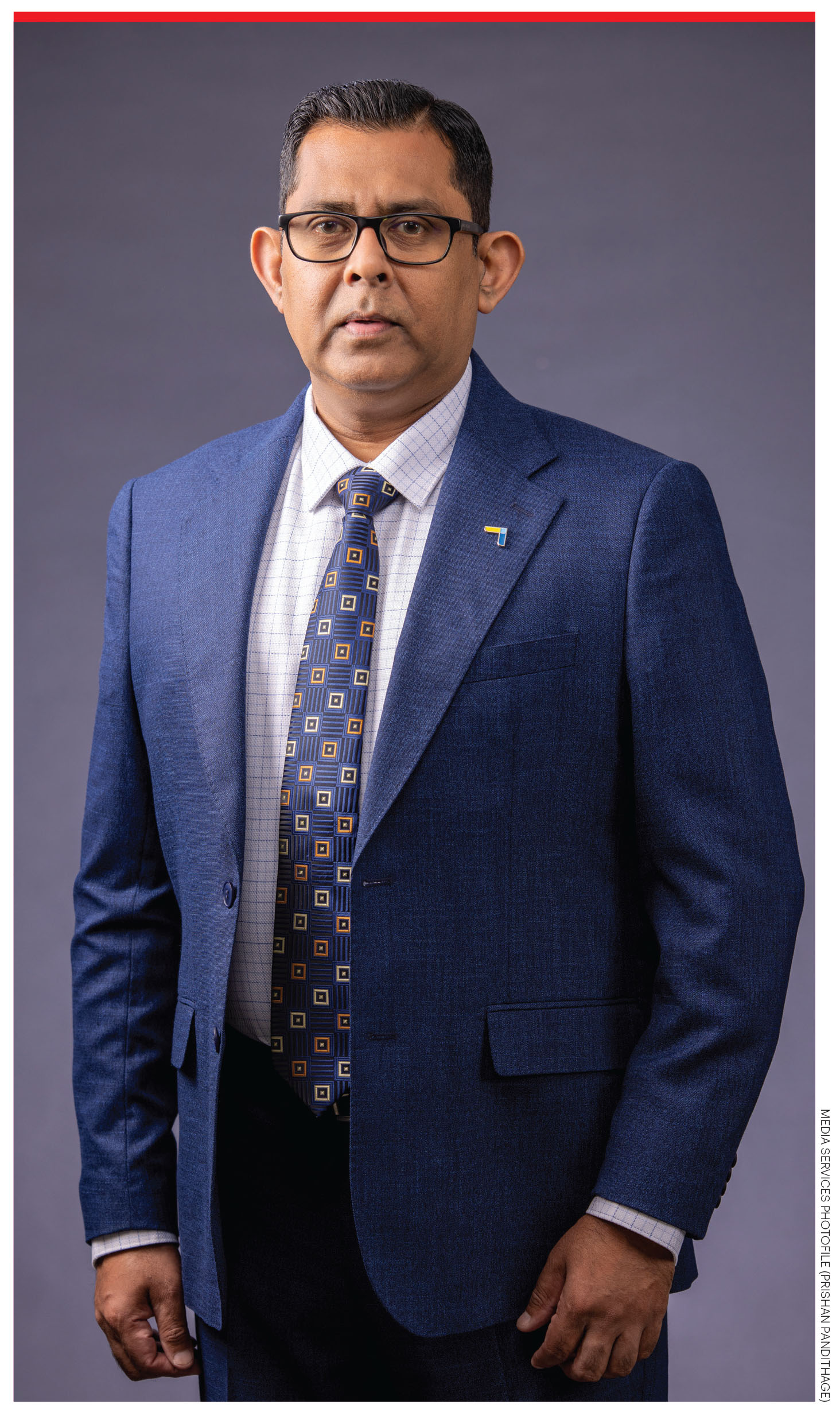
Damith Pallewatte
Q: Recent incidents have raised questions about whether local banks are keeping pace with increasingly sophisticated internal and external threats. Where do you believe the most serious vulnerabilities lie today?
A: The most serious vulnerability in any institution is not a system; it is the distance between a control that exists on paper and one that has been tested under pressure.
That distance is invisible until something goes wrong; it is the gap I spend most of my time trying to close.
Across the sector, that gap tends to be widest in three places: the human layer, because people can be manipulated in ways that systems cannot; the extended perimeter, because we are now only as strong as the partners and providers we connect to; and detection speed, because the damage from any lapse is a function of how long it runs undetected.
The vulnerability that concerns me the most is not the one I can name. It is the one we have not yet thought to test.
Q: Banks frequently invest in advanced cybersecurity systems, yet technology alone cannot prevent every lapse. How should institutions balance technological safeguards with human oversight and accountability?
A: The balance begins with recognising the capabilities and limitations of both. Neither can serve as a substitute for the other and institutions get into trouble when they assume otherwise.
You can have the best cutting-edge technology and still face systemic failures if nobody in the organisation is empowered or willing to escalate what the tools are telling them. Conversely, no amount of human diligence can monitor the transaction volumes a modern bank processes.

In practice, this comes down to three things.
First, ownership. A control without a named owner is an aspiration, not a control. Second, independence.
The second and third lines of defence – risk and internal audit – are only valuable if they have the standing to be genuinely unwelcome in a room. If assurance functions are structurally polite, you have the appearance of oversight without the substance.

Third and most important, is whether an organisation can hear bad news. Every significant control failure I have studied anywhere in the world involved someone who had suspected something earlier. The question is whether the institution made it safe and quick for that person to say so.
Having spent much of my career in risk before taking on this role, my conviction is simple: no control is stronger than an organisation’s willingness to be told it is wrong.
Q: When fraud is undetected over an extended period, does this point to a failure of technology, internal controls, governance or organisational culture?
A: It would be inappropriate to comment on any specific institution or matter, particularly where investigations are ongoing.
But speaking generally, the framing of the question assumes these are four separate things – but they aren’t.
Technology, controls and governance are the architecture. Culture determines whether the architecture is used as designed or quietly worked around because somebody is in a hurry.
No amount of human diligence can monitor the transaction volumes a modern bank processes
So the honest answer is that prolonged, undetected activity is almost never a single point failure. It is a sequence of small accommodations, each of which seemed reasonable.
The metric I’d encourage the sector to focus on is detection latency, meaning the time between an event occurring and the institution becoming aware of it. In the lending business, we call this ‘distance to default,’ where early warning systems (EWS) play a meaningful role in detection.

A mature institution does not claim that nothing will ever happen. It measures how quickly it would find out and works deliberately to shorten that interval.
Q: Banks are becoming increasingly interconnected through digital payment platforms, fintech partnerships and third party service providers. Does this interdependence create systemic vulnerabilities that the sector has yet to address adequately in the interest of customers?
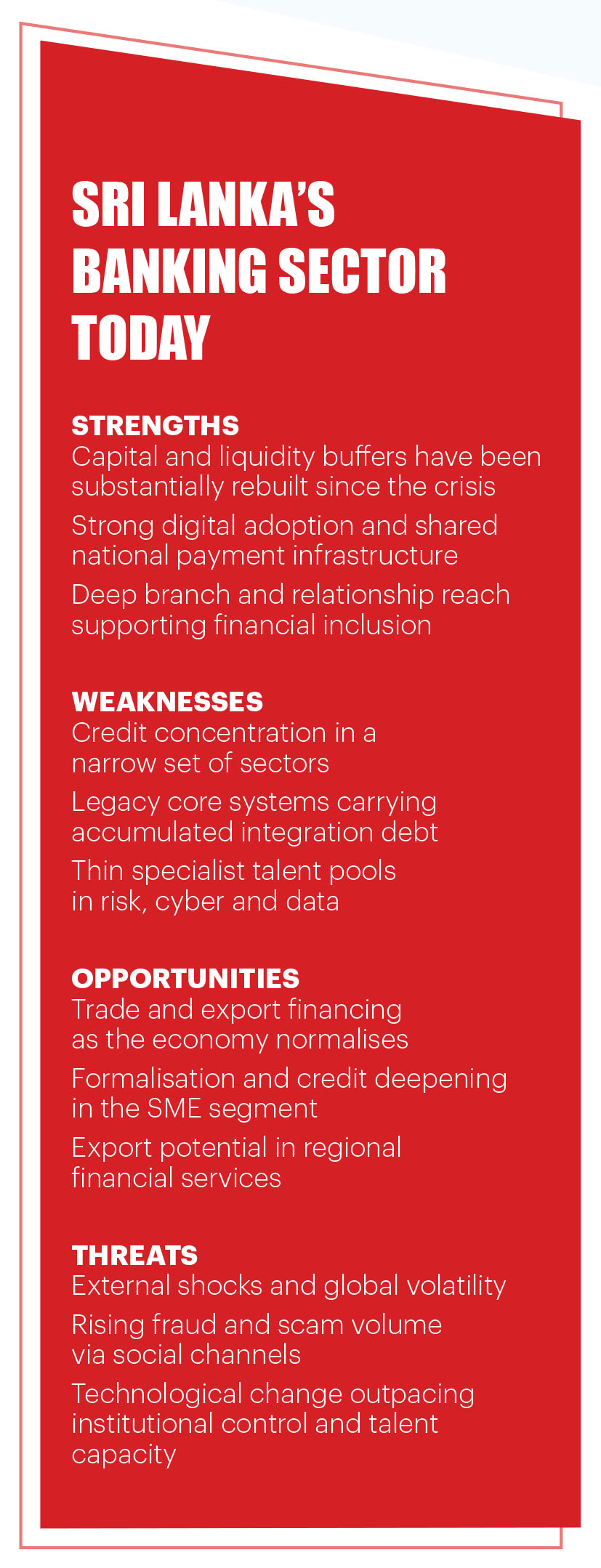
A: Interdependence, by its nature, creates new vulnerabilities. And the interaction of multiple complex systems in an interdependent system means that regardless of how much we are able to invest in strengthening systems, there will always be other black swan events around the corner that could still create challenges.
Interconnection means your risk perimeter is no longer your own balance sheet; it is your slowest counterparty.
That is not an argument against interconnection. Shared payment infrastructure has been extremely good for Sri Lankan consumers by lowering costs, extending reach and bringing people who were previously outside the formal financial system into it. But this does mean that risk is now a shared asset and cannot be managed institution by institution.
There are three things the sector should do collectively – i.e. share fraud intelligence in something close to real time so that a pattern detected at one bank becomes a defence at every bank the same day; agree on common minimum standards for onboarding and monitoring third party providers so that the weakest due diligence in the market does not become everyone’s exposure; and run joint resilience exercises… because we will never respond together under pressure if we have never practised together.
We compete on products, service and price; we should not compete on safety. Sri Lanka’s scale is genuinely an advantage here. A market this size can coordinate faster than much larger markets – we should capitalise on that.

Q: Cybersecurity is often deem-ed the responsibility of tech teams. What role should the boards and senior management of banks play, in understanding, testing and strengthening cyber resilience?
A: Treating cyber as a technology subject is the single most common governance error in banking globally. It is not a technology subject; it’s a business continuity and at the extreme, a solvency subject. That places it squarely with the board.
Treating cyber as a technology subject is the single most common governance error in banking globally
Directors do not need to understand the nuances of the technical architecture. They need to be able to ask the following questions and understand the answers: What would hurt us most? How would we know it was happening? How quickly could we recover? Who has independently tested that answer recently?
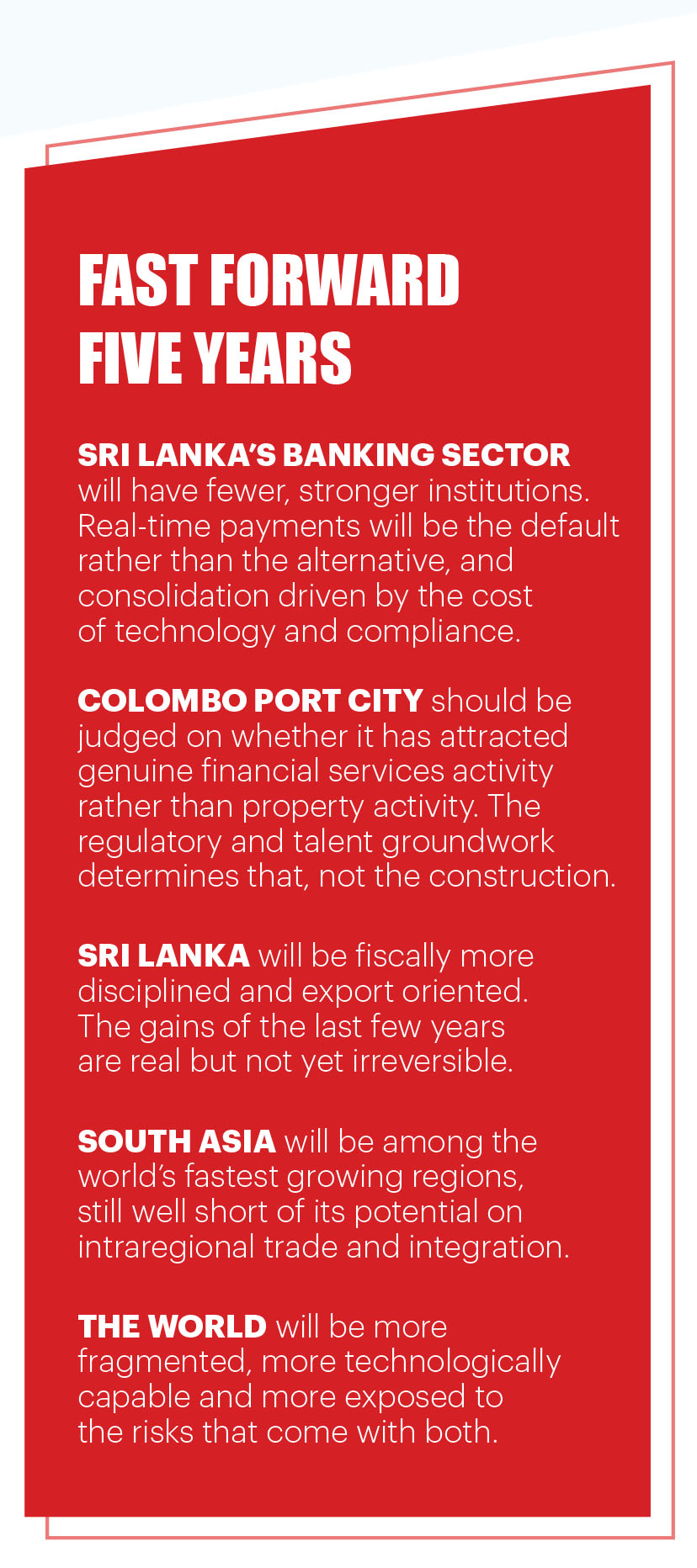
The shift I would encourage is from reporting to testing. A dashboard that is entirely green is not assurance; it is often just a well designed dashboard. Assurance comes from somebody deliberately trying to break the thing and reporting honestly on what they found.
Boards also set the tone in a way no policy document can. When a board consistently rewards the person who surfaces a problem rather than the person who reports a clean quarter, that preference travels through the organisation faster than any training programme.
When a customer banks with us, they are trusting us with their hard-earned finances and we havea strict obligation to protect them
Senior management is the team that experiences a disruption first while the board largely sees it through reporting. Management should therefore invest in the capability to deploy countermeasures quickly when an incident occurs and the two must always remain closely connected.
Q: Customers are usually told to safeguard passwords and ignore suspicious links. But where should the responsibility ultimately lie when a customer loses money through increasingly sophisticated fraud?
A: When a customer banks with us, they are trusting us with their hard-earned finances and we have a strict obligation to protect them. That obligation is also clearly set out by our regulator and we accept it fully. Nothing I say next qualifies that.
But your question, as it has been posed, frames this issue as a dispute between a bank and its customers, which it isn’t.

There is a third party in the scenario you describe and they’re actively committing a crime. These are organised operations deliberately targeting people who trust their bank and are often elderly or unfamiliar with digital channels. Ultimate responsibility rests with them and we should keep saying so.
I would also gently challenge the word ‘sophisticated.’
Trust and innovation do not have to be mutually exclusive
The deception itself has barely changed in 20 years. Scammers typically seek to manufacture urgency and then they request information or a payment. They use what they obtain to impersonate the customer and drain his or her funds, either directly or indirectly. That is the same playbook it has always been.
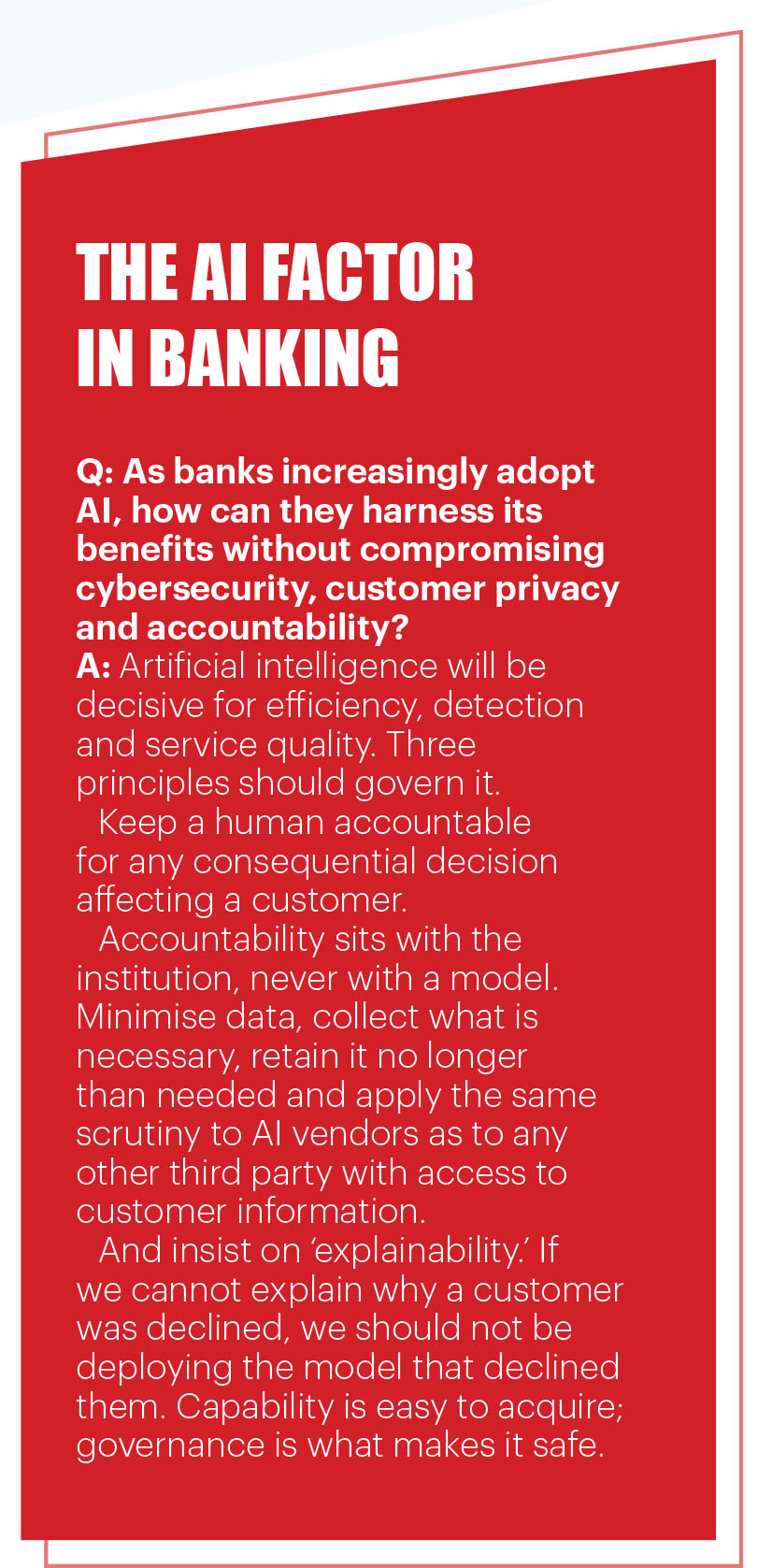
What has changed is distribution.
Tools that make credible deception cheap and scalable have arrived considerably faster than the guardrails around them, and the platforms carrying these approaches – social media in particular – bear real responsibility for what they distribute.
The sophistication is in the delivery, not the deception.
This is why no single party can solve this issue. Banks must invest and support affected customers where we fall short. Regulators and law enforcement must pursue perpetrators. Platforms and telecommunications providers must take responsibility for what moves across their networks. Customers must guard credentials that no legitimate institution will ever ask for. And given that these networks operate across borders, this will eventually require cooperation between states.
Q: You have said that modern banks must enable trust as well as innovation. Have recent lapses shown that the sector has sometimes pursued digital innovation faster than it has strengthened the controls needed to sustain trust among customers?
A: Trust and innovation do not have to be mutually exclusive.
In fact, innovation done correctly leads to reliable, consistent and secure services. Otherwise, those services can never be trusted and without trust, they can never be considered true innovation in the first place.

In most industries, trust is a constraint on how fast you can move. In banking, it is the product. A payment that does not settle, a balance that cannot be relied upon, a channel that cannot be trusted… These are not innovations with a control problem; they’re failures.
Where I accept the challenge is here: across the sector globally, channel expansion has at times moved faster than control maturity. New products, new partners and new interfaces have sometimes been launched with the control capability treated as a subsequent work stream rather than a precondition.
Where I accept the challenge is here: across the sector globally, channel expansion has at times moved faster than control maturity
The discipline is to make control capability a gate rather than a follow-up.
Can we monitor this? Can we detect misuse of it? Can we reverse it?
If the answer to any of these questions is ‘not yet,’ then we’re not ready to launch, however commercially attractive the proposition is. That is slower – it is also the only version of innovation that compounds rather than erodes.