STATE OF THE NATION

VIEWPOINTS
BETWEEN A RECOVERY AND REPEATED CRISES
Wijith DeChickera notes policy rates as much as fuel prices at the pump fluctuate in a slipstream that offers no small quantum of turbulence
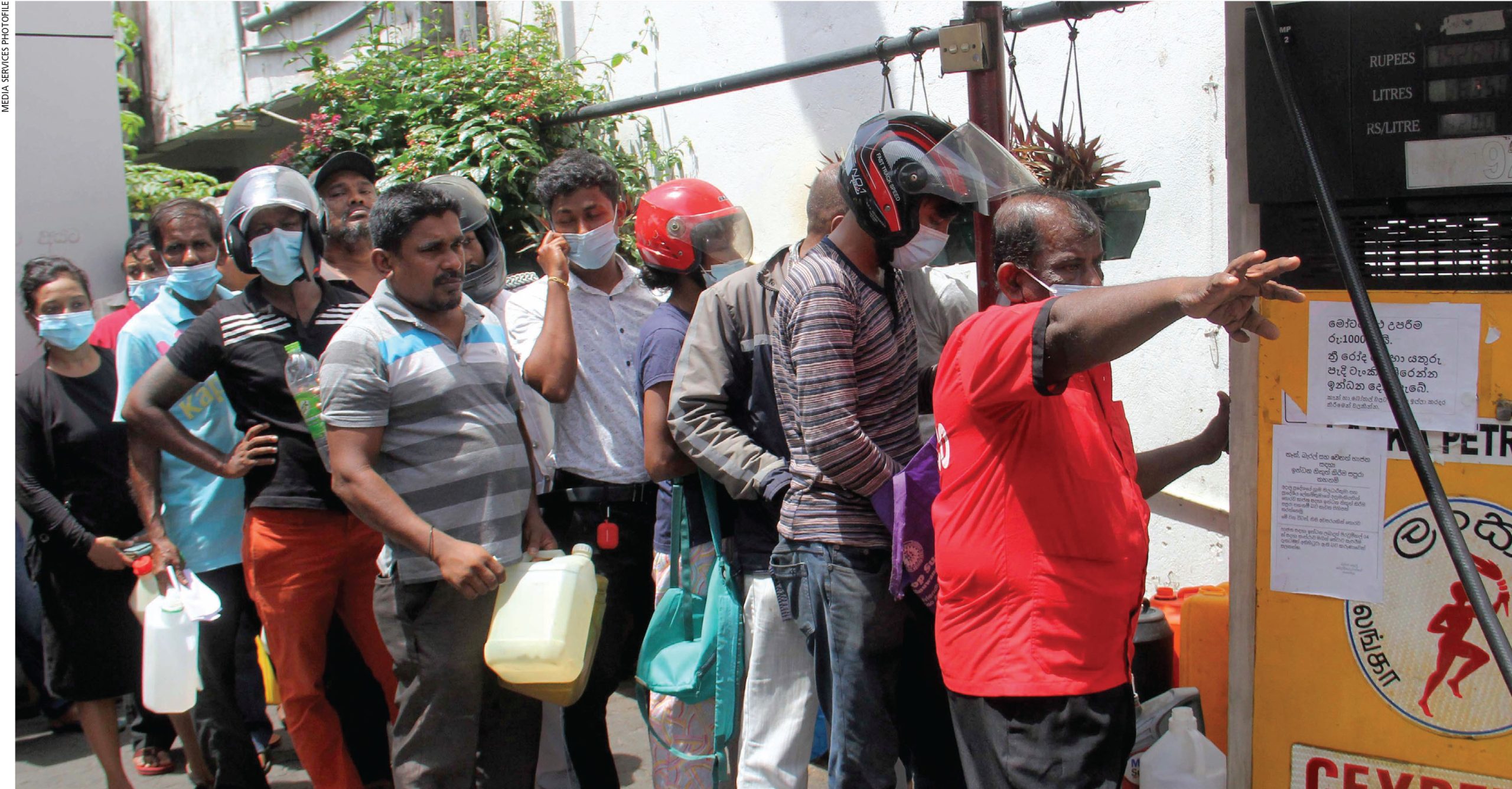
Sri Lanka’s national pastime – besides cricket, complaining bitterly and queuing for fuel – is recovering from one national disaster after another… in time for the next.
Today, our island resembles a patient discharged from the ICU who has barely sat down with the cup that cheers before somebody announces ‘one more thing – another small complication.’
It comes gift-wrapped as a protracted war in the Middle East; often showing signs of abating but escalating again for no reason other than its protagonists’ mercurial natures.
There are also other curve balls to consider when these hit the headlines – and suffer from when they impact the bottom line. These span the gamut from volatile oil prices and attendant price fluctuations at the pump through jittery markets to a state authority that uncapped the macroeconomic equivalent of smelling salts.
An unusual move that was also counterintuitive, the Central Bank of Sri Lanka’s 100 basis point policy rate hike hit the unsuspecting on the head with all the subtlety of a coconut at a carnival.
One moment most Sri Lankans were cautiously and optimistically wondering whether a modicum of recovery had finally arrived. The next, the governor of the monetary policy regulator semaphored to say: ‘Tighten your seatbelts. Turbulence ahead.’
And turbulence there certainly is in the slipstream of a global hostilities threatening to embrace more players than an empire in its death throes and contesting ideologies in the ever volatile Middle East.
Sri Lanka may think itself safely removed from the rigours of Gaza, Tel Aviv, Tehran and the Strait of Hormuz; but economically speaking, we’re lodgers in the living rooms of the Levant. Our fuel and remittances come from the troubled region, and our lifeline – shipping routes – pass perilously close to the conflagration.
Every fresh missile strike launched over the Gulf arrives as a caravan in Colombo with interest rates disguised as inflation. So tough but true: not merely the discomfort at prices at the pump but a panic inducing feeling of national trauma about to be resurrected from an unquiet grave.
Hardly have we recovered from the wounds of Cyclone Ditwah last year than the spectre of a repeat performance including all the pain, anger and anxiety raises its ugly head again.
The ghosts of 2022 still stalk the republic: a spectral figure carrying a jerrycan in one hand and a gas cylinder in the other. So daunting a prospect it is that Sri Lankans now react to even a hint of instability like survivors react to even the rumble of distant thunder after the divesting tropical storm that laid waste to lives, livelihoods and infrastructure.
Importers grasp at dwindling dollars, consumers panic-buy while the mercantilist classes still trade like there is no tomorrow and businesses quietly raise prices before you can say ‘Temu and Daraz have changed the playing field for commerce in Sri Lanka today.’
Anxiety – as well as uncertainty – has become the economic force in the island nation.
Is that why the Governor of the Central Bank, seemingly in the driving seat of fiscal rather than monetary policy, slammed the brakes last month, fearing the return of an inflationary milieu and an unsalutary psychology of having and spending too much?
To be fair, some degree of tension between a central bank and finance ministry is natural if not normalised in developing nations. If the two institutions agreed enthusiastically all the time, one should worry. One camp wants stability while the other side favours growth, jobs for the boys and reelection to run the rest of the roost.
Such is the ancient tango taking two to do it – a dance between the devil of a fiscal policy and the dervish of its monetary counterpart – and Sri Lanka seems to be no exception to the usual form.
Still for all of that, there is some confusion as to who is actually driving the bus… and a sneaking suspicion whether the other bloke is surreptitiously pulling the handbrake simultaneously while the accelerator pedal is being pressed as far as it dares go.
And yet, the longer ride may be better balanced than you think. Sri Lanka is not collapsing, nor is it flourishing. It is hovering in that peculiarly Sri Lankan condition of suspended uncertainty: surviving on resilience, policy improvisation and a dollop of luck…
Tourism (despite low footfall) still limps on, remittances offer fresh oxygen, the IMF sticks around like a strict (yet, necessary) chaperone. Inflation, while threatening, is nowhere near apocalyptic levels.
But ordinary people are beginning to feel the recovery fray at the edges. The middle classes especially are exhausted. Taxes have belted up while salaries did not. Borrowing costs remain painful. Every trip to the supermarket is a traumatic experience. And yet, the surprising number of new vehicles on the roads these days beggars belief!
It’s a mixed picture presently. An island dreaming of a slow recovery under an unsmiling sun for now, hoping the news won’t revert to a return of this crisis or that…