MOST LOVED BRANDS
LMD READERS’ CHOICE
PROFILE
CIPM SRI LANKA
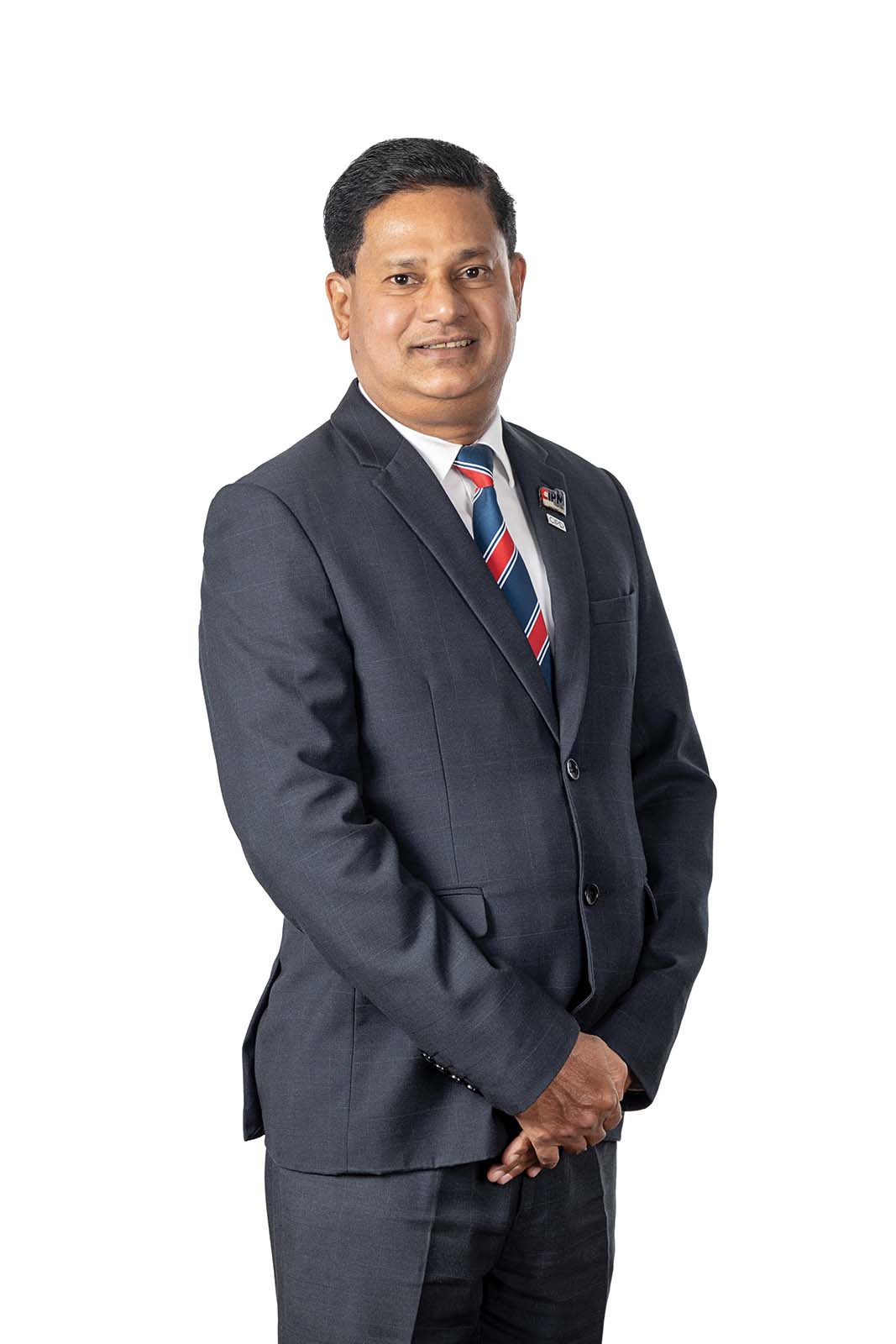
President
Q: In a crowded market, how does your brand differentiate itself beyond price and product?
A: The Chartered Institute of Personnel Management Sri Lanka (CIPM) is not simply providing courses and competing on price; it is elevating the quality standards of professional education.
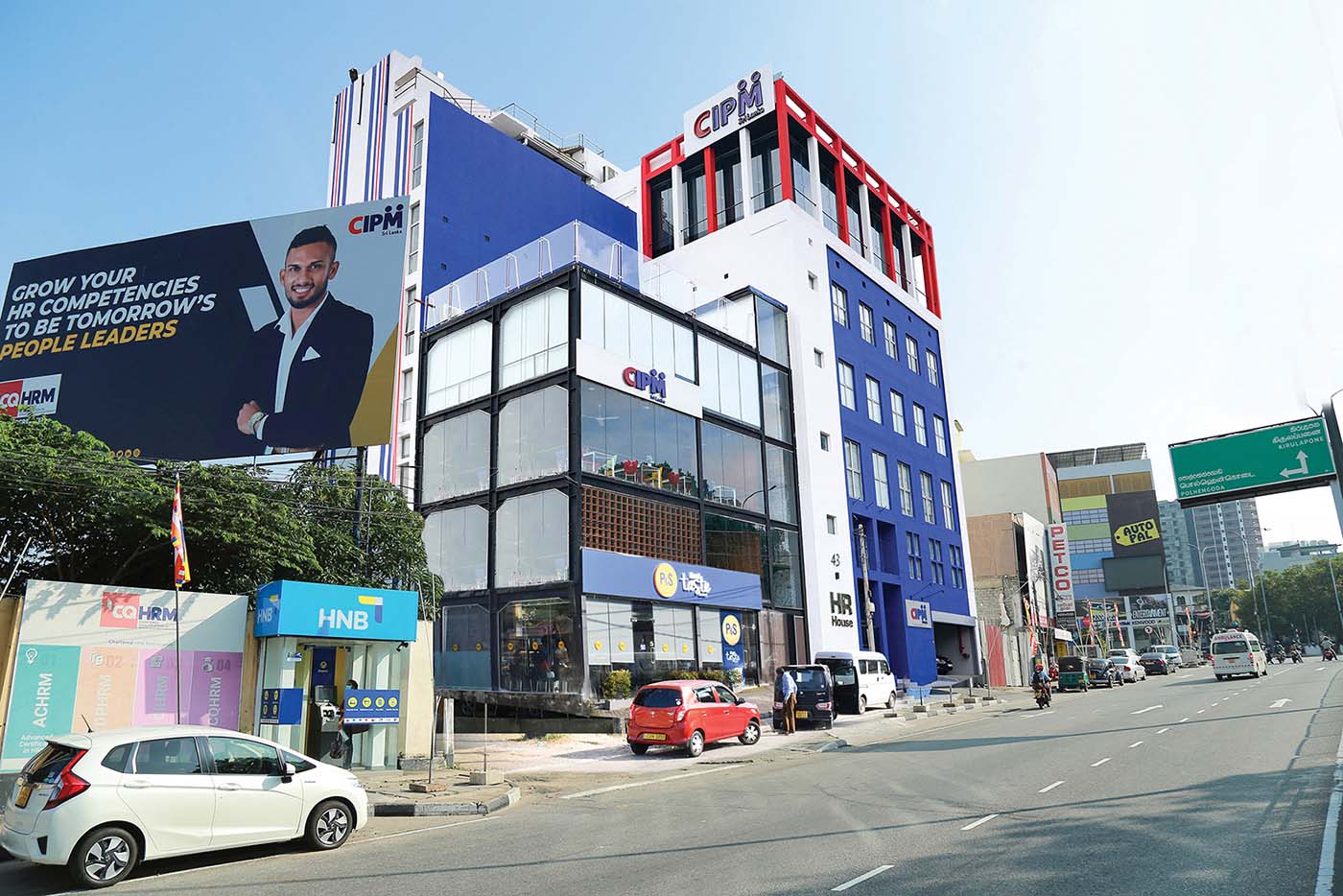
We are Sri Lanka’s only chartered professional body for human resources management (HRM), established in 1959 and elevated by Act of Parliament No. 31 of 2018. Students don’t simply enrol for a qualification; they enter a recognised profession.
Our differentiator is the ecosystem
behind the qualification – a 67 year heritage; an elected member council; national HRM standards that we ourselves author; peer reviewed research; the People Power journal; and international affiliations with the Asia Pacific Federation of Human Resource Management (APFHRM) and the World Federation of People Management Associations (WFPMA).
In a market where many institutions offer HR diplomas, CIPM offers professional identity, credibility and industry recognition. A chartered qualification from CIPM represents more than academic completion – it reflects professional standing and trust built over decades.
Q: What does customer loyalty mean to your organisation, particularly when purchasing power is under pressure?
A: For us, loyalty is measured in decades, not transactions. Our students begin their journey with CIPM at the foundation level, and continue progressing through diplomas, professional qualifications, chartered membership and eventually leadership positions in the HR profession.
Over time, they return not only as learners but employers, mentors, speakers, corporate partners and advocates for the institute. That continuity of trust across different stages of life and career is the strongest
indicator of loyalty for us, and it is a responsibility we take seriously especially during periods of economic pressure.
Instead of cutting price and signalling that quality is negotiable, we extended
access through instalment plans; scholarship pathways; expanded regional centres in Kandy, Galle, Kurunegala and Gampaha; and a strengthened learning management system (LMS).
In our view, loyalty is the absence of substitutions, and it is earned by ensuring that every rupee a student commits during a difficult year produces a measurable career
return – affordability without dilution and access without compromise.
Q: During periods of financial strain, consumers tend to prioritise value. How do you strike a balance between
affordability and maintaining a strong brand identity?
A: We protect identity by refusing to compromise on the chartered standard; and we protect affordability by widening the staircase, not lowering the ceiling. Our portfolio is specifically tiered – from short executive certificates in HR analytics, employment law and reward management, through diplomas to the full chartered qualification – so that a learner can begin at the level their budget permits and progress without re-enrolling elsewhere.
Regional centres remove travel and relocation costs while digital delivery through our LMS removes opportunity cost. We further strengthen affordability through flexible payment options that encourage organisations to co-invest in employee development. What changes is the entry point, not the standard. That is how we keep CIPM affordable in 2026 without ever making it cheap.
Q: Public opinion reflects consumer trust. How has your brand earned and sustained this trust over time?
A: Trust at CIPM has been built over 67 years through three disciplines on which we refuse to compromise.
First, governance: we are member elected, parliament incorporated and bound by a published code of conduct – the public knows who is accountable.
Second, examination integrity: our papers are independently moderated, results are released without favour and a CIPM pass means the same thing in Colombo as it does in Dubai.
Third, professional voice: when policymakers, regulators or boards need an authoritative position on minimum wage, employment law reform, occupational safety or workforce skilling, CIPM is in the room and on record.
Tens of thousands of alumni now occupy senior HR positions across sectors and industries – they are our testimony. Ultimately, brand trust is not what we say about ourselves; it is what our members and the
organisations that employ them say on our behalf every working day.
Q: What role does authenticity play in shaping consumer perceptions today, and how do you ensure that your brand remains credible and transparent?
A: Authenticity is non-negotiable. The
moment we sound like a marketing brochure, we have already lost the membership. We anchor credibility in disclosure. Our bylaws, education policy, membership criteria, fee structures and continuing professional development (CPD) guidelines are published openly on the CIPM official website.
Our executive council is elected by the membership. Lecturer feedback and session evaluations are collected from students and acted upon. Print and video coverage of every CIPM activity is shared across our
social media channels.
When we say ‘globally recognised HR programmes,’ we can identify the affiliations behind that claim including APFHRM, WFPMA, Chartered Institute of Personnel and Development (CIPD), Chartered Management Institute (CMI), and Software Quality Assurance (SQA).
In a market full of new and unverified
credentials, the simplest credibility test is whether an institution can withstand scrutiny. We have sustained that scrutiny for nearly seven decades and built the brand upon it.

Q: Consumer expectations continue to evolve rapidly. How does your brand stay relevant while remaining true to its core identity?
A: Our core identity has remained unchanged since 1959: to professionalise the management of people in Sri Lanka. What evolves is how we develop the next generation of HR leaders. In recent years, we have introduced new programmes and established partnerships with CIPD, SQA and CMI.
Our recent workshop on Building Stronger – KPI Mastery for a Sustainable 2026 introduced the tactical compass framework, helping leaders reengineer metrics for a post-disaster economy without losing sight of long-term value.
The lesson behind that framework is also how we run the brand: hold the compass steady but redraw the map as the terrain changes. Relevance and identity are not opposites – discipline in one enables freedom in the other.
Telephone: 2199988
Email: info@cipmlk.org
Website: www.cipmlk.org