Sporting LIFE
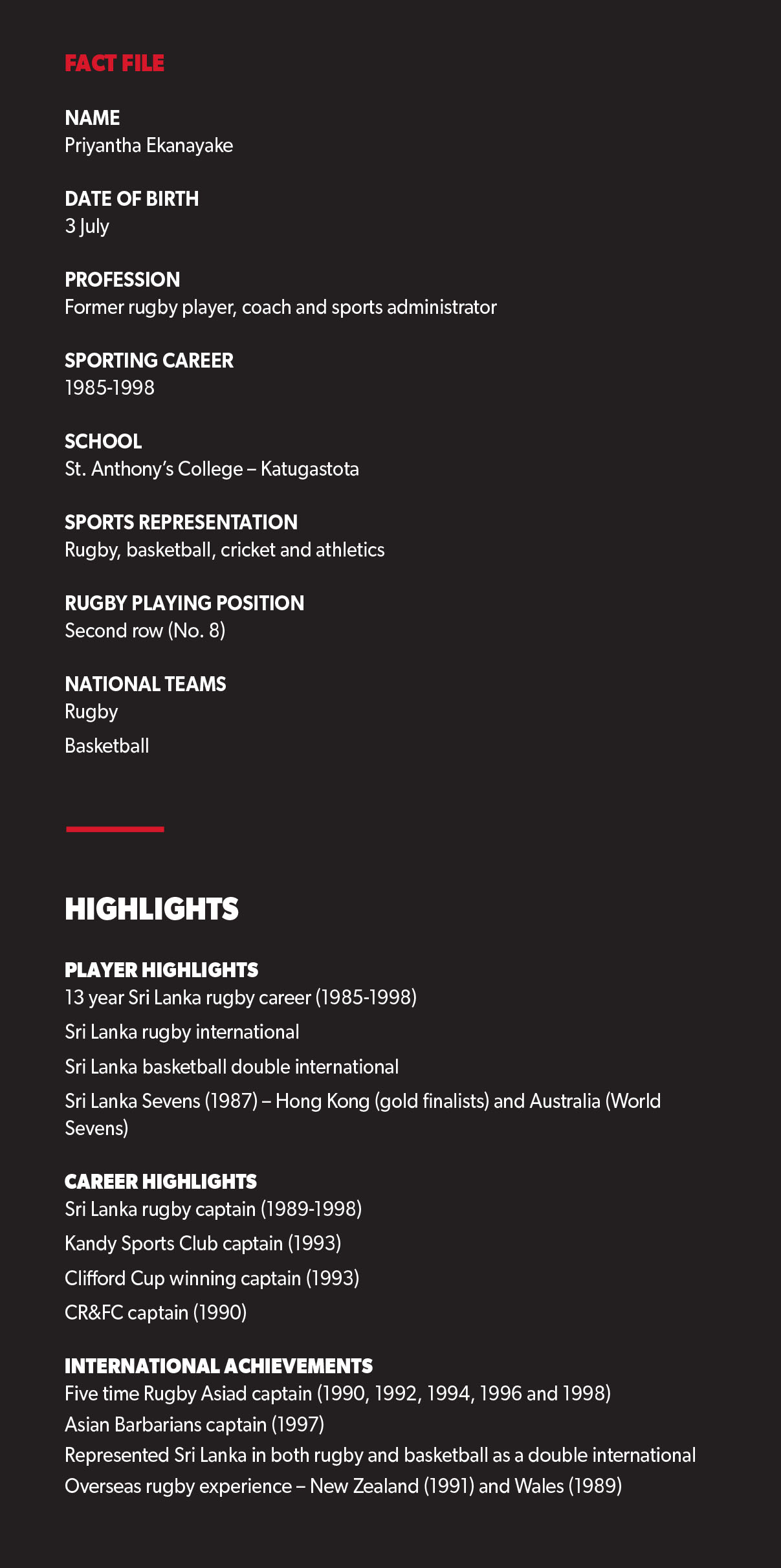
Priyantha Ekanayake
UNFINISHED SPORTING JOURNEY
Suresh Ginige chronicles a stellar rugby football journey and penchant for shaping the next generation of sporting talent
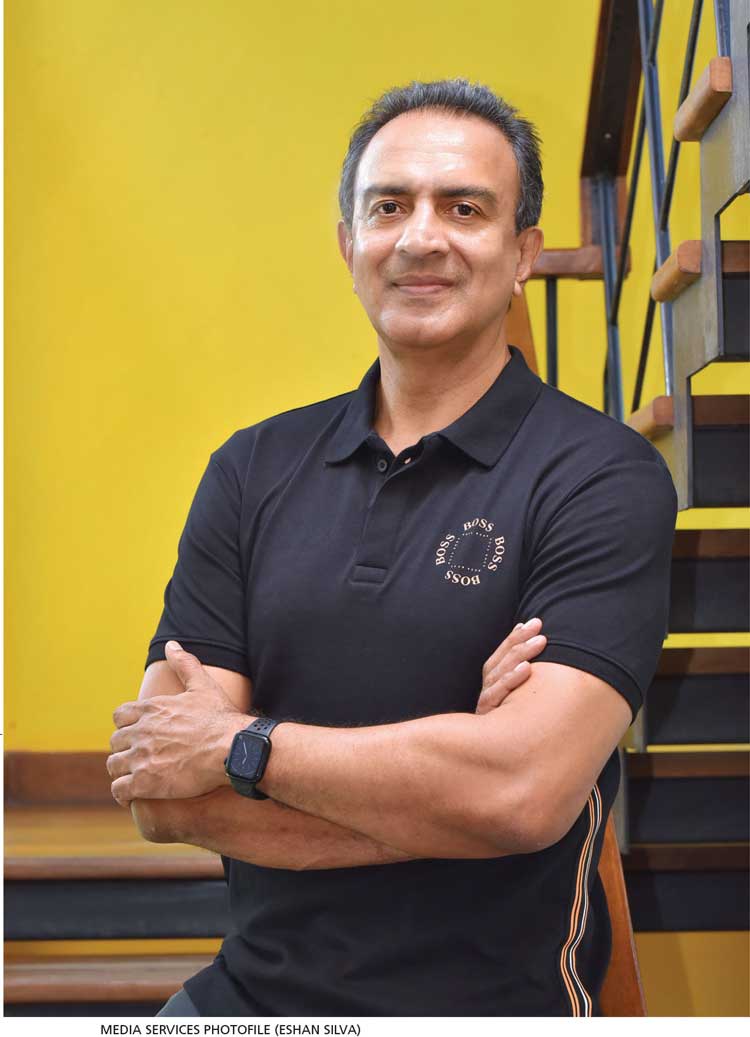
For Priyantha Ekanayake, sport was not initially a carefully chosen path. Growing up in the hostel at St. Anthony’s College, he found in sport an escape and a way forward. Soon however, it became much more: a discipline, a source of identity and eventually, a defining part of his life.
There was also a strong family influence. His elder brother was an accomplished all-round sportsman who competed at national level. “For me, it was a matter of following his footsteps,” he reveals.
Ekanayake played a variety of sports, going on to captain both the basketball and rugby teams. That versatility would later prove decisive. Basketball developed the athleticism and coordination that complemented his rugby, particularly his ability to compete in the lineouts.
By the mid-1980s, the schoolboy had become a national sportsman. He represented Sri Lanka in basketball before eventually committing himself fully to rugby. His distinguished national rugby career spanned more than a decade, during which he played in several positions and captained the team for much of that time. Ekanayake holds the distinction of having captained Sri Lanka at five Rugby Asiads.
On the Domestic front, he captained CR&FC and later Kandy Sports Club (Kandy SC), helping establish a culture that would underpin Kandy’s emergence as a dominant force in Sri Lankan club rugby.
Rugby also took him to New Zealand. Competing against players who represented the All Blacks and experiencing rugby at a higher level fundamentally changed his understanding of the sport. “I was a different player after I returned from New Zealand,” he reflects.
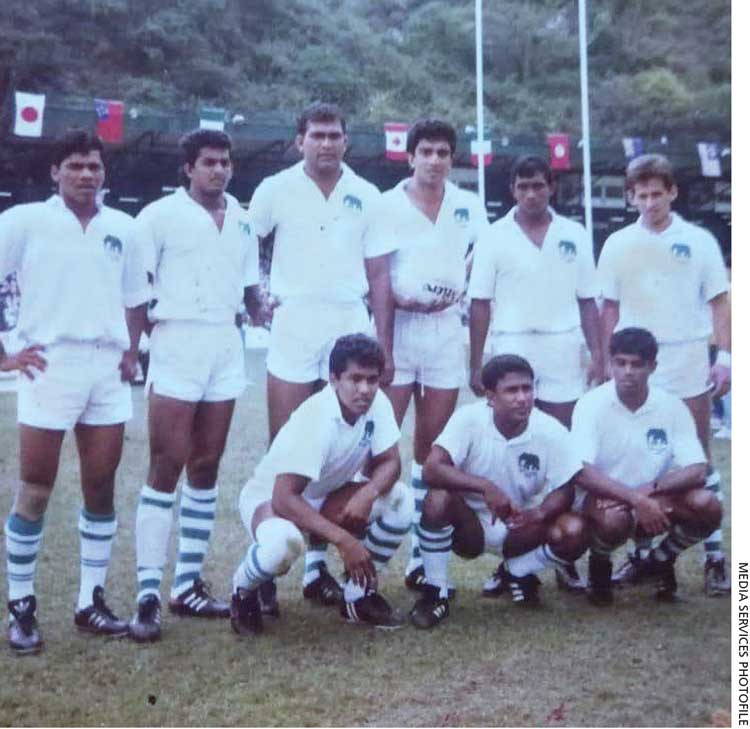
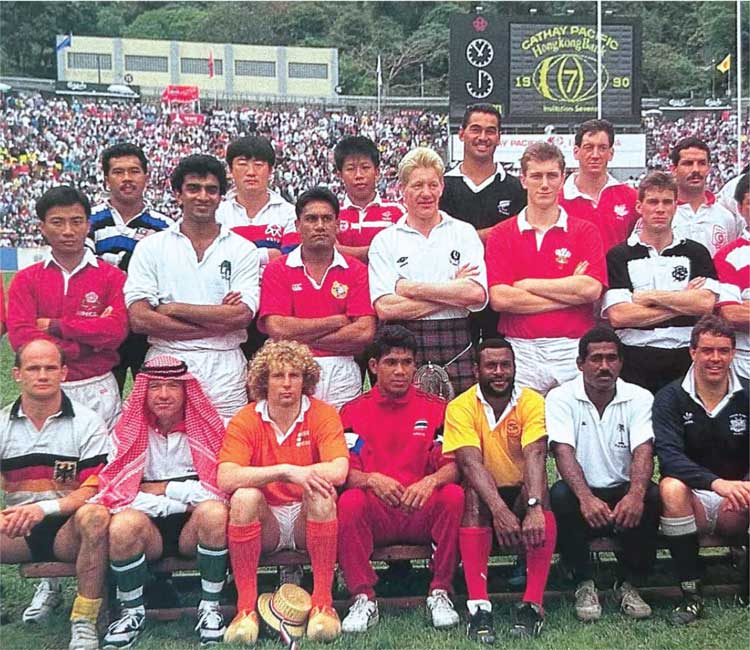
His international career also coincided with a period when Sri Lanka Rugby began to develop greater belief in its capabilities. He remembers the impact of foreign coaching – particularly the contributions of former All Black Jeff Matheson and New Zealand coach George Simpkin – and increased exposure.
But he believes the biggest change was psychological. Ekanayake notes: “Once you break the psychological barriers and have self belief, everything changes.”
The experience strengthened him physically and mentally, while giving him a deeper understanding of how to read a game, manage situations and exercise leadership on the field.
His international relationships extended well beyond the field. Years of playing against teams from across Asia created friendships that eventually contributed to another significant milestone – captaining the Asian Barbarians.
After his playing career, Ekanayake moved into coaching and administration at Kandy SC. With the support and encouragement of Malik Samarawickrama, who also guided him professionally, Ekanayake entered national sports administration.
He eventually served as president of Sri Lanka Rugby and later, as its chief executive officer.
Ekanayake believes that Sri Lankan players have the attributes to compete effectively in sevens rugby. And he calls for changes to school rugby rules to develop stronger front row forwards who are capable of competing internationally, as well as greater international exposure for local coaches.
The transition from player to administrator exposed him to a very different side of sport and one of its most persistent weaknesses. For Ekanayake, Sri Lankan sport has suffered from a lack of long-term structures, stringent planning and clearly defined development pathways.
“No structure – that’s the problem. There is no plan, no vision,” he rues.
That diagnosis shapes his thinking about the future. As Chairman of the National Sports Council, his focus is on building a high-performance system that can identify promising athletes early, provide sustained support and prepare them to compete internationally.
A proposed high-performance centre is intended to serve athletes across a range of sports. The concept incorporates sports science, strength and conditioning, medical support, recovery, biometrics and specialist expertise. Athletes with medal potential would receive the attention necessary to maximise their performances.
You don’t shine alone – you shine with others
He also believes in instilling the right values. Ekanayake notes that young sportspeople must develop resilience, the drive to succeed and a hunger to learn while understanding the value of teamwork – lessons he learnt the hard way. “You don’t shine alone – you shine with others,” he affirms.
And Ekanayake believes the future of Sri Lankan sport will not be determined by talent alone. It will depend on whether the country can build the structures, leadership and culture needed to transform talent into achievement.
For him, that is the unfinished part of his sporting journey. After a glittering playing career, his challenge now is to build a system that enables the next generation to reach the highest echelons of sport.