ACCOUNTANCY PROFESSION

COMPILED BY Suresh Ginige
ACCOUNTING FOR INTEGRITY
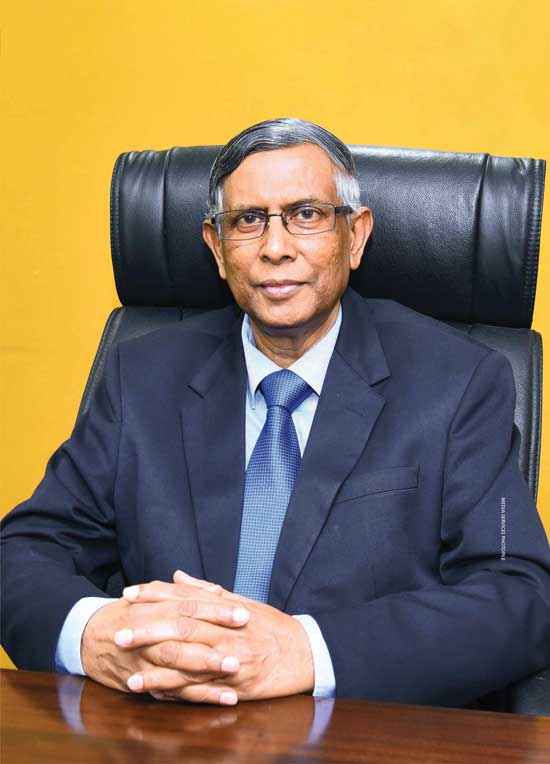
Prof. Lakshman Watawala calls for stronger accountability and governance
Q: How would you assess the state of Sri Lanka’s accountancy profession – and what are its main strengths and weaknesses?
A: The country has a well-established accountancy profession with recognised national professional bodies such as the Institute of Chartered Accountants of Sri Lanka (CA Sri Lanka) and Institute of Certified Management Accountants of Sri Lanka (CMA).
Foreign bodies operating in Sri Lanka include the Chartered Institute of Management Accountants (CIMA), Association of Chartered Certified Accountants (ACCA) and Institute of Certified Public Accountants (CPA).
Our main strength is alignment with global standards. As a member of the International Federation of Accountants (IFCA), Sri Lanka follows international standards covering education, auditing, ethics, public sector accounting and sustainability. This is important for attracting foreign investment and meeting international sustainability requirements.
However, weaknesses remain – particularly in the public sector.
While private sector accounting practices have advanced, public sector financial systems, planning and monitoring remain weak. The issue is not necessarily a shortage of qualified accountants but the recognition and utilisation of professional expertise in the sector.
Sri Lanka requires more professionally qualified accountants in key positions in ministries, state departments and corporations, supported by stronger controls and cost management.
Q: Artificial intelligence, automation and data analytics are rapidly transforming accounting globally. How prepared is Sri Lanka’s accountancy profession for this technological shift?
A: We are ready in some areas – particularly in the private sector – but cannot afford complacency. AI and data analytics are being discussed extensively but the real question is whether we understand their practical applications.
The banking sector shows what is possible, having embraced information technology and transformed how banks operate and serve customers. Unfortunately, government departments and ministries have not kept pace.
As financial processes become increasingly digital, controls and risk management become more important. ERP systems can automate bookkeeping but professionals still need to interpret information and ensure that transactions are stringently controlled.
This makes continuing professional development essential. We need to strengthen IT and accounting education, and retrain public servants to work in a digital and AI enabled environment.
Q: What gaps do you see between accountancy education and the skills employers require in today’s business environment?
A: The main gap is practical experience. A good accountant needs more than academic qualifications; professional competence comes from education combined with hands-on training.
The government must recognise professional bodies rather than viewing university education as the only pathway to employment. Professional education combines academic knowledge with practical training and provides skills directly relevant to business, ensuring that those who qualify are job ready.
We also need more opportunities for accountancy technicians and support level professionals. Accounting education must move beyond technical knowledge. English, IT, business understanding, analytical ability and practical experience are increasingly important. We need professionals who can interpret information and use it to make better decisions rather than merely prepare accounts.
Q: Do you believe the country’s current financial reporting and auditing framework is sufficiently robust or are further reforms needed?
A: Further reforms are urgently needed. Our accounting and auditing monitoring framework is outdated, and must align with global standards.
We need a stronger professionally driven institutional framework and greater involvement of qualified accountants in setting and monitoring standards.
Sri Lanka also needs stronger financial reporting and cost accounting across the public sector. Proper records must be maintained, accounts produced on time and financial performance monitored continuously.
Regulators need to seek assistance from professional accountancy bodies to strengthen financial, cost and management accounting, with a focus on short, medium and long-term value creation.
In addition, auditing needs greater scrutiny – if fraud is detected only after several years, we have to ask whether systems and audit techniques are working effectively.
Q: How important is the accountancy profession to strengthening corporate governance, transparency and accountability?
A: It is absolutely fundamental. Good governance depends on reliable financial information, effective controls and professionals who uphold high ethical standards.
Listed companies have made progress with requirements covering independent directors, audit committees, risk management, the submission of quarterly accounts within 45 days and other governance mechanisms. The challenge is enforcement – and extending these standards to major public sector organisations and appropriately sized private companies.
Large state institutions should face stronger reporting requirements, given that they manage resources of enormous public importance. They should submit quarterly accounts within 45 days, similar to private sector companies listed on the Colombo Stock Exchange (CSE).
Auditing needs greater scrutiny – if fraud is detected only after several years, we have to ask whether systems and audit techniques are working effectively
However, accounting is about more than numbers; it is about ensuring that resources are properly managed, decisions are based on reliable information, and organisations create value for stakeholders and society.
The government must demonstrate what it has achieved with the funds entrusted to it through taxes, import duties and other sources while businesses must show that resources are managed responsibly.
Therefore, professional accountants have a critical role in promoting financial discipline, transparency and accountability.
But this requires more than systems and regulations; it calls for professional competence, integrity, ethical behaviour, and a commitment to ensuring accounting information translates into better decisions and outcomes for the country.
The interviewee is the President of the Institute of Certified Management Accountants of Sri Lanka.