MEANINGFUL IMPACT
Mariam Omar wants to balance values with the courage to embrace change
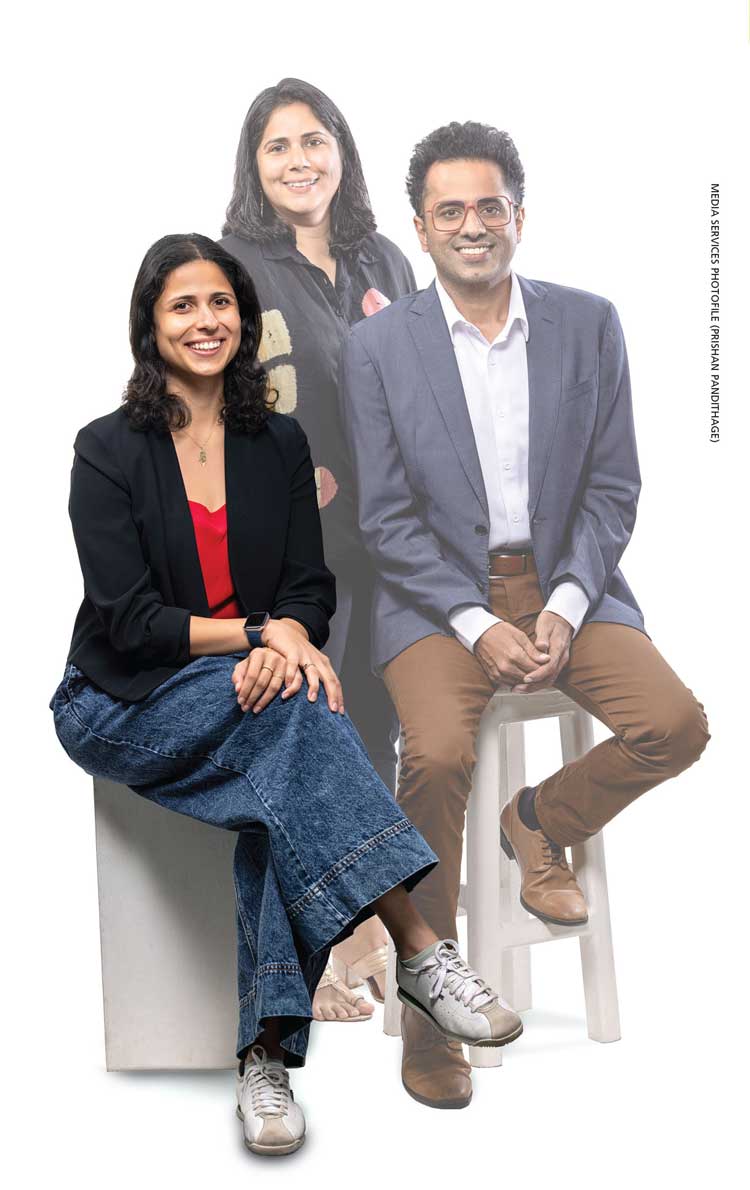
Q: Was there a particular experience at Brandix that changed the way you understood the company’s impact beyond business and shaped your professional aspirations?
A: I think it was less one particular moment and more the realisation, over time, of the sheer scale of the ecosystem that Brandix touches.
When you are looking at a business from the outside, it is easy to think about factories, products, customers and financial performance. When you’re inside it, you begin to see the people, families, communities, suppliers and customers behind every decision.
What struck me most was that a company like Brandix has the ability to create an impact at a scale that very few organisations in Sri Lanka can. That comes with a responsibility that goes beyond simply being commercially successful.
It also changed what I wanted from my own career.
I became increasingly interested in the space where business, people, technology and purpose intersect, and particularly in how we communicate and lead change. For me, this is about helping people understand why the work they do matters and taking them along on the journey.
That has shaped my aspiration to contribute to building a business that is not only successful but one that leaves something meaningful behind.
Q: What responsibility does the next generation carry when stepping not merely into a business but its reputation, values and influence?
A: The responsibility of the next generation isn’t to preserve everything exactly as it was. It is to understand what made the company successful, protect what’s truly foundational and have the courage to evolve what needs to change.
A family business carries an invisible balance sheet beyond its financials: reputation, relationships, trust, values and decades of institutional knowledge. You inherit all of that; but you don’t automatically inherit the right to lead it. You have to earn that through contribution and credibility.
For me, being part of the next generation means being a steward rather than an owner of a legacy.
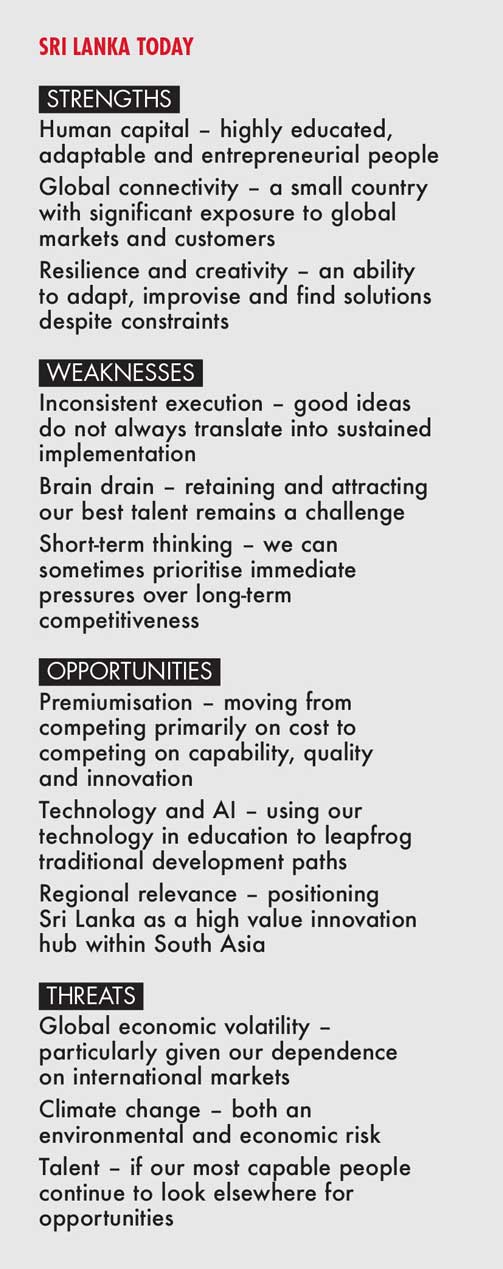
We should leave the business stronger, more relevant and more resilient for the generation that comes after us. And that means being willing to ask difficult questions while having enough humility to understand why certain things became the way they are in the first place.
Q: How can younger family members respectfully challenge established thinking without dismissing the experience and institutional knowledge of earlier generations?
A: The key is to challenge the idea, not the person, in the service of the company’s success.
Institutional knowledge is incredibly valuable, particularly in a business that has been built over decades. But experience can sometimes become a reason for doing something because ‘that’s how we’ve always done it.’
The role of the next generation is to bring genuine curiosity to that conversation.
I don’t think the answer is to walk into a room assuming that because you are younger, you have a better answer – in fact, you probably don’t. But you may have a different question, a different reference point or exposure to something that hasn’t been considered before.
The best conversations happen when both generations are willing to learn from each other with enough respect to listen and enough confidence to challenge.
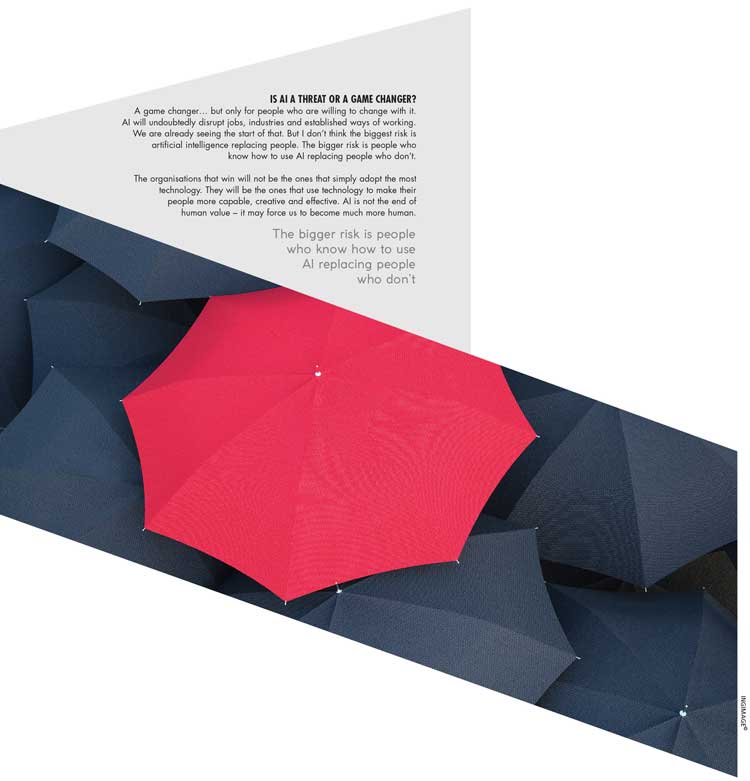
Q: How is AI changing the way Brandix communicates with its employees, customers and other stakeholders?
A: One of the most profound things artificial intelligence has done, at least for the time being, is to democratise knowledge.
It has made information, expertise and analytical capability much more accessible; and in some ways, it has levelled the playing field between people who previously had very different access to those resources.
For a company such as Brandix, that changes how we engage with different stakeholders. Employees can access knowledge and learn in ways that are more personalised; customers can expect faster, more informed responses; and leaders can make sense of far more information much more quickly.
The challenge is that when knowledge becomes abundant, judgement becomes more valuable. We still need to know what questions to ask, what information to trust, and how to translate it into decisions that are right for our people, our customers and our business.
So I see AI as less about communicating faster, and more about giving more people the ability to participate, learn and make better decisions.
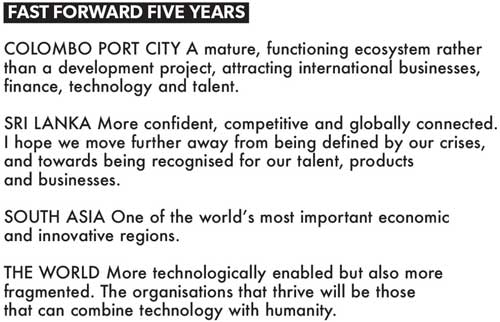
Q: From your generation’s perspective, how is Sri Lanka currently perceived internationally – and what role can its leading businesses play in reshaping that narrative?
A: Sri Lanka has a complicated international narrative. There is still an association with the challenges we have faced as a country but there’s also a growing recognition of the depth of talent, creativity, resilience and capability that exists here.
One of the things we sometimes underestimate is the strength of our people.
Sri Lankans are incredibly adaptable. We have an ability to build relationships, solve problems creatively and find ways forward with relatively limited resources. The challenge is turning those qualities into institutional capabilities that can compete consistently on a global stage. That’s where our leading businesses have an important role to play.
We can help shift the conversation from what Sri Lanka struggles with to what Sri Lanka is capable of. And that cannot be done through advertising alone. It has to be demonstrated through the quality of what we produce, the standards we operate by, the way we treat our people and the contribution we make to the communities around us.
Companies have an opportunity to be ambassadors for the country every day. When a global customer experiences Sri Lankan capability through a business, that becomes part of their perception of Sri Lanka.
I’d love to see us become known not simply as a beautiful country or a low-cost destination but a country that produces extraordinary people, ideas, products and businesses.
Q: Are younger leaders more willing to connect commercial success with environmental and social responsibility? Or have these expectations simply become unavoidable business realities?
A: I think it’s both – the expectations have certainly changed.
Environmental and social responsibility are no longer things that businesses can treat as separate from their core strategy. Customers care, employees care, investors care – and increasingly, regulation and supply chains demand it.
But I also think my own perspective has been shaped by how I grew up.
In my upbringing, success was never framed as purely individual or financial. I was taught quite early on that a lot of outcomes come down to circumstance and luck; and that if you’re fortunate enough to be in a position of advantage, there is a responsibility that comes with it to contribute positively to others and the world around you.
That idea has stayed with me and it influences how I think about social responsibility. Alongside that, a respect for nature is something that was always present in my environment growing up, not as a separate ‘sustainability’ concept but as part of everyday life and decision making.
Because of that, I have personally found it difficult to separate commercial success from its wider impact.
We have all seen the consequences of climate change, inequality and poor governance much more visibly, and I’m less comfortable with the idea that a business can be successful at the expense of everything around it.
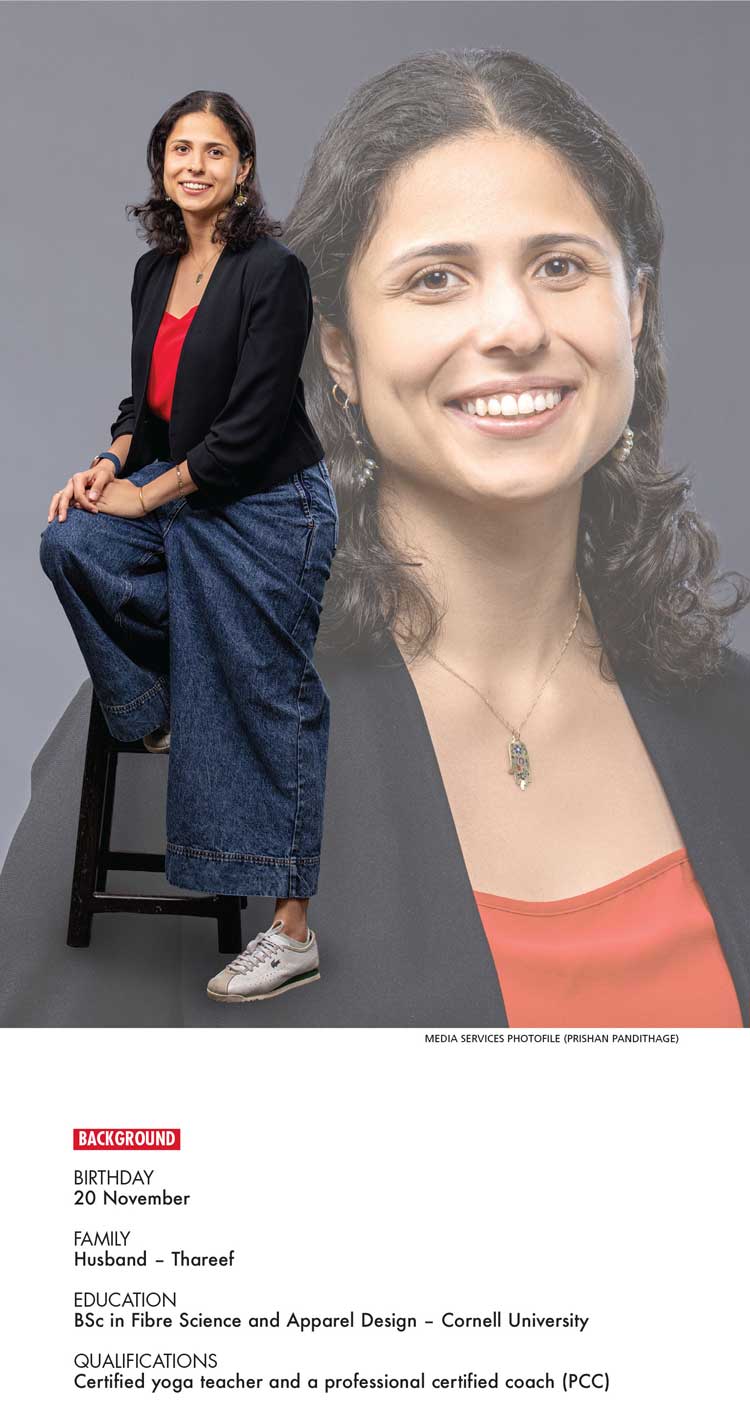
Q: When your career is associated with a prominent family enterprise, how do you define personal achievement and build a professional identity of your own?
A: I have become much more comfortable with this over time. When you’re associated with a family enterprise, there can be an assumption that your path has already been defined for you.
For me, building a professional identity has meant deliberately developing experiences and capabilities that are my own, and being willing to be judged on the value I create rather than the surname I carry.
My background is quite eclectic. I studied fibre science and apparel design, worked in product development, and then moved into HR, communications and transformation. I’m also a certified yoga instructor. None of those transitions were particularly linear but each taught me something different about people, products, businesses and change.
Today, I measure personal achievement less by position and more by whether I have made something better than I found it – whether that’s a team, a business problem, a piece of work or someone’s experience of the organisation.
Being part of a family business is a privilege. But I think the challenge is to make sure that privilege becomes a responsibility rather than an entitlement.
For me, building a professional identity has meant deliberately developing experiences and capabilities that are my own