BUILDING DIFFERENTLY
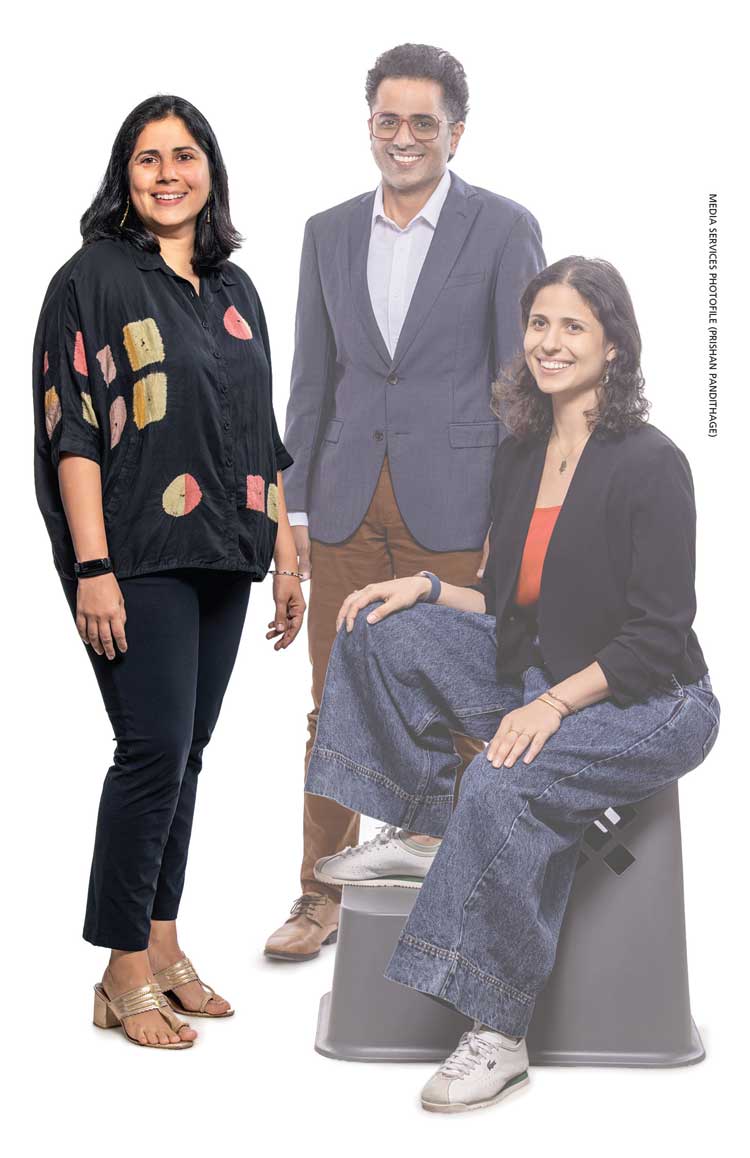
Anam Omar is all for fresh thinking in an evolving manufacturing landscape
Q: What is your earliest memory of Phoenix Industries and how has it influenced the way you view your role in the company today?
A: I don’t have one very clear earliest memory; but I do remember visiting Phoenix on school factory trips and occasionally, with my father.
Growing up though, Phoenix gradually moved out of the foreground. My dad became more involved with Brandix, so most of our dinner table conversations centred on Brandix. It was only when I moved back to Sri Lanka, having spent a few years overseas for my studies and early career, that I reconnected with Phoenix.
I was working at a product design company at the time and happened to meet my uncle at a family lunch. He said: “If you’re doing design, why don’t you design a chair for Phoenix?” That was what brought Phoenix back onto my radar.
When I eventually visited the factory, it was like being a kid in a candy store. I loved seeing the machines, understanding how things were made and thinking about what we could create with them. I think that was when I became genuinely curious about the business.
That curiosity has never really gone away. Even today, a big part of how I see my role is to keep asking what else we can do, what we could do differently and what Phoenix could become.
Q: As a next generation leader, how do you determine which elements of a longstanding business should be preserved and those that need to be challenged or reinvented?
A: I think everything should be open to being challenged. Not for the sake of changing things but because the moment you start thinking what you have is good enough, you stop pushing yourself to be better.
At the same time, I have a lot of respect for what’s been built before us. There are things that have been part of Phoenix from the beginning that are really important to hold on to – one of the biggest is our willingness to take risks.
Many of Phoenix’s milestones have come from trying things that hadn’t been done before. Some worked and some didn’t; but that’s part of taking risks. Previous generations were willing to try new things, push boundaries and question the way things were being done, and I think that has played a big part in getting Phoenix to where it is today.
So for me, it’s less about deciding what should stay the same and what should change. What I really want us to preserve is the courage to keep changing, keep experimenting and keep pushing ourselves to do better.
Q: Has growing up around the world of business given you a clearer understanding of its purpose? Or did you need to step outside that environment to develop your own perspectives?
A: It’s been a bit of both. Growing up, I was exposed to business through the family, although I wouldn’t say I really understood it at the time.
You pick up a lot by simply being around the conversations – how businesses grow, the decisions that are made and the challenges that come with it.
But I never imagined I’d end up in a family business myself. The family context growing up was very Brandix centric and as anyone who knows me knows, fashion is really not my thing!
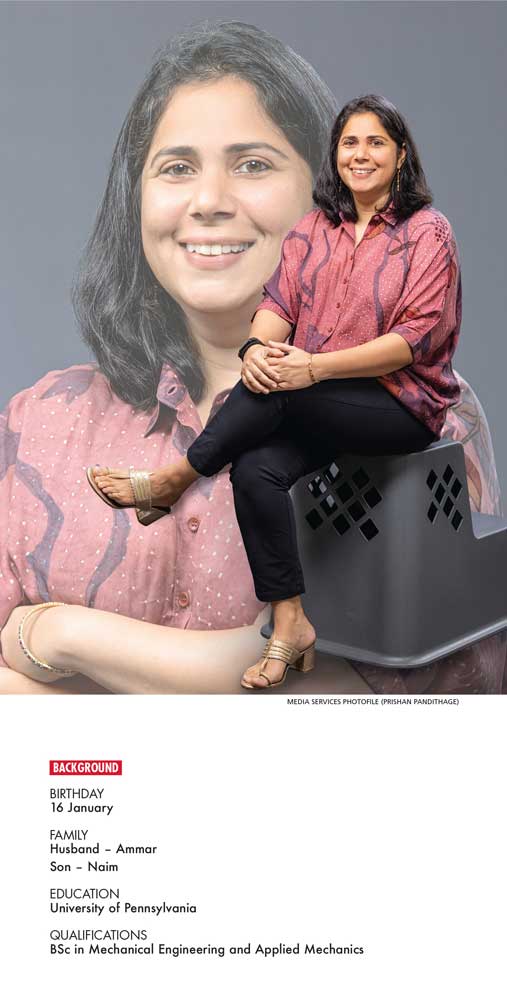
I studied engineering and have always been interested in how things work and how things are made. Over time, I became really interested in furniture and industrial design, which is probably why Phoenix clicked for me in a way I hadn’t expected.
And I’m glad I had time outside the family business because it gave me a chance to form my own views, meet different people and experience different ways of working. But growing up around business inevitably had a strong influence on me.
The combination of the two continues to shape the way I think and approach things day to day.
Q: What changes in Sri Lankan consumer behaviour are shaping the way Phoenix approaches product design, innovation and manufacturing?
A: It’s an exciting time to be a brand in Sri Lanka. We’re seeing a growing number of young brands enter the market, bringing fresh ideas and raising the bar. And consumers are expecting much more from brands than they did before.
I like the fact that consumers are demanding more from us. It means we must think much harder about what we create and why we’re creating it. We have a responsibility to be thoughtful about what we put out into the world. It has to be a good product, it has to solve a need and ultimately, people have to want it.
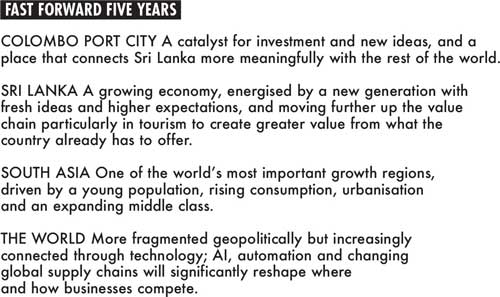
In addition, I think people expect more from brands today beyond the product itself. They care about what a brand stands for, how it behaves, where things come from and increasingly, its impact on the environment.
All of this pushes us to think harder about what we put out into the world and why. Consumers are expecting more from brands and that’s exactly how it should be.
Q: AI is increasingly influencing everything from product development to consumer insights. Where do you see it creating the most value for a manufacturing business such as Phoenix?
A: For me, the biggest opportunity is using artificial intelligence and automation to help us grow without having to grow our headcount at the same rate.
We want Phoenix to become a much bigger business; but we also want the people who are already part of the business to benefit from that growth. There is still a lot of repetitive work being done across the business. In the factory, we’re looking at robotics to take on more of the manual and repetitive tasks, so that our team can focus on work that adds more value.
I think AI can do the same with a lot of our administrative work – reports, presentations, analysis and all the things we spend hours preparing for meetings. That’s the part I find really interesting – not AI replacing people but asking ourselves whether people need to be doing some of this work in the first place, and what they could be doing instead.
The moment you start thinking what you have is good enough, you stop pushing yourself to be better
If we can free up people to spend more time thinking, creating and solving problems, that’s where the real value is. Our teams are already experimenting with this in different ways across the business. The space is moving incredibly fast and we definitely don’t have all the answers yet, so we’re learning as we go.
But I think the bigger risk is not embracing it quickly enough and finding ourselves trying to catch up later.
Q: How do you view the country’s present business landscape – as one constrained by uncertainty or instability, or as an opportunity to build differently?
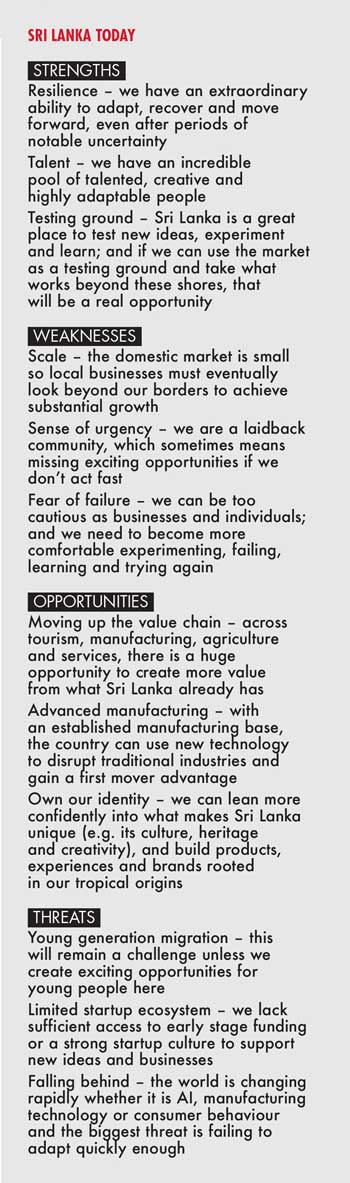
A: I definitely see it as an opportunity to build differently. I think that as a business leader, you almost have to be optimistic – I don’t spend much time engaging with the alternative.
For me, uncertainty is what makes business interesting. If everything stayed the same and the answers were always obvious, there wouldn’t be much to figure out or opportunities to create more impact.
Sri Lanka has been through so many shocks over the past few years and we really haven’t been able to catch a break. But what I find quite remarkable is how we keep bouncing back. Every time we go through something, we seem to recover faster than one would expect. I find that incredibly inspiring.
The challenge I do see for us is scale. For Sri Lanka facing local market focussed companies, there is only so much you can grow within a market the size of Sri Lanka. At some point, if we want to keep evolving and remain relevant, I believe we have to look beyond our borders.
Q: Family connections may open doors but they also lead to scrutiny. How have you worked to establish an identity and leadership style that is distinctly your own?
A: That’s a difficult one – because a lot of meetings still start with an introduction that places me within the family or the wider Brandix context. That connection is always going to be there and I’ve definitely benefited from it in terms of doors that it has opened for me.
I think that over time, I’ve become more comfortable being myself and less concerned about trying to establish an identity that is separate from the family. I find it quite difficult to be anyone other than myself in any setting. And even if I tried to present a different version of myself, I don’t think I’d be very good at it.
Sometimes I wish I could ‘fake it’ a little better… but it’s simply not in me! I’m also naturally quite introverted when it comes to business networking. I do it when I need to for the business but I’m never going to be the person who walks into a room and wants to meet everyone in it.
I don’t think I’ve consciously tried to build a leadership style or an identity of my own. I’ve tried to do the work, push for the things I believe in and be myself while doing it. Over time, I think the identity takes care of itself.