CONSTRUCTION INDUSTRY
BUILDING MORE THAN BRICKS AND MORTAR
Suresh Ginige examines the challenges that must be addressed if the construction industry is to emerge as a crucial engine of economic growth
The construction industry – which was flatlining as a result of high interest rates, foreign exchange shortages, difficulties in importing materials and escalating costs – is beginning to regain momentum.
Last year, it rather improbably emerged as one of the country’s fastest growing industries, supported by stronger foreign investment, increased financing and rising demand for building materials.
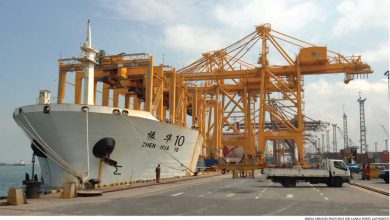
Resumption of major infrastructure projects, progress on the Port of Colombo expansion project, government backed housing initiatives and growing investment activity linked to the Colombo Port City have contributed to this recovery.
Yet, the significance of this revival extends well beyond construction itself.
Given its strong linkages across the economy, every major development generates activity across a wide network of sectors and industries. The industry also creates employment, stimulates demand for construction inputs and when strategically directed, expands the country’s productive capacity.
This makes the recovery of the construction industry particularly important as Sri Lanka moves beyond stabilisation.
A more resilient economic expansion will require expanding productive capacity, attracting investments and creating the physical foundations for sustainable growth. Construction has a central role to play in such a transition.
The opportunities are considerable: Sri Lanka needs modern infrastructure to support a more competitive economy.
Better transport networks can reduce logistics costs while improved urban infrastructure can make cities more productive. Modern industrial facilities can strengthen manufacturing and exports, while housing, commercial developments and mixed-use projects can accommodate urbanisation and generate new economic activity.
Importantly, the construction industry’s recovery is increasingly being driven by investment rather than consumption alone. This is an essential shift if Sri Lanka is to sustain growth beyond the initial post-crisis rebound. Major infrastructure projects could consequently serve as catalysts for a broader investment cycle.
However, recent years have exposed structural weaknesses that must be addressed if construction is to become a sustainable engine of growth. Contractors have faced severe financial pressures, volatile input costs, shortages of skilled labour and intense competition for a limited number of projects.
One of the most pressing concerns is the industry’s dependence on imported construction materials. This leaves developers and contractors vulnerable to currency movements, global commodity prices, shipping costs and changes in import policy. Rising input costs can rapidly undermine project feasibility, particularly when contracts have been negotiated under very different market conditions.
The answer lies in strengthening domestic capabilities.
Sri Lanka has considerable potential to make greater use of locally available materials while encouraging research into alternatives to conventional inputs. Greater adoption of recycled and alternative materials could reduce import dependency, while helping address concerns over the depletion of resources such as sand and clay.
Procurement practices will be crucial too.
Projects need to be awarded on the basis of realistic costs, quality, technical capability and long-term value, rather than simply the lowest possible price. Otherwise, the industry risks entering a cycle in which contractors compete for survival instead of building financially sustainable businesses.
Skills are another determining factor.
As construction activity expands, Sri Lanka will need more engineers, project managers, technicians, machine operators and skilled tradespeople. Given the migration of many construction workers particularly in recent years, greater investment in vocational education and industry based training will be essential to maintaining the supply of labour.
Meanwhile, technology offers another opportunity.
Digital project management, building information modelling, automation, modern construction methods and better use of data can improve productivity, while reducing costs and waste. For an industry that is traditionally reliant on labour intensive processes, technology could greatly enhance efficiency and competitiveness.
Sustainability must also become an integral part of the next construction cycle.
Energy efficient buildings, climate resilient infrastructure, responsible sourcing and greener construction practices are increasingly becoming requirements rather than optional extras. The island has an opportunity to ensure that the infrastructure built during its next growth phase is smarter, more efficient and more resilient.
What’s more, the financial system will have an equally important role to play.
Lower and more predictable interest rates can encourage developers to restart projects and households to invest in property. At the same time, long-term financing mechanisms will be required for major infrastructure and private sector developments. Greater certainty in policy and regulation will be essential to unlocking both domestic and foreign capital.
And the latter is particularly significant. Construction has attracted increased foreign direct investments (FDI) especially in housing, hotels and commercial developments. With attracting FDI now a national priority, ensuring that the construction industry can convert these inflows into productive and sustainable investments becomes even more important.
With visionary and forward-thinking policies, stronger institutions, sustainable financing, investment in skills and technology, and a greater emphasis on quality and productivity, the construction industry could become one of the key drivers of Sri Lanka’s economic progress.
The cranes returning to the skyline may therefore represent more than a construction rebound. They could offer an early indication that the country is beginning to build again – not simply in the aftermath of a crisis but for a more productive, competitive and investment driven future.