
EXPORT STRATEGY

TRANSFORMATIVE DEVELOPMENT PLAN
The export development plan places exports at the centre of the country’s economic growth model
Shiran Fernando writes that the goals are achievable – despite being ambitious
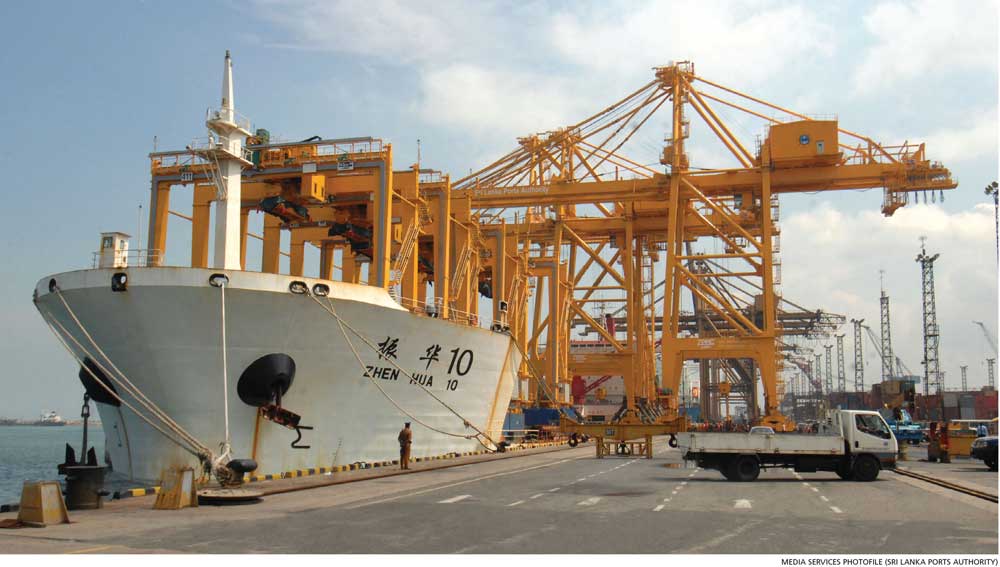
The launch of Sri Lanka’s National Export Development Plan (NEDP) 2026-2030 is a positive step in placing exports at the centre of the country’s growth model after decades of dependence on domestic consumption, remittances and debt financed public investments.
This plan, which aims to increase total exports to US$ 36 billion by 2030, consists of 28 billion dollars in merchandise exports and over US$ 8 billion in services exports; and it will position Sri Lanka as a competitive logistics and knowledge intensive export hub.
What makes the NEDP particularly significant is that it builds on lessons learnt from previous export strategies.
The National Export Strategy (NES) 2018-2022 targeted export earnings of US$ 28 billion but achieved only 17.2 billion dollars due to the combined impact of the COVID-19 pandemic, global supply chain disruptions and Sri Lanka’s economic crisis.
Earlier plans also failed to achieve their intended export targets, and this highlighted that the challenge wasn’t the absence of strategies but the difficulty of implementation.

GLOBAL EXPERIENCE A notable strength of the NEDP is its recognition that Sri Lanka’s export problem is structural rather than sectoral. For years, policy makers have focussed on identifying winning sectors without adequately addressing the underlying constraints affecting all exporters.
The new plan begins with six cross sector enablers – i.e. trade logistics and hub operations, trade facilitation, trade finance and investment reforms, trade promotion, quality and ESG standards, and skills development and innovation.
This approach reflects global experience. Countries rarely become export powerhouses simply because they choose the right industries. Success depends on reducing transaction costs, improving infrastructure, ensuring regulatory predictability and developing skilled labour.
And the export development plan’s horizontal focus addresses many of the root causes that have historically undermined Sri Lanka’s competitiveness.
For example, logistics costs remain substantially higher in Sri Lanka than in leading Asian export economies. Customs procedures, fragmented regulations and lengthy approval processes have often increased costs for exporters.
To this end, digitalising border procedures and improving trade facilitation could potentially deliver export gains across all industries rather than benefitting only selected sectors.
PRIORITY SECTORS The NEDP identifies eight priority sectors – i.e. auto components, mineral based industries, rubber based industries, marine industries, spices and concentrates, digital products and services, electrical and electronic components, and processed food and beverages.
These sectors reveal an intentional effort to move Sri Lanka up the value chain. Traditional exports such as tea, garments and basic agricultural commodities have generated foreign exchange for decades, but face limitations in terms of productivity growth and value addition.
The NEDP seeks to develop industries with greater technological content and stronger integration into global value chains.
Particularly noteworthy is the emphasis on digital products and services. Unlike manufacturing industries that require extensive physical infrastructure, digital exports can scale rapidly with investments in talent, connectivity and innovation.
Sri Lanka already possesses a relatively strong IT and business process outsourcing (BPO) sector. Expanding this segment provides one of the fastest routes towards the US$ 8 billion services export target.
Similarly, electrical and electronic components, and auto components, are sectors that have experienced rapid growth throughout Asia. Their inclusion reflects an understanding that future export growth will increasingly depend on participation in regional manufacturing networks linked to India, ASEAN and East Asia.
SUCCESS STORIES The NEDP shares many characteristics with export transformation strategies implemented by successful Asian economies.
Vietnam focussed on trade facilitation, attracting foreign investments and integration into global production networks. As a result, it transformed itself from an exporter of basic commodities into a major supplier of electronics and manufactured products.
Sri Lanka’s emphasis on logistics, electronics and export diversification follows a similar policy direction.
Singapore built its competitiveness through efficient logistics, world-class port operations and services exports. Sri Lanka’s focus on becoming a regional logistics and trading hub explicitly mirrors elements of the Singaporean model, albeit on a different scale.
Malaysia pursued export led industrialisation by investing heavily in skills, technology and manufacturing capabilities. The NEDP’s commitment to innovation, entrepreneurship and workforce development reflects a comparable understanding that human capital is central to export competitiveness.
INSTITUTIONAL ALIGNMENT Perhaps the most important innovation in the NEDP is its whole of government implementation framework.
Export development is no longer viewed solely as the responsibility of the Sri Lanka Export Development Board (EDB). Instead, the strategy acknowledges that ministries, customs authorities, investment agencies, educational institutions and financial regulators influence export outcomes.
This is crucial because many of Sri Lanka’s export constraints originate outside the export sector itself. Delays in approvals, a shortage of industrial land, skills mismatches, financing gaps and regulatory uncertainty require coordinated government action.
Without institutional alignment, even the best designed export strategy will struggle to succeed.
While scepticism is understandable due to the failure of previous export strategies, the US$ 36 billion target – though ambitious – isn’t impossible to achieve. It will require export growth that’s far above historical trends and sustained progress across multiple sectors.