THE STORIES WE BUILD
EXPLORING THE ROLE OF NARRATIVES IN REINFORCING ARCHITECTURAL DISCOURSE BY JOHANN PEIRIS
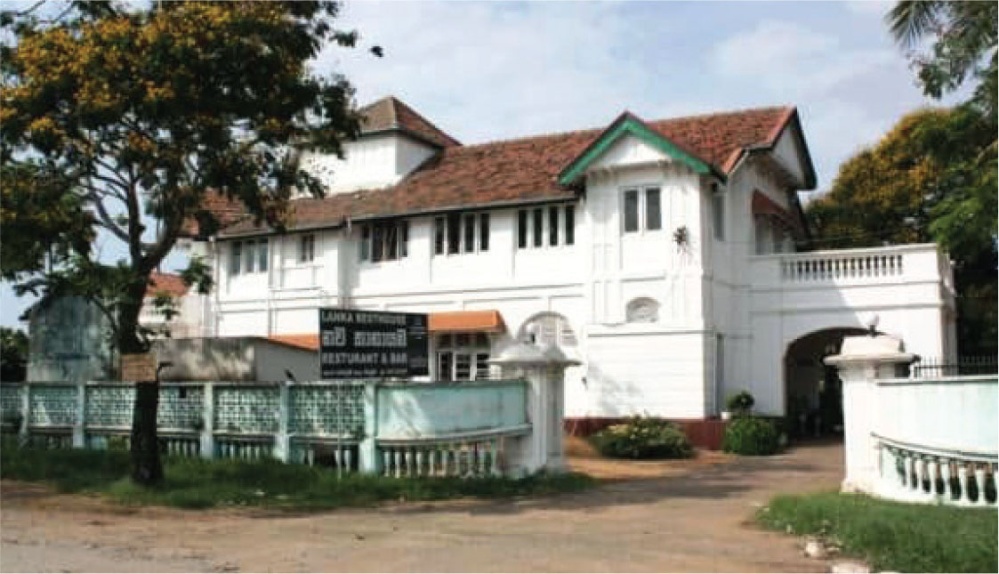
There are many reasons why people are interested in the lives of celebrities and historical figures. Immersing themselves in their stories and myths offers an opportunity to explore triumphs and tragedies from a safe distance. It can serve as an escape from reality, satisfy the need to form one-sided connections with famous figures and even reflect an evolutionary tendency to pay attention to high status individuals in society. Remarkably, the need to circulate these stories extends to the realm of architecture too.
“This church is not medieval, we’re in New York. It’s neo-Gothic 19th century… Guess the question is – do these stories convince us of a lie? Or do they resonate with something deep inside us that’s profoundly true? That we can’t express any other way. Except storytelling.”
Fr. Jud Duplenticy delivers these lines to detective Benoit Blanc in the third Knives Out film, Wake Up Dead Man (2025). It struck a chord with me as I penned these words for this edition of The Architect. Do stories convince us of lies or do they serve a more profound function in architectural discourse?
This short essay offers a series of observations on the stories and urban legends that surround Sri Lanka’s built spaces. It also reflects on how this phenomenon can be understood and consciously engaged with, by architects and those working on interiors. In doing so, I draw on the conceptual framework of Edward Hollis’ work, particularly his article Unreliable Guides: Introducing, Mapping and Performing Interiors.
As a history enthusiast who enjoys pouring over odd historical claims, I have observed that we Sri Lankans are fascinated by famous figures. Many myths and legends surrounding them are also set against an architectural backdrop.
A common critique of the way history is taught in our schools and perceived more generally is that it focusses too much on great kings and their conquests, devotes too little attention to the last century and does not equip students to critically assess the veracity of the narratives they encounter. Nonetheless, a historical consciousness remains very much alive, and perhaps architects should acknowledge the power it commands over the way built spaces are perceived and understood.

Royalty
As a millennial, I am constantly surprised by Sri Lankans’ enduring fascination with British royalty. Numerous hotels market rooms where members of the royal family stayed, dined, had a cup of tea or merely visited.
The Negombo Rest House, for example, draws in two generations of British royalty. A website promoting tourism in Negombo claims: “The Queen stayed in Room No. 7 of the New Rest House, a room that had previously been occupied by her grandfather. Its 200-year-old architecture, including striking blackwood rafters and a majestic view of the beach, provided a historic backdrop for the Queen’s visit. This room became synonymous with royal heritage, further solidifying the inn’s reputation as a prime destination for visitors interested in royal history.”
The Old Polonnaruwa Rest House is another such example. “The Royal Suite at EKHO Lake House is more than mere accommodation. It is an experience steeped in heritage and elegance. Named in honour of Queen Elizabeth II’s visit to the property in 1954, the suite is a luxurious blend of Sri Lankan tradition and Tudor style influences.”

Others claim that a jewellery box and mirror used by the Queen are still in the suite and that her own bathtub was installed. What is notable is not the factuality of these claims but the aura that has sustained the tireless recounting of these stories nearly three-quarters of a century later.
With royalty, the examples are plentiful. Tintagel, a boutique hotel in Colombo, markets the suites where the Prince of Wales and the Duchess of Cornwall stayed while the Grand Hotel Nuwara Eliya draws on Queen Elizabeth II’s visit, during which she had tea there. The possibility of invoking historical stories bearing the royal imprimatur – however fleeting – conjures up an aura intended to provide an exalted experience.
“There is an excess of meaning in the remains: a plenitude of fragmented stories, elisions, fantasies, inexplicable objects and possible events which present a history that can begin and end anywhere, and refuses the master narratives of history” (Edensor 2005, 140).
In the canon of Sri Lankan architectural history, elite houses and colonial bungalows feature prominently for their stylistic characteristics and have become ideal settings for boutique hotels. These transformations often bear the imprint of the conservationist architect.
“Those who are unfamiliar with heritage tend to assume that heritage objects are out there, and that preservationists come later and treat them. The reality is that preservationists have always played a much more active role in choosing, one might even say, co-creating heritage objects. But their role has been unacknowledged, or sometimes even consciously concealed” (Otero-Pailos, Langdalen and Arrhenius 2016, 22).
I began this essay by asking why we are so fascinated by the lives of high status individuals, even those long consigned to history. The allure of a boutique hotel or house museum that was once the home of an aristocrat perhaps lies in the voyeuristic desire to inhabit – albeit temporarily – an imagined feudal past. Of course, affordability at these hotels is often prohibitive, catering to a particular leisure class. A visit to or stay in a colonial era house is also rarely complete without tales of spectral activity or the presence of a resident ghost.
For instance, the house of Sir Thomas Villiers in Haputale has many such stories about a grand piano that plays at night, the eyes of a portrait that follow visitors and the sound of footsteps echoing on the stairs.
Exiled kings
The flipside of this obsession with British royalty is a fascination with local elites, their dwellings, family histories and scandals. Places and stories associated with local kings and chieftains abound in our imagination. An oddly shaped sentry box near the Dutch Hospital in Colombo is claimed to have been King Sri Wickrama Rajasighe’s prison cell prior to his exile. Similarly, a house named Sri Vick Raj on the banks of the Negombo Canal is said to have been his last hiding place. The historical accuracy of these claims is less important than the retelling of narratives that appear to resonate with the collective psyche.
While the wildly inaccurate historical claims made by some tour guides may be the bane of historians, many contemporary scholars are more interested in understanding the historiography of such narratives. Archaeologist Chryshane Mendis, for example, wrote an essay with the intention of ‘changing public opinion’ by challenging a misleading narrative with evidential claims of academic rigour. He does so in a very scientific manner, triangulating sources and historical images. Yet, in my essay, I find the afterlives of discourse and the manner in which these narratives are retold more interesting.
What is perhaps less well understood by both builders and those who tell their stories is that “neither buildings nor stories possess single or original narrators nor final complete states; they are always in transition, their form and their intended meaning uncertain” (Hollis, 2024, 22). If architects, tour guides or hotel managers are able to become more comfortable with the idea of uncertain meaning, perhaps it would be easier to accept the shifting social lives of spaces.
On the trails of Ravana
Following the end of the civil war, two particular paths of nationalist ideologies appear to have emerged: the resurgence of the Ravana discourse and interpretations of claims that Gautama Buddha was born in Lanka. Both ideological camps have upset more critical scholars but have given rise to the popularity of certain spaces in the country. SriLankan Airlines promotes “a mystical journey through Sri Lanka on the Ramayana Trail, where ancient legends and breathtaking landscapes come alive.” Other groups promote places where the Buddha was supposedly born and lived.
Some discourses and places have shorter lifespans than expected. This was the case with ‘war tourism’ in the North, where organised tour buses of Sinhalese visitors from the South travelled to places that promoted a Sinhala nationalist narrative of victory. The sites included Prabhakaran’s infamous bunker home and the 22 foot deep swimming pool where Sea Tigers supposedly trained2. This phenomenon illustrates a more recent example of how stories and legends animate places, monuments and ruins in Sri Lanka, even if in somewhat problematic ways.
The unreliable guide
We are all unreliable guides, in a manner of speaking. In these performative accounts, Architecture (with a capital A) becomes a stage set upon which the guide embellishes the narrative. The “Renaissance and Baroque theorists saw architecture as the scenery of the theatrum mundi: the arena of moral action” (Hollis 32). Archt. Richard Murphy believes that “the past must undergo renovation, not restoration, to survive into the present. He sees in the architectural marriage of parasite and host, an expression of the process of history itself” (quoted in Hollis). In that sense, the unreliable guide and the unreliable historian are both critical to constructing a story that endures beyond restoration.
When asked to pen an essay for this issue, the first categories of analysis that came to mind were the tangible (architecture) and the intangible (stories and legends). However, on further reflection, I realised that this binary was too restrictive to articulate some of the ideas I wished to explore. For example, Laurajane Smith (2015) rejects UNESCO’s (2006) distinction between tangible heritage (heritage as and of objects) and intangible heritage (heritage as and of practices), positing that ‘all heritage is intangible’ because all heritage is practice. In that sense, it is not merely that stories prolong the longevity of a building but that they are integral to its very existence – or even its destruction.
In conclusion, I return to Hollis, who reminds us that: “The ways in which old buildings are preserved or altered, and in which new buildings meet old ones, indicate the different ways in which the past is imagined. Indeed, in dealing with old buildings in practice, designers are forced to act as historians, to construct narratives from the raw material that surrounds them and to judge the past. In designing construction, designers are also constructing a notion of tradition. Can design be not the object of history but its modus operandi?”
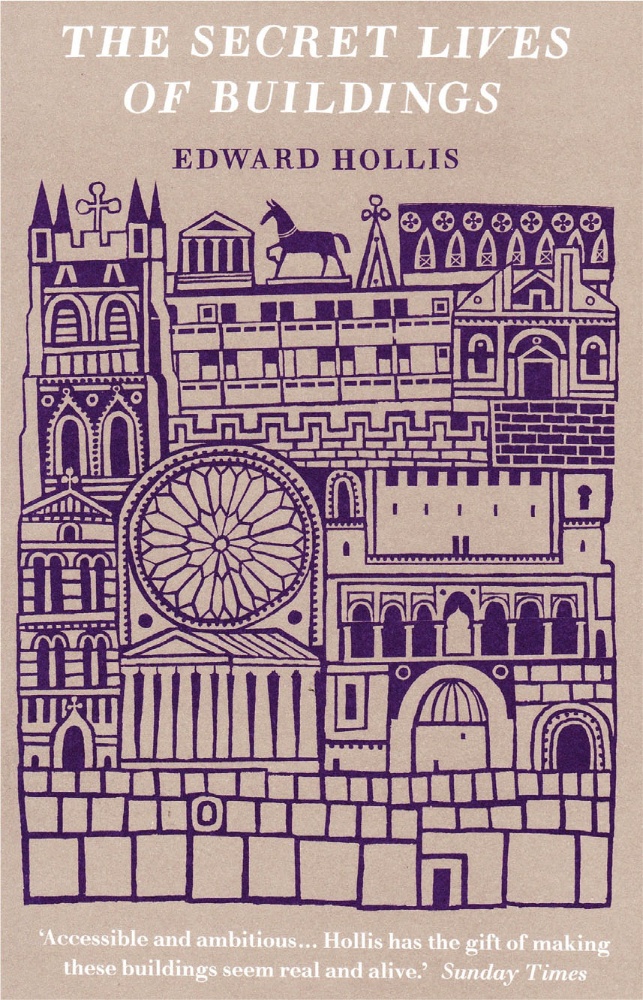
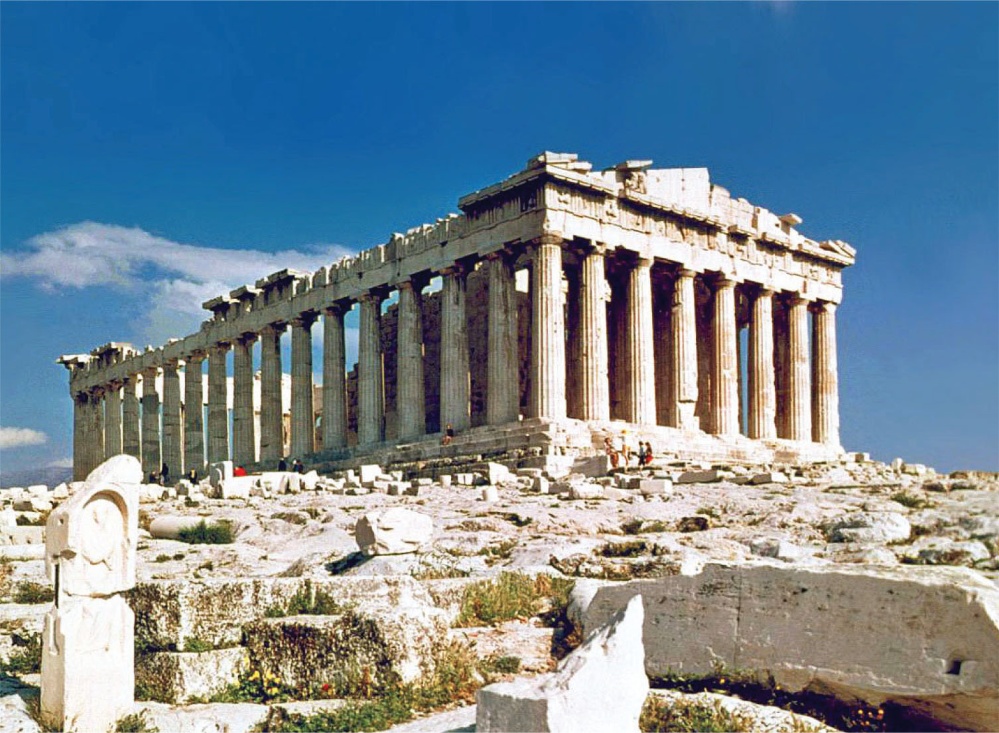
Furthermore, I challenge architectural historians, sociologists, and other curious minds reading this to seek ways to document more diverse, subaltern, scandalous and unthinkable transformations of buildings in Sri Lanka. I was engrossed by Hollis’ The Secret Lives of Buildings for its fascinating accounts of spaces as significant as the Parthenon, the Hagia Sofia, the Berlin Wall and the Venetian in Las Vegas. More than mere biographies of building, these stories offer fascinating insights into historical episodes, shifting empires, religions, ideologies and appropriation of history. What are the best examples that we can explore and document in the same way in Sri Lanka? These accounts will not be without controversy because Sri Lankan histories are every bit as wild, diverse and fascinating as its people.
Can you identify these coded examples or suggest better suited ones?
– The Christian church that stands on the former site of a destroyed Hindu Shrine
– A Sufi shrine nestled within a famous Hindu Temple
– A Dutch governor’s house that became part of a seafarer’s church
– A governor’s house that was subsequently used as a seminary, a post office and a museum
– A cinema hall that became an evangelical church
– An equestrian facility used as a torture chamber