EXPORT SECTOR
INFLECTION POINT IN ECONOMIC JOURNEY
Suresh Ginige explains why expanding exports, services and tourism is critical to building a resilient economy – and sustaining hard-won gains
The recent announcement that Sri Lanka regained upper-middle income status was met with jubilation in government circles. However, the public response has been more measured – perhaps because many recognise that this recovery has been hard-won and could easily be reversed.
While inflation has stabilised to some degree and foreign reserves have improved, recent geopolitical developments have highlighted the ease with which the country could once again slip into the abyss of bankruptcy.
Cyclone Ditwah, uncertainty surrounding US tariffs and tensions in the Middle East underscore the urgent need for Sri Lanka to build a more resilient economic model – one that is capable of generating sustainable foreign exchange earnings, improving living standards and preventing another economic crisis.
For decades, Sri Lanka’s growth model has relied heavily on domestic consumption, imports and debt financed public expenditure. While this approach supported periods of economic expansion, it also contributed to recurring balance of payments pressures and increased dependence on external financing.
Countries such as South Korea, Singapore and Vietnam demonstrate the effectiveness of an export led growth strategy, having catapulted to developed status by producing competitively for world markets, attracting foreign investments and integrating into international value chains.
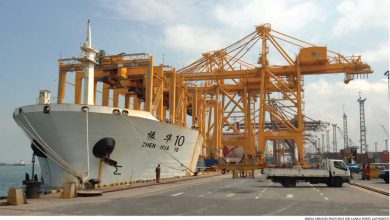
Sri Lanka possesses many of the fundamentals required for such a transformation. Its strategic location, internationally recognised ports, educated workforce and reputation for quality manufacturing provide a strong foundation.
However, the challenges lie not in a lack of potential but the ability to establish an ecosystem that enables businesses to compete, innovate and grow in global markets.
The country already has several internationally recognised export sectors. Apparel, tea, coconut and rubber based products, spices, and gems and jewellery continue to contribute substantially to export earnings.
Meanwhile, the Information and Communication Technology and Business Process Management (ICT/BPM) sector has emerged as one of the country’s fastest growing sources of foreign exchange.
And the recovery in tourist arrivals reflects Sri Lanka’s enduring appeal as a destination.
But the next phase of tourism development must focus not merely on increasing visitor numbers but enhancing revenue through high value experiences, luxury tourism, wellness, MICE (meetings, incentives, conferences and exhibitions) tourism and specialised travel segments.
Sustaining export growth requires more than increasing production volumes. The country must move beyond traditional commodity exports and focus on value addition, innovation, branding and deeper integration into global supply chains.
The recently announced National Export Development Plan (NEDP) 2026-2030 provides a strategic framework for positioning Sri Lanka as a competitive logistics and knowledge intensive export hub.
It identifies apparel and textiles, ICT/BPM, electronics and electrical components, food and beverage processing, coconut and rubber based products, boat building, logistics and transport, wellness products and value added agriculture as key drivers of future export growth.
Sri Lanka’s export performance in 2025 demonstrates the potential of several industries. Despite challenging global conditions, sectors such as coconut based products, food processing, ICT/BPM and specialised manufacturing have shown encouraging momentum.
The growth of tourism and services further reflects a gradual shift in economic value creation from traditional commodity based exports towards diversified products and knowledge intensive industries.
Meanwhile, opportunities emerging from initiatives such as the Colombo Port City could strengthen the island’s ambition to become a regional services hub.
The Japan-India-Sri Lanka Export Corridor proposed by the Japanese government represents another important opportunity. The initiative aims to integrate Sri Lanka more deeply into regional manufacturing and supply chains, by combining Japanese technology and investment capabilities with India’s expanding industrial ecosystem and vast consumer market.
Such a corridor could help address one of Sri Lanka’s traditional investment challenges – its relatively small domestic market. By providing access to India’s rapidly expanding economy, it could enhance Sri Lanka’s attractiveness as a destination for export oriented investment and open new windows of opportunity.
However, achieving this ambition requires addressing longstanding structural challenges.
Exporters continue to cite regulatory complexity, lengthy approval processes, inconsistent taxation policies and bureaucratic delays as barriers to competitiveness. Improving the ease of doing business through digital government services, streamlined customs procedures, policy consistency and faster approvals will be essential.
Sri Lanka cannot compete purely on cost – its competitive advantage must be built on quality, innovation, sustainability and trust. This makes the expansion of the export sector even more critical, as international partnerships and foreign investments can bring advanced technologies, management expertise, research capabilities and access to global markets.
Indeed, the nation stands at an inflection point in its economic journey.
Amid global uncertainty, the country has significant opportunities to reposition itself. With consistent policies, meaningful structural reforms and a dynamic private sector, exports, services and tourism can become the pillars of a stronger, more resilient and sustainable economy.
Meanwhile, the road to an export led economy calls for vision, committed leadership and the participation of a dynamic private sector.
Only time will tell whether the government acts decisively to make the NEDP a reality or allow the present opportunity to become yet another entry in Sri Lanka’s long list of missed opportunities.