LMD JULY 2026 COVER STORY
ASSESSMENT METHODOLOGY

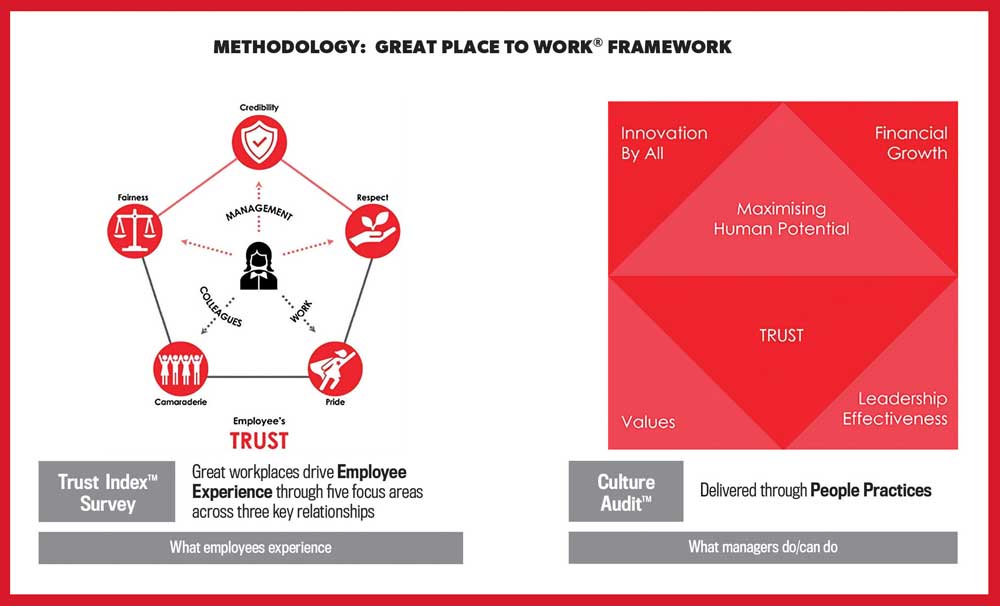
Great Place To Work® Inc. has been a global pioneer in the study and recognition of Best WorkplaceTM cultures for more than three decades. With a presence in over 90 countries and conducting assessments across 170 territories, it applies a rigorous, research based methodology to help organisations measure trust in the workplace, a driving force for business performance.
Through this methodology, Great Place To Work® Inc. provides a voice for employees to rate their workplaces, and an opportunity for organisations to be identified and certified by passing a global threshold for a high trust culture.
The Sri Lankan study is based on this global model, ensuring consistency and credibility across geographies. It primarily measures factors that contribute to building or breaking trust in the work environment, which forms the foundation of a Great Place To Work For All™ and in turn, the basis for being selected as a best workplace.
Moreover, the evaluation framework places an emphasis on the consistent employee experience of trust, regardless of role or background and the ability of employees to reach their full potential within organisations.
This accounts for 85 percent of the final assessment scoring. The remaining 15 percent evaluates daily experiences related to encouraging innovation for all, living by meaningful organisational values and leadership effectiveness, which promote a consistent experience of a Great Place To Work For All™ culture across an organisation.
FIRST STEP: CERTIFICATION
The Great Place To Work® programme recognises all eligible organisations that meet the gold standard for certification.
ELIGIBILITY
Organisations with 10 or more employees.
CRITERIA
An organisation in which employees are at least 70 percent positive about it being a great workplace by rating it in the Trust Index™ Employee Experience Survey by Great Place To Work® Inc. and on submission of a satisfactory Culture Brief™.
Organisations that are Great Place To Work Certified™ with 20 or more employees can opt to complete the required submission(s) and forward their results for recognition in the Best Workplaces™ lists if they fulfil the eligibility criteria.

GREAT PLACE TO WORK FOR ALLTM MODEL
Great workplaces for all are able to maximise human potential through effective leadership styles, meaningful values and a deep foundation of trust among all employees, regardless of who they are or what they do.
When these qualities are in place, such workplaces benefit from enhanced innovation and long-term financial growth.
TRUST
Fundamental to a great workplace is a strong sense of trust between employees and management. Leaders are credible, show respect and act fairly, helping to drive experiences of pride and camaraderie.
MAXIMISING HUMAN POTENTIAL
A great workplace for everyone regardless of who you are or what you do in the organisation.
VALUES
Organisational values are not merely written; they’re what employees experience in their day-to-day work lives – particularly what they see in their leaders.
LEADERSHIP EFFECTIVENESS
An effective leadership team has an emotional connection with organisational culture and its people, as well as the ability to create a coherent and effective strategy at every level of the business.
INNOVATION BY ALL
A great workplace culture enables an organisation to continuously improve, adapt quickly and generate pivotal opportunities, by tapping into the intelligence, skills and passion of everyone in the organisation.
FINANCIAL GROWTH
Financial growth is an expected outcome of a successful and positive great workplace culture. Great workplaces have been built with the vision and capabilities for long-term financial sustainability.

THE FIRST STEP
For organisations seeking recognition, the first step is to voluntarily undertake a paid assessment, which allows them to measure trust in workplace culture and subsequently be certified for one year, provided they meet the global threshold in positive employee experience through the feedback given by employees.
Certified organisations may then opt to be considered in the selection process for the Best Workplaces™ in Sri Lanka and Asia lists. To be eligible for the Sri Lankan study, organisations must employ at least 20 people within Sri Lanka and be registered entities in the country.

TWO LENS MODEL
The Great Place To Work® model adopts a two lens approach, combining the perspectives of both employees and people managers. The employee perspective is measured through the Trust Index™ employee survey, a proprietary tool comprising 59 statements on a five point Likert scale.
This survey – which contributes 75 percent of the overall score for selections – captures employee sentiment across key demographics such as role, age, tenure and gender, and includes open-ended questions to gather qualitative input. It provides power to employees to either validate or invalidate their workplaces.
It is administered in over 90 languages including Sinhala, Tamil and English – and strict procedures are in place to ensure anonymity and confidentiality, thereby encouraging honest feedback.
The survey is administered in multiple convenient modes such as email, kiosk and printed questionnaires, depending on the organisation’s requirement. The manager’s perspective is assessed through the proprietary Culture Audit™ tool, which contributes 25 percent of the score for selections.
This framework evaluates the established people practices effectiveness in sustaining trust in the long-term and integration of the organisational people philosophy. These submissions are reviewed by Great Place To Work® trained evaluators. Organisational structure, size and industry are considered during the final evaluation.
PARTICIPATION
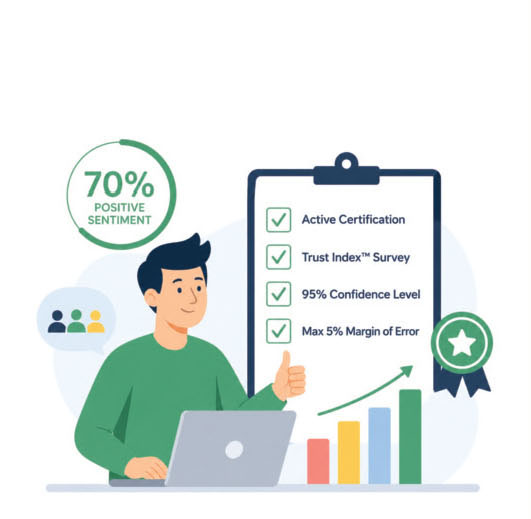
Organisations that participate must have an active certification by achieving at least 70 percent positive employee sentiment through the Trust Index™ survey within a period of one year from the time of selection. Survey results must meet a 95 percent confidence level with a maximum margin of error of five percent.
For organisations with fewer than 5,000 employees, all staff are surveyed. Larger organisations are assessed using a stratified random sample of either 5,000 employees or 30 percent of the total workforce, whichever is greater. This approach ensures that the sample size is both representative and statistically robust.

EVALUATION
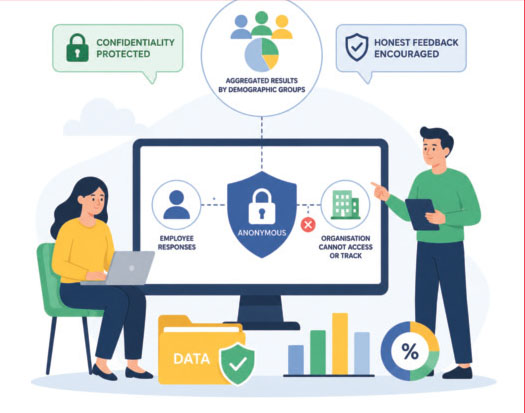
To safeguard anonymity, individual employee responses are anonymised and not accessible to participating organisations – and they cannot be tracked. Instead, results are aggregated into percentages representing demographic groups to ensure confidentiality and encourage honest feedback.
A stringent audit process is followed during and after the survey to verify the integrity of high scores, and check for manipulation of results, thereby reinforcing the credibility of the assessment.
ORGANISATION SIZE
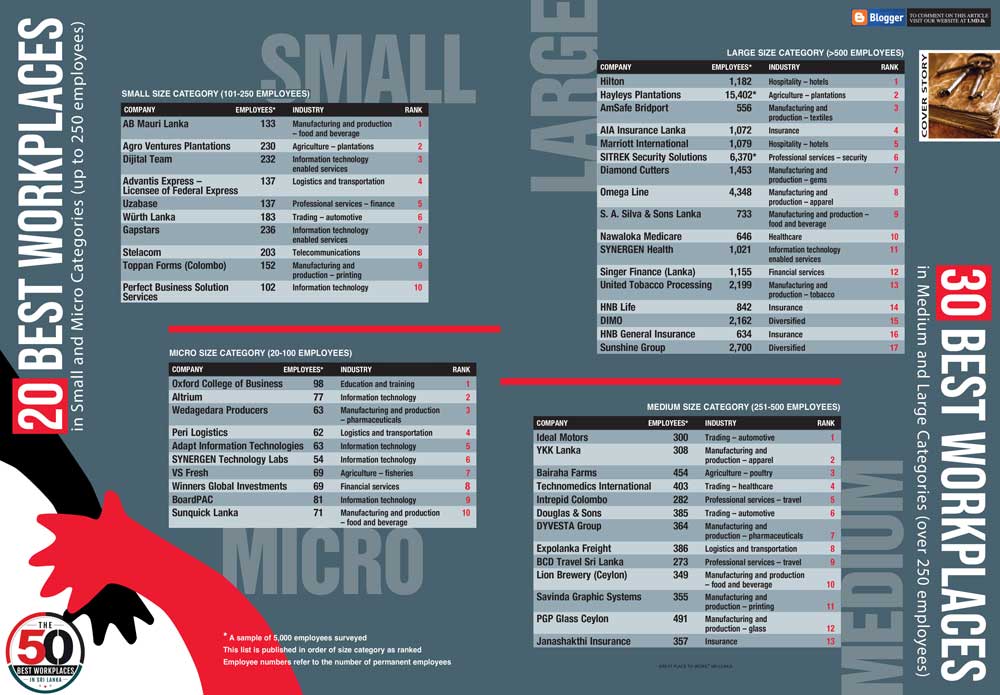
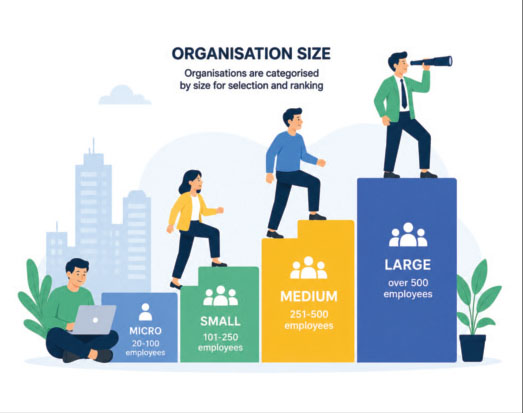
Organisations are then categorised by size for selection and ranking: micro (20-100 employees), small (101-250 employees), medium (251-500 employees) and large (over 500 employees).
In Sri Lanka, the 50 Best Workplaces™ list is finalised through selections into these categories with rankings determined by merit order of scores within the size categories.

POST-ASSESSMENT CULTURE IMPROVEMENTS
Beyond recognition, the assessment process provides organisations with valuable insights into improving organisational culture that drives better business performance.
Results relating to employee experience are shared through a dynamic portal pinpointing areas of strength and concern, enabling targeted interventions to improve the culture experience across key demographics.
This can be further studied through qualitative methods such as identifying root causes for priority areas via focus group discussions with employees, as well as through an onsite Culture Audit™ – a methodology comprising a series of discussions with employees, people managers, practice owners and human resources, to understand the implementation and effectiveness of submitted practices.
Coupled with survey data, this two lens model can be used to highlight gaps and support action planning by the management team to improve perceptions and/or people practices within the organisation, thereby creating a better employee experience.
The 2026 rankings of the 50 Best Workplaces™ in Sri Lanka were finalised based on surveys conducted between April last year and March 2026.

TRUST AS A CURRENCY
SUSTAINABLE WORKPLACES THAT ANCHOR SRI LANKA’S GROWTH
In times of upheaval, Sri Lanka has shown the world what resilience truly means and within this environment, businesses have been continuously tested on their ability to adapt and endure.
Indeed, in volatile times trust becomes the cornerstone of fortitude and innovation, enabling employees to believe in their leaders, organisations and a shared vision for the future. Just as leaders strive to earn the confidence of clients, they must first secure the trust of their own people, as it is employees who carry the mission forward.
Best workplaces exemplify this principle. In the long-term, they serve as beacons of resilience, foster a culture of innovation by all and demonstrate people centric leadership. They create spaces where employees feel valued, empowered and inspired to contribute their best.
By prioritising greater transparency, inclusivity and continuous development, Best Workplaces nurture sustainable growth, demonstrating that when employees thrive, businesses flourish and the nation’s progress is fuelled.
STUDY SNAPSHOT This year marks the 14th consecutive year of the Best Workplaces™ study in Sri Lanka, contributing to the world’s largest ongoing study on trust in the workplace by Great Place To Work®.
Conducted from April 2025 to March 2026, the study captured insights from over 80,000 employees across over 150 assessments with an 86 percent average response rate.
Representing over 93,000 employees from over 200 organisations across more than 20 key industries, the research applied a globally standardised methodology to identify Sri Lanka’s 50 Best Workplaces™ for 2026.
These results establish a benchmark for trust and highlight the behaviours that define high trust workplaces in the country today.
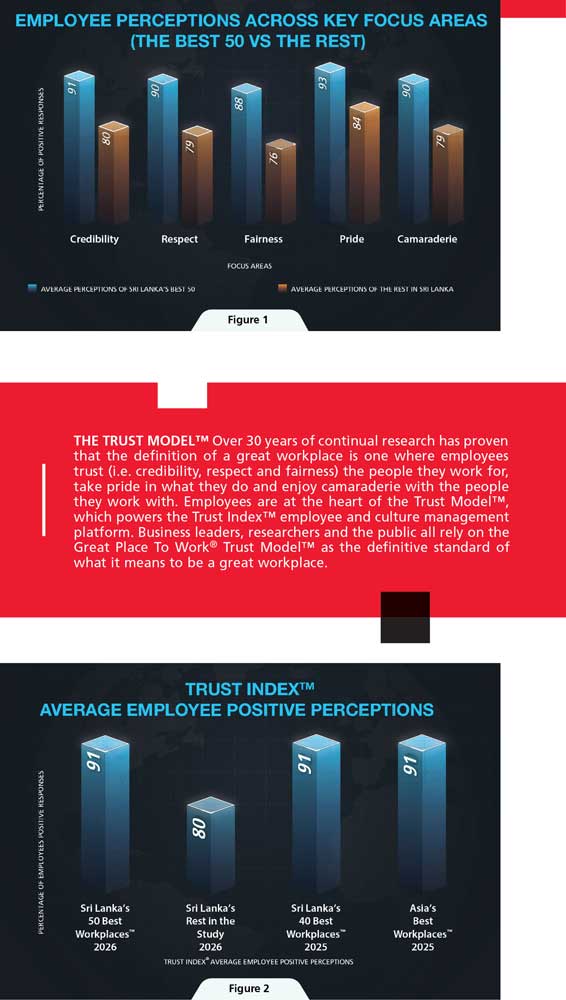
THE BIG PICTURE The collective employee experience of the Trust Model™ is represented through the average Trust Index™. Figure 2 highlights a 91 percent positive Trust Index™ employee experience survey score for the Best Workplaces™ in Sri Lanka 2026, derived from employee responses to 58 globally benchmarked statements.
Notably, this score mirrors the results of the 2025 study cycle, underscoring the consistency of the list makers in maintaining high employee sentiment. In both cycles, the rest trailed by 11 percentage points, highlighting a clear distinction between the Best Workplaces™ and the rest in terms of employee experience.
On a broader note, the Best Workplaces™ in Asia also recorded a 91 percent positivity score in 2025, placing Sri Lanka’s Best 50 in 2026 on a par with leading organisations across the region.
DEMOGRAPHIC HIGHLIGHTS Based on the Great Place To Work For All™ model, organisations with greater consistency across standard demographics such as gender, age, tenure and managerial role were selected as Best Workplaces, creating a natural divide in consistency among the best versus the rest.
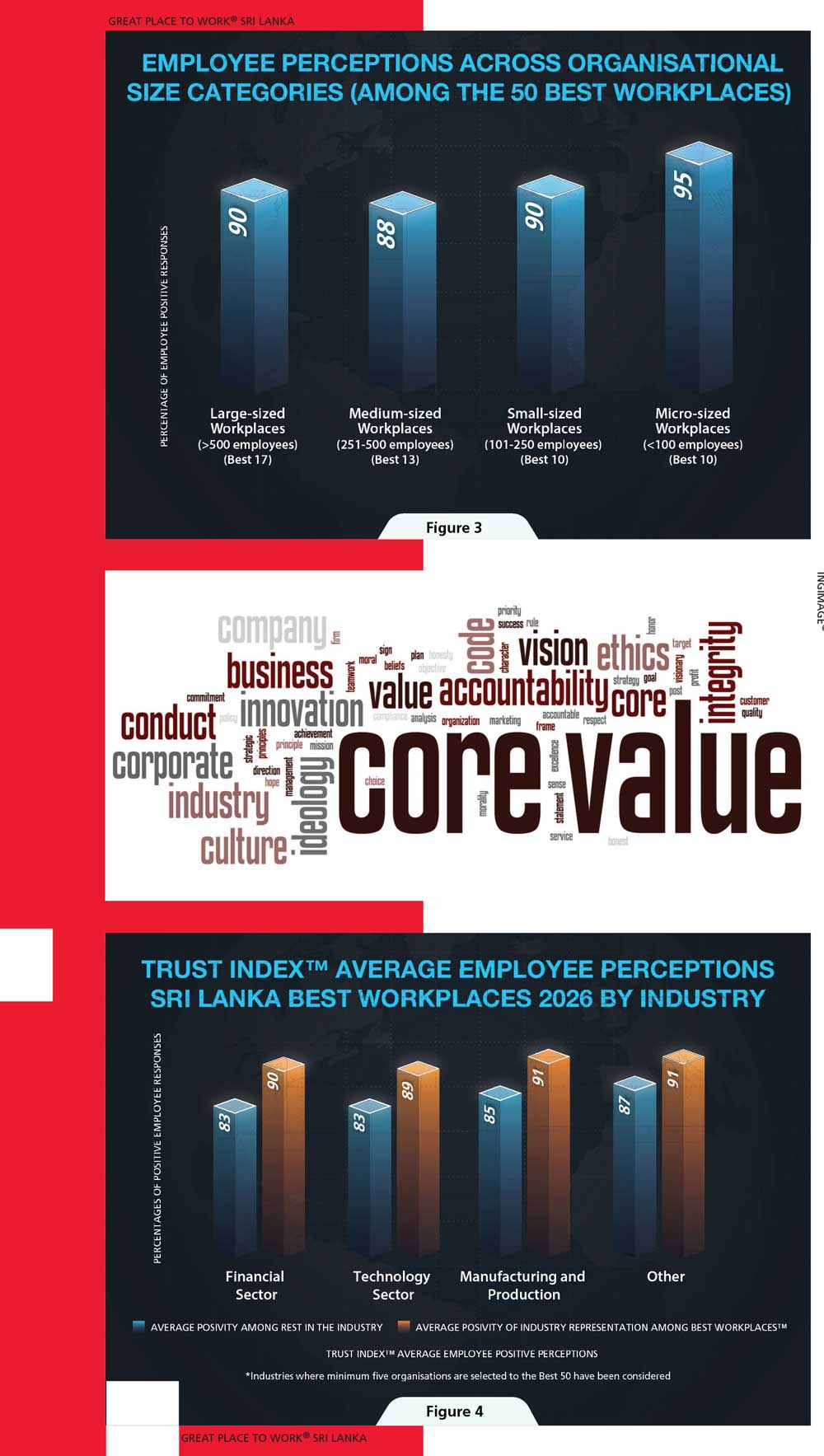
While the Trust Model™ applies across all geographies, industries and organisational sizes, it is accepted that the complexity of managing culture increases with the size of an organisation. Figure 3 highlights average employee positivity among the Best Workplaces™ based on selected size categories.
By industry, the highest representation in the study was from organisations across the manufacturing and production, and financial, sectors. Figure 4 summarises the average positivity across the key industries.
Looking ahead, this report will explore the factors that enable the Best Workplaces™ in Sri Lanka to stand apart from the rest.
By examining employee perceptions around practices, leadership behaviours and cultural attributes that drive these outcomes, the study highlights how organisations can foster trust, sustain performance and differentiate themselves in ways that engage employees in the long run.
ORGANISATIONAL CULTURE HEALTH INDICES The Trust Index™ Survey serves as a guiding framework for organisations, providing a holistic view of workplace culture and the elements that foster a thriving environment of trust.
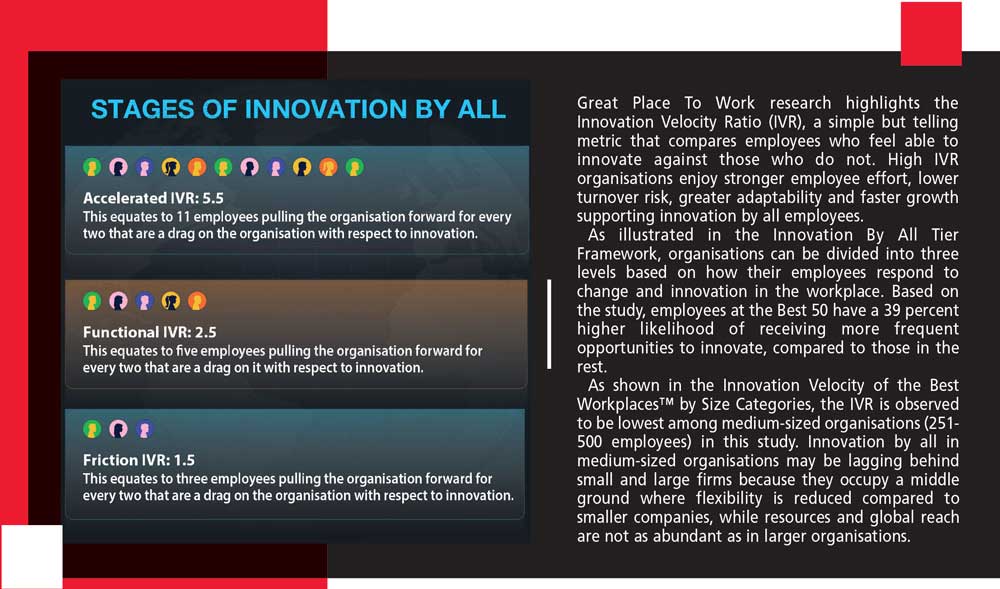
It includes indicators of a healthy organisational culture and offers valuable insights into the beneficial outcomes of sustaining high trust cultures that are truly a Great Place To Work® For All™ (Figure 5).
Organisational pride emerged as the highest scoring index with 95 percent of employees stating that they’re proud to tell others that they work at their organisation – a slight decline of one percent compared to the previous study cycle. This strong sense of advocacy is closely linked to the broader dimension of pride within the Trust Index™ Survey, where employees express pride in their organisation’s corporate image and identity.
Retention is another critical outcome with employees in the best consistently expressing their intention to remain with the organisation long term (92%). The study data shows this commitment to be related to factors such as egalitarian treatment, demonstrated sincere care, leaders acting as role models, honest and ethical business practices, and the availability of unique and special benefits. In contrast, the rest lags by a substantial 11 percentage points, highlighting the need for improvement.
Another important outcome to note is daily motivation with employees in the best scoring 91 percent while the rest lags by a substantial 12 percentage points. For the best, the study finds that motivation is influenced by management delivering on its promises and the availability of facilities that contribute to a positive work environment.
However, employees in the rest perceive these areas less positively, which can negatively impact their motivation and enthusiasm in their daily performance. A good work environment extends beyond a clean and clutter free office; it requires the right equipment to perform effectively, a workplace that is physically safe, appropriate ergonomic furniture, proper break facilities, quiet zones and biophilic elements.
Without such improvements, the rest risks a further decline in motivation, leading to reduced productivity and ultimately, weaker innovation and financial growth within the organisation.
GREAT PLACE TO WORK® FOR ALL™ The philosophy of a Great Place To Work® For All™ begins with a simple but powerful principle: every employee, regardless of his or her role or background, should consistently experience a positive workplace environment.
This is not merely about creating a pleasant atmosphere; fostering an enabling and empowering environment is a strategic imperative for organisations that aspire to achieve stronger financial performance, and drive long-term sustainability and innovation by all.
When employees truly feel trust, they align with their organisational goals, support leadership direction and contribute their best efforts. This alignment translates directly into improved productivity, higher performance, stronger customer relationships and ultimately, superior financial results.
At the heart of this transformation is meaningful values and effective leadership – it begins with leadership behaviour.
Leaders who embody organisational values and demonstrate sincerity in their actions foster trust and fairness, thereby unlocking greater human potential within their teams. This environment encourages employees to innovate, collaborate and take ownership of outcomes.
In today’s volatile business landscape, innovation is no longer optional; it is critical for survival. Organisations that cultivate high trust cultures are better positioned to adapt quickly, generate creative solutions and remain competitive in the face of disruption.
When the elements of trust, meaningful values and effective leadership are firmly in place, the workplace becomes more than just a setting for daily tasks – it evolves into a platform where creativity flourishes and innovation by all becomes a natural outcome.
KEY ELEMENTS OF A GREAT PLACE TO WORK FOR ALL™
LIVING BY MEANINGFUL VALUES Employees in the Best 50 report that their ‘top management strongly embody the values of their organisation’ with an impressive 92 percent positivity (Figure 6).
However, walking the talk – denoted by the areas of ‘managers keeping promises’ and ‘management actions matching its words’ – scores relatively lower, though it outperforms the rest by a margin of 14 percentage points. These findings highlight the need for both groups to be more mindful in their commitments, and strengthen consistency between words and actions.
The study shows that walking the talk is highly influenced by how leaders manage job coordination. When management assigns job responsibilities, it must be based on a proper plan – and one that is effectively executed. Grievance handling is another area strongly linked to perceptions around walking the talk.
A key quality of leaders is their ability to understand employee grievances and take the necessary actions. Effective grievance management requires leaders to actively listen, communicate their reasoning and link decisions back to the values they espouse. Doing so not only builds trust but also ensures that employees feel safe, heard and respected.
Walking the talk is also tied to management’s commitment to honest and ethical business practices, especially during difficult times. For example, choosing not to lay off employees during setbacks unless it is a last resort or refusing to engage in bribery to secure business deals, sends a powerful message.
Embedding organisational values into hiring and promotion decisions ensures that leaders and employees across the organisation consistently demonstrate the company’s culture. This alignment creates workplaces where values are not merely words but actions that drive sustainable success.
LEADERSHIP EFFECTIVENESS As Figure 6 shows, while experiences relating to leadership effectiveness are performing strongly on average among the Best 50, the rest shows significant gaps, particularly in manager approachability and demonstrating sincere care.
Improving approachability requires managers to be more inviting and open in their interactions, while accepting feedback and suggestions.
Leaders who encourage employees to ask questions, share ideas and voice concerns without responding defensively, create an environment where individuals feel included and empowered to speak up. This sense of openness helps employees see themselves as part of something larger than their immediate role, thereby strengthening collaboration.
Effective leaders cascade organisational strategy across the workplace, co-create short and long-term goals with employees, and share a clear vision. This strategic cohesion ensures that employees understand the direction of the company so they can align with and contribute to its success.
In parallel, building an authentic connection with employees creates an environment where they can meaningfully work towards the set direction. Approachability plays a critical role here, as employees must feel comfortable approaching leaders when bottlenecks arise.
Equally important is managers consistently demonstrating sincere care. Simple actions such as checking on employees when they’re sick or taking employees’ personal commitments into consideration when urgent work requirements overlap with personal time, go a long way in creating an environment where employees continue to give their best.
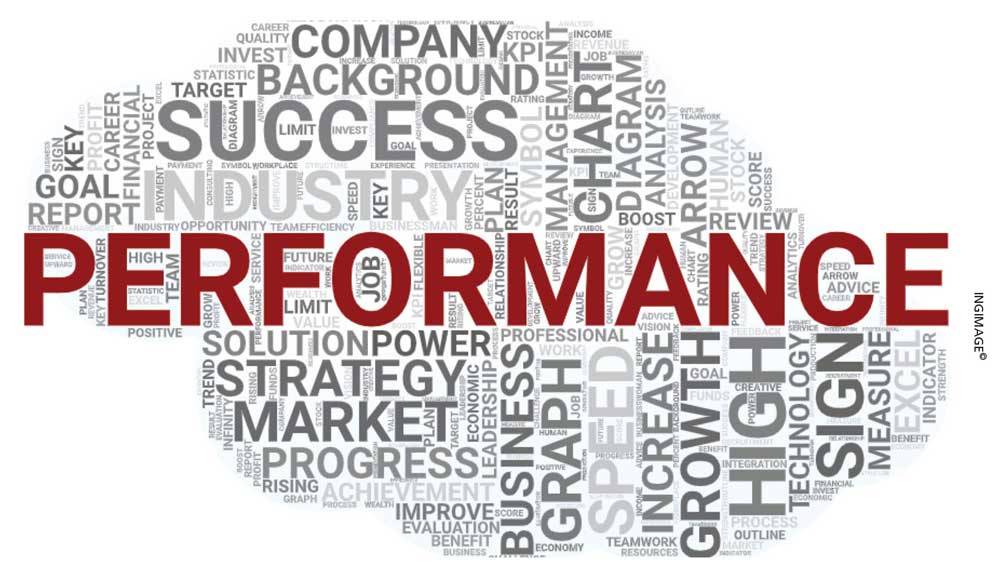
INNOVATION BY ALL This is an expected outcome in a workplace where every employee is empowered to contribute ideas, drive change and shape the future. Innovation by all thrives in high trust, inclusive cultures that lead to substantially higher growth and agility.
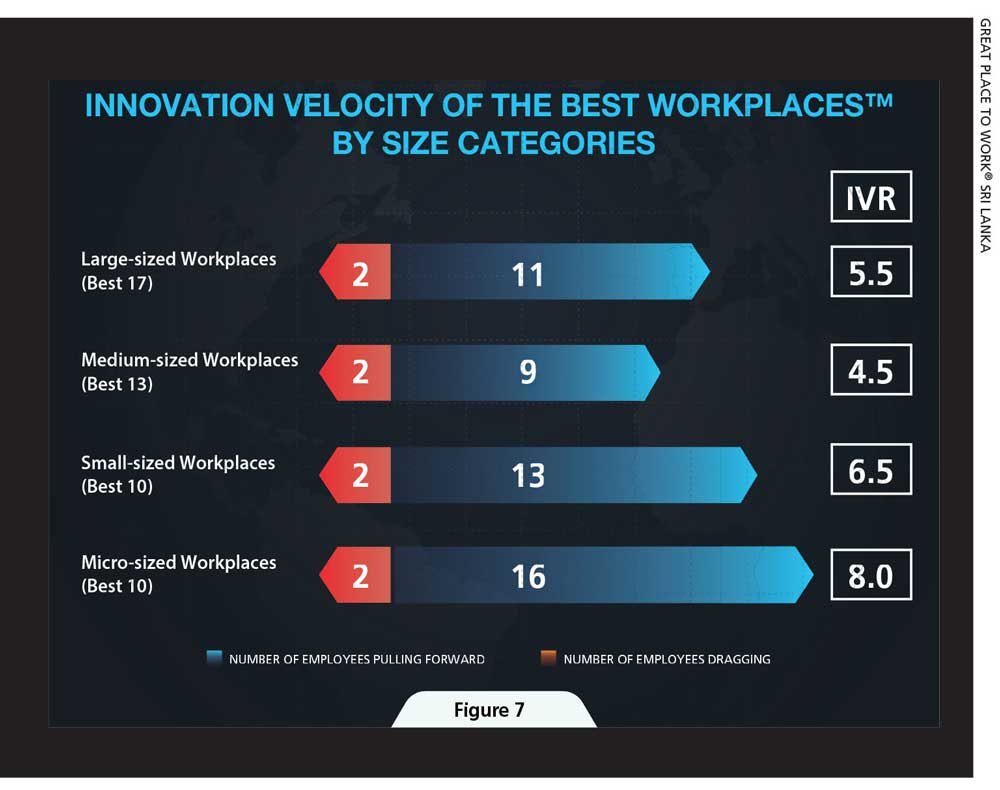
Among the Best 50, agility among employees emerges as a strong force, earning an impressive average of 92 percent positivity (Figure 6). In comparison, the rest lags by nine percentage points, highlighting the need to encourage an agile mindset through conversations that help stakeholders understand the importance of working together as one team to achieve organisational goals.
However, agility alone is not enough. The survey results reveal that the rest also falls far short in initially involving employees in decisions that directly affect their jobs or working environments. To strengthen innovation by all, management must ensure that employees are actively engaged in shaping the future of their organisations.
For example, before implementing major changes – such as restructuring teams or introducing new technologies – leaders should seek employee inputs through focus groups, open forums or surveys. This not only results in better informed decisions but also fosters a sense of ownership and belonging among employees.
For the best – whether micro, medium or large in employee numbers – the challenge lies in sustaining their culture of innovation. Although average employee perceptions of innovation by all remain relatively high, the study data shows a much wider dispersion in experience across organisations compared to other areas.
Therefore, leaders must continue to review and refine practices that encourage innovation, ensuring that all employees are confident in their ability to contribute and in the organisation’s ability to quickly adapt and evolve when necessary.
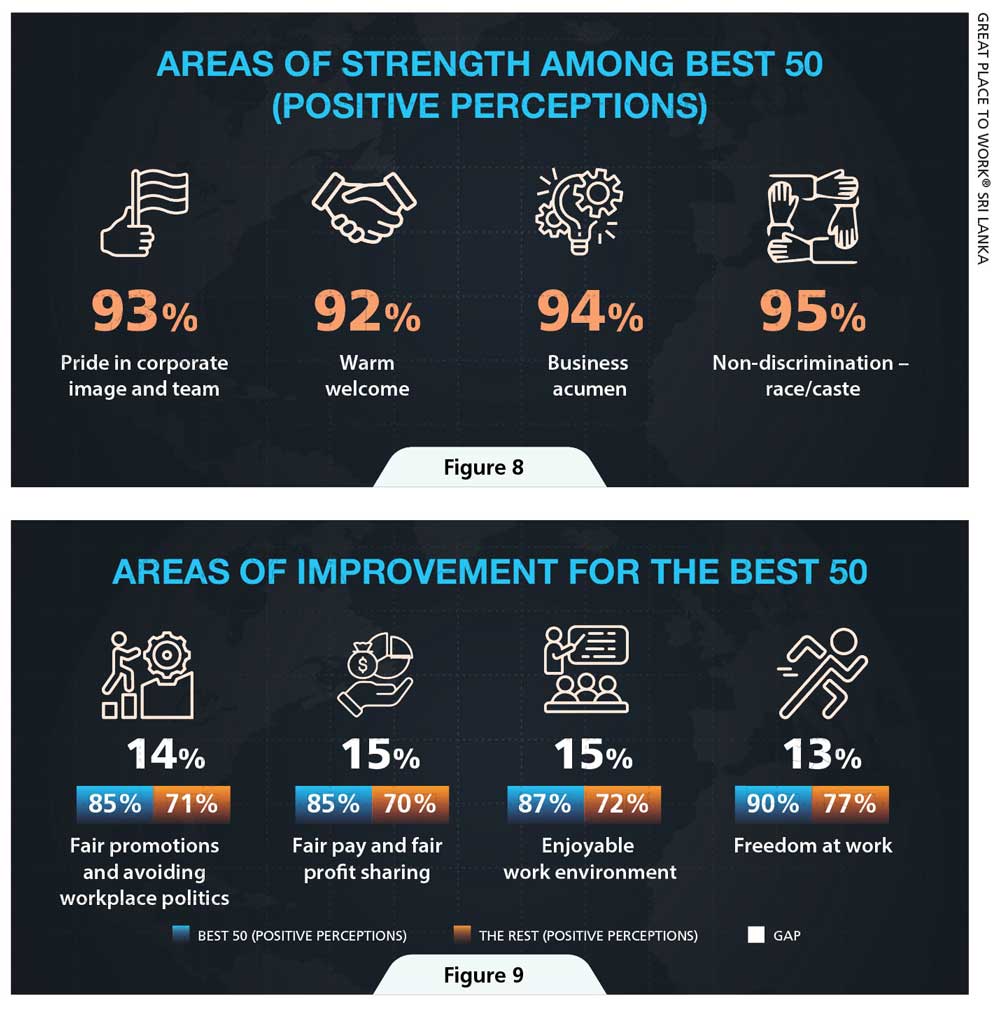
WHERE THE BEST EXCEL The key areas of strength for the Best 50, as identified by their employees, are summarised in Figure 8. As the number one strength, pride in the organisation stems mainly from employees’ belief that the quality delivered is excellent and the organisation’s overall impact on the community is significant.
Furthermore, the study shows that employees in the best demonstrate strong team cohesion, which leads to higher levels of pride in their collective achievements.
High positivity for a warm welcome is the second strongest area and has directly resulted in a more positive sentiment towards camaraderie within the organisation.
From a leader’s perspective, business acumen is a critical factor in effectively driving the organisation towards its goals. The study shows that employees among the best perceive business acumen very positively at 94 percent. It encompasses the ability to skilfully manage operations with sound judgement, understand financial drivers, optimise resources and make strategic decisions that balance growth with sustainability. This is also a key area under effective leadership.
OPPORTUNITIES FOR GROWTH While the Best 50 demonstrates strong positive employee perceptions in many areas, employee feedback highlights four critical areas with opportunities for growth. These areas also require attention among the rest (Figure 9).
To manage perceptions of fairness in promotions, organisations must establish transparent criteria supported by fair performance evaluations and open communication about career pathways. This enables employees to perceive that advancement is based on merit rather than favouritism, thereby reinforcing employee trust in leadership. Improving in these areas is vital because fairness and integrity are cornerstones of high trust cultures.
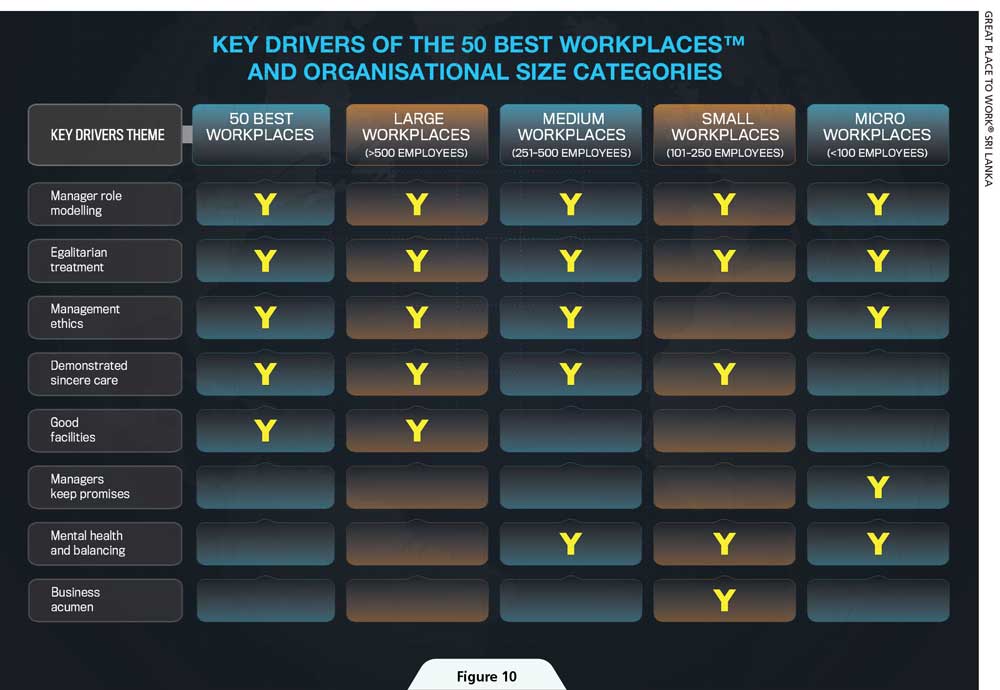
And to address the issue of workplace politics, organisations are encouraged to strengthen accountability and ensure that performance is measured using standardised metrics with minimal subjectivity that could be attributed to favouritism or undue bias.
While workplace politics significantly impacts perceptions of performance evaluations and promotions, it can also negatively affect perceptions around assigning job responsibilities, rewards and recognition, teamwork and employee wellbeing.
Additionally, fostering a culture of collaboration with clear role definitions, transparent communication of expectations and criteria, and recognition of collective team achievements can help reduce unhealthy competition and reinforce the integrity of the process.
For both the best and the rest, fair pay and fair profit sharing under the area of compensation require focussed attention. While many employees generally feel they’re compensated fairly for the work they do, there is still room to strengthen transparency and consistency in pay practices.
Organisations can reduce this gap by conducting regular market benchmarking, ensuring pay structures are aligned with industry standards and openly communicating how compensation decisions are made, while also creating opportunities for employees to clarify their concerns through one-on-one discussions.
Employees can often feel disconnected from the profits their organisations generate. Introducing and communicating clear and inclusive profit sharing mechanisms, as well as linking additional rewards more directly to both personal and organisational performance, can help employees feel that their contributions are recognised in fair and tangible ways. This also strengthens the sense of ownership and alignment with organisational goals.

Improving in these areas is critical because compensation and profit sharing are powerful drivers of trust, motivation and retention. When employees believe they’re rewarded fairly and share in the success of the organisation, they become more engaged, ultimately fuelling stronger financial performance and long-term competitiveness.
Lastly, creating a fun workplace and an environment where employees have the freedom to work also provides an opportunity for sustainability for both the organisation and its people.
KEY DRIVERS The key drivers among employees of the Best 50, identified through correlations in employee responses to the Trust Index™ Survey, represent the critical elements that shape how employees emotionally connect with their workplace and perceive it as truly a great place to work.
These drivers serve as the foundation for reinforcing a culture of trust and long-term commitment. They are summarised in Figure 10.
It is noteworthy that the overriding statement – ‘Taking everything into account, I would say this is a great place to work’ – registered a slight decline of one percent compared to the 2025 study cycle. This subtle shift suggests a marginal weakening of employees’ emotional connection to their organisations among the Best Workplaces™ for 2026, even as overall perceptions of workplace trust and culture remain consistently high.
Although the decline is only one percent, the trend since 2024 indicates a gradual erosion that should not be overlooked. Organisations should proactively invest in reinforcing employees’ emotional connection to the workplace.
According to the study, the most significant driver of emotional connection among employees in the best is managers acting as role models, which is also a key indicator of meaningful values – a core element in creating a great place to work for all. Simply having a set of written values isn’t sufficient; managers must serve as living examples of these values.
Secondly, egalitarian treatment with an impressive overall score of 93 percent stands out as another key driver. Employees in the study affirm that they are treated as full members regardless of their position, which reaffirms the Best 50’s commitment to inclusivity and fairness.
This principle resonates deeply with the ‘for all’ framework, ensuring that every individual, regardless of role and background, experiences dignity and respect. When everyone’s contribution is valued and considered important to the running of the business, organisations can maximise the potential of all employees.
LAST WORDSIn today’s rapidly evolving work environment, while organisations may achieve steady progress, external disruptions can quickly threaten organisational performance, financial stability and growth.
This underscores the critical importance of prioritising employees, who are the foundation of every business. Employees’ experiences directly shape organisational performance and listening to their voices provides essential insight into workplace culture.
Benchmarking against other organisations and industries is also critical, as both culture and employee expectations continue to evolve over time. Sustainable growth is the ultimate objective of any organisation but it cannot be achieved without a workforce that is engaged, motivated and fulfilled.
The findings of the study highlight where the 50 Best Workplaces™ in Sri Lanka stand, offering valuable lessons for all. Organisations that act decisively to build trust, strengthen workplace culture and invest in employee wellbeing will secure resilience, innovation by all and long-term success. Those that fail to adapt risk falling behind in an increasingly competitive and volatile landscape.
Great Place To Work’s mission is to help every place become a Great Place To Work For All™, so that organisations can maximise human potential through a High Trust, High Performance Culture™ that drives business, improves lives and creates a better society.
No matter where you are in your journey, you’re invited to join and contribute towards achieving the vision of making Sri Lanka a great place to work.
FOOTNOTE For more information on how to begin your journey of becoming great, contact Head of Assessments Ruwani Alwishewa (0766 301200 and lk_support@gptw.com,call 4545594 or visit www.greatplacetowork.lk).
– Compiled by Great Place to Work® in Sri Lanka Best Workplaces

CATEGORY AWARDS
The Great Place To Work® Category Awards recognise organisations that demonstrate workplace excellence in line with the Great Place to Work For All™ model. These special awards highlight workplaces that consistently deliver a positive employee experience and sustain a High Trust, High Performance Culture™.
Organisations that excel in surpassing these standards are honoured across four distinct award clusters: Excellence in People Initiatives (two outstanding For All™ practices); the Cube Award for Special Recognition; Awards Based on Organisation Size and Classification; and Legends (organisations listed for five or 10 consecutive years).

EXCELLENCE IN PEOPLE INITIATIVES
Great Place To Work® in Sri Lanka views the Excellence in People Initiatives recognition as an important opportunity to raise awareness, and promote best practices that contribute to building and sustaining a high trust workplace culture.
Organisations that receive this recognition demonstrate high achievement in both their submissions on people practices, which account for two-thirds of the final score and employee experience scores, which contribute the remaining third.
The enhanced Great Place To Work For All™ model identifies five focus areas that management must prioritise to deliver a consistent and impactful employee experience. These areas are designed to strengthen engagement and provide organisations with a competitive advantage.
For the current year, two practices were selected for recognition under the Excellence in People Initiatives category. These highlight areas particularly relevant to the Sri Lankan workplace context and emphasise the importance of fostering stronger employee engagement. The awards were presented for excellence in Living the Values and Encouraging Innovation by All.

EXCELLENCE IN LIVING THE VALUES
Organisational values extend beyond statements displayed on walls or websites; they are reflected in the everyday experiences of employees and demonstrated through the actions of leaders.
When values are actively lived, they foster a stronger sense of pride among employees, enhance the credibility of management, and contribute to a consistent and meaningful workplace experience across the organisation.
The award for Living the Values is presented to an organisation that has established a clear foundation of values that are both relevant to its business and distinctive to its culture.
Recognition is based on evidence of practices and leadership behaviours that align with these values in daily operations. Such organisations showcase how values shape workplace culture, influence employee experiences, and guide leadership in strategic decisions and critical actions.

EXCELLENCE IN ENCOURAGING INNOVATION BY ALL
Innovation is a critical driver of sustainable business success and should be embedded as a core element of organisational strategy.
A Great Place To Work For All™ culture enables employees to contribute to innovation, creating a workplace that continuously improves, adapts quickly, and generates new opportunities by harnessing the collective intelligence, skills and passion of its people. When nurtured effectively, this culture supports accelerated productivity and long-term growth.
The award for Encouraging Innovation by All is presented to organisations where employees feel empowered to make a meaningful difference. To achieve this, organisations must establish people practices that intentionally encourage employees to share new ideas and propose better ways of working.
In addition, great workplaces implement distinctive policies and programmes that recognise and reward employee contributions to innovation. Evidence of success is demonstrated through examples and stories of employees across different roles offering suggestions, with feasible ideas being implemented, monitored and shown to positively impact the organisation.
CUBE AWARD
BEST IN BOLD ACTS OF LEADERSHIP/MOVEMENT LEADERSHIP
The Best Workplaces™ aspire to achieve more than business success alone. They’re driven by a commitment to long-term sustainability and meaningful contribution to society.
This year’s study continues to capture courageous leadership, showcasing how organisations cultivate a Great Place To Work For All™ in a way that benefits not only the organisation but employees and a wider community too.
At the heart of this movement is leadership that balances profitability with purpose, striving not only to build strong businesses but also drive meaningful change in the world. Initiatives in this area are characterised by a clearly defined scope, substantial resource commitment, measurable outcomes and active multi-stakeholder involvement, demonstrating a genuine dedication to the organisation’s purpose.
When such programmes are aligned with the organisation’s vision and mission, they foster a deeper sense of connection among employees, inspiring them to engage more meaningfully with their workplace and reinforcing a culture of trust and pride.
BEST IN CLASS AWARDS

ORGANISATION SIZE (EMPLOYEE STRENGTH)
The challenges of sustaining a strong workplace culture vary according to the size of the employee population. To ensure fair comparison, organisations recognised among the Best 50 were evaluated and ranked within their respective size categories.
The 50 Best Workplaces™ comprise 20 organisations with less than 250 employees and 30 organisations with more than 250 employees. The list has been categorised into four segments: 10 organisations in the micro category (under 100 employees), 10 in the small category (101–250 employees), 13 in the medium category and 17 in the large category.

ORGANISATION CLASSIFICATION
This recognition includes the top multinational corporations (MNCs) and public listed companies (PLCs) in Sri Lanka.
The awarded organisations in these categories are selected based on the highest combined scores achieved through employee perceptions measured by the Trust Index™ survey and the evaluation of people practices within the Culture Audit™ framework.

ORGANISATION INDUSTRY Among the Best 50 – the leading organisation in each industry will be recognised.
LEGEND STATUS
Building and sustaining a great workplace is a continuous journey that requires consistent focus and commitment. Organisations that demonstrate long-term dedication to employee engagement and people management are honoured through the Legends recognition programme.
Those that have maintained a place on the Best Workplaces™ list for five and 10 consecutive years are inducted as Five Year Legends and Ten Year Legends respectively, and are inducted into the Great Place To Work Hall of Fame.
This year, AmSafe Bridport joined the ranks of Five Year Legends alongside Hilton and Synergen Health from the Best Workplaces™ in Sri Lanka 2026 list. Honourable mentions among organisations in this year’s Best 50 list include AIA Insurance Lanka, DIMO, Advantis Express, Licensee of Federal Express and Oxford College of Business. No organisation newly achieved Ten Year Legends status from the 2026 Best 50.
BEST WORKPLACES IN ASIA
The annual Great Place To Work® study of the Best Workplaces™ in Asia honours outstanding organisations across the Asia-Pacific and Middle East regions. The regional list categorises recognition into two segments: Best Large Workplaces in Asia (over 500 employees), and Best Small and Medium Workplaces in Asia (50-500 employees).
This 2026 list for Asia incorporates results from a study conducted between April 2025 and June 2026, and is scheduled for release in September this year. Organisations among the 50 Best Workplaces™ in Sri Lanka with over 50 employees will be eligible for selection.
FOOTNOTE Winners for category awards will be announced at the Great Place To Work® Sri Lanka Best Workplaces Gala Awards Ceremony in September 2026.