BRAND DEVELOPMENT

Compiled by Yamini Sequeira
BRANDING BEYOND ALGORITHMS
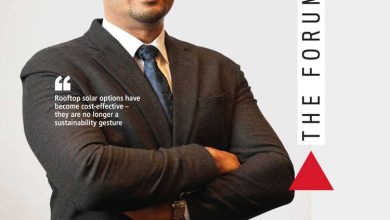
Nadi Dharmasiri shares insights into the minefield that reflects brand building

Q: How has digital first behaviour reshaped brand building – and how brands are managed and scaled globally?
A: Digital first behaviour has essentially removed the gap between a brand and the end user. As a result, brands today are built in public, managed in real time and scaled through community.
Digital platforms facilitate information sharing while enabling direct dialogue with end users, allowing brands to test, learn and shape their personality at speed. Brands are challenged to remain consistent yet adaptive – and often even personalised because every move is now visible and difficult to reverse.
Q: Are algorithms and platforms now shaping brand identity as much as strategy itself?
A: Algorithms shape expression rather than identity. They influence visibility, format and timing, which in turn affects tone and patterns in a brand’s digital footprint.
However, purpose, identity, values and promise must always take precedence. If platforms begin to define brands, there’s a risk of commoditisation. Ideally, algorithmic feedback should guide execution while strategy remains rooted in human truth.
Q: What are the new rules of branding in an era dominated by social media, influencers and real-time engagement?
A: Extreme transparency and openness now matter more than perfection. Flaws, when handled properly, can humanise brands and build trust. Alongside this is storytelling with the same brand narrative expressed in different ways across multiple platforms.
Another shift is community co-ownership: influencers and customers now co-author brands, rather than brands being controlled solely by brand custodians in offices. Authenticity and credibility are no longer optional; they’re the price of entry. But authenticity without consistency is simply noise.
Finally, speed is non-negotiable. Today’s consumers expect immediate and meaningful engagement, driven by relevance and clarity while also expecting brands to remain authentic to their core identity – because in a real-time world, silence is often interpreted as indifference.
Q: Why do some businesses still struggle to build differentiated brands despite having quality products?
A: Product quality is the minimum requirement to enter and compete. Many businesses undervalue insight and positioning, often relying on category trends or founder intuition instead of research.
Branding is frequently reduced to logos, packaging and advertising, rather than understood as a holistic system that connects product, culture and customer beliefs. Building an emotional connection between the brand and consumer is key.
The absence of marketing at the board level reflects this gap. If leadership perceives branding as a cost rather than capital, budgets remain small and talent is not developed.
There is often limited investment in research, strategy and long-term brand building. A brand should be treated as a balance sheet asset – one that drives margin, supports talent retention and strengthens export resilience.
Q: To what extent does the confusion between branding and marketing continue to affect local businesses?
A: The confusion remains quite significant. Marketing is the toolbox: campaigns, media, promotions and the ‘7Ps.’ Branding is the blueprint: strategy, story and promise.
Amid this confusion between branding and marketing, most local companies chase quarterly sales spikes, sacrificing building durable brand equity. This creates price wars instead of brand loyalty.
If the distinction between the two is understood and respected, it will most often support sustainable value creation beyond tactics.
Q: Can local brands compete internationally without scale?
A: Yes, if they compete on distinction rather than distribution. Without scale, local brands must win through cultural uniqueness and premium positioning.
Origin can be a powerful non-replicable advantage. Instead of chasing mass markets, brands should focus on owning a clearly defined global niche.
However, execution must be world-class. Packaging, user experience and storytelling need to meet global standards. Digital plays a key role here, enabling smaller brands to find and build a loyal international audience.
Q: How are consumer expectations changing globally particularly around authenticity, sustainability and purpose?
A: Consumer expectations have shifted from what you sell to how you behave. Purpose can no longer sit as a tagline; instead, it must be reflected across supply chains, wages and even environmental choices.
Sustainability today is closer to risk management than CSR, which in many ways has become outdated. Therefore, strategy must embed environmental, social and governance (ESG) and ethics into products and operations.
At the same time, personalisation must be handled responsibly. Relevance builds trust but overreach can quickly erode it. It is vital to be mindful of crossing thresholds.
The interviewee is a branding and marketing strategist, and a motivational speaker.
Q: Are brands built more on emotional connection than functional superiority these days?
A: Emotion drives choice and loyalty, while function strengthens and defends the brand.
In many categories where functional differences are minimal, emotional resonance acts as the tiebreaker. However, emotion without performance does not sustain loyalty.
The strongest brands bring both together: they perform well and feel meaningful to the customer – ‘This brand performs better and it really understands me too.’
Q: What will define successful brands over the next decade?
A: Trust will be the foundation, supported by consistency, technology and storytelling.
In an age of AI generated content and synthetic media, real and verified behaviour will matter more than viral moments.