
MIND POWER
BEYOND THE MENTAL NOISE!
Practical strategies for peace of mind BY Archana Law
When was the last time you did nothing? No emailing, texting, internet, TV, chatting or reading – not even reminiscing about the past or planning for the future…
Our world is defined by constant motion – e.g. notifications, deadlines, traffic and digital overload. That calm feeling is a luxury that’s reserved for retreats or vacations. With our relentless pace, we’re always doing something and our minds are constantly occupied.
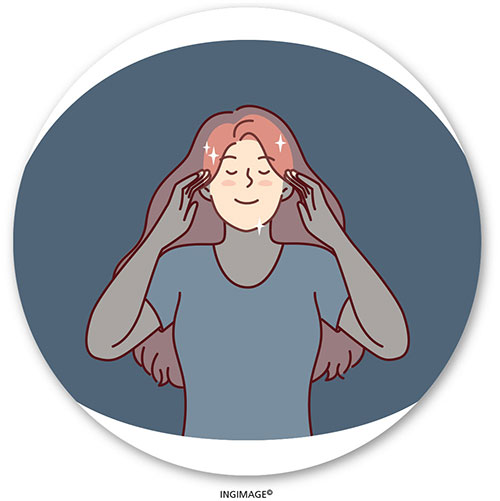
And our most valuable resource – the lens through which we experience every moment of our lives; be it happiness, contentment or emotional stability – is our mind. It’s also the very tool we rely on to stay focussed, creative and spontaneous, and perform at our best in everything we do.
But despite its importance, we rarely make time to care for it!
The result is predictable: we become stressed. Our racing thoughts spin in endless, repetitive and overwhelming cycles. We experience a mix of confusing and difficult emotions, often without the tools to manage them.
Even more concerning is how this constant mental noise disconnects us from the present moment. And perhaps the most surprising part is that we assume it’s normal! However, modern science suggests that being calm is a trainable skill that can be accessed anytime and anywhere.
At its core, calmness isn’t the absence of activity; instead, it is a regulated nervous system. Beneath that subjective experience lies a complex interplay of brain networks, hormones and physiological systems.
American academic medical centre the Mayo Clinic defines it as a mind-body practice that reduces stress by shifting attention and cutting out mental noise. When we focus our attention on breath, sensations or the present moment, we interrupt the brain’s default stress loops.
From a physiological perspective, stress activates the sympathetic nervous system (fight or flight) by increasing the heart rate, breathing and cortisol levels. Mindfulness practices activate the parasympathetic system (rest and digest) by lowering the heart rate and improving emotional regulation. Even a few minutes of meditation can restore your calm and inner peace, and reduce anxiety related symptoms.
The Harvard Medical School recommends short daily mindfulness practices, which reinforce the fact that calmness isn’t about escaping life but learning instead, to regulate one’s experiences. Here are some proven frameworks…
MINDFULNESS Paying attention to the present moment without interpretation or judgement reduces rumination and anxiety, improves emotional regulation, and enhances focus and clarity.
Try a quick minute of the box breathing cycle of inhale (four seconds), hold (four seconds), exhale (four seconds) and hold (four seconds)… then repeat it. This reduces stress and re-centres attention.
Or try the sensory grounding exercise: identify five things you see, four you hear, three you touch, two you smell and one you taste.
BALANCE Positive psychology shifts the focus from reducing distress to building wellbeing. Research shows that positive emotions are linked to better health, longevity and resilience.
Practise gratitude on the go by focussing on things you appreciate during a commute. Reframe challenges with introspection of what you’re learning. By intentionally generating positive emotions, you create a buffer against stress.
AWARENESS The Search Inside Yourself emotional intelligence (EI) programme developed at Google links mindfulness with EI.
Its core model is based on labelling the emotion that reduces emotional intensity; pausing before reacting to create space between stimulus and response; and the body awareness scan to release tension in the jaw, shoulders or chest.
MOVEMENT Calmness is not always stillness. Physical activity plays a powerful role in stress reduction.
The Mayo Clinic notes that exercise increases endorphins and helps shift the focus away from stressors. Take a five minute walk between tasks, stretch or rotate your shoulders during work or practise mindful walking by focussing on each step.
ACCEPTANCE A critical insight from mindfulness science is that resistance increases stress while acceptance reduces it.
Mindfulness teaches that thoughts and emotions must be observed without judgement, and allowed to pass rather than escalate. Replace ‘this shouldn’t be happening’ with ‘this is happening’ as you observe thoughts as events rather than facts.
Consistency matters more than duration. Even brief mindfulness can greatly improve wellbeing and reduce stress.
Science explained by the institutions cited above shows that calmness can be cultivated through attention, breathing, awareness and emotional intelligence.