THE SUPPLY CHAIN
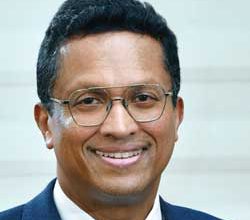
Rukmal Dharmadasa
FINANCING MODUS OPERANDI
Reshaping transparency and access to capital under geopolitical pressures

Most noteworthy global trend in supply chain finance (SCF)
Moving towards deep tier financing, focussing on upstream tier two and three suppliers, and making supply chains more resilient.
Impact of geopolitical tensions on SCF
Pushes overall costs up and increases the liquidity squeeze due to uncertainty.
Role of technology in modern supply chain finance
It has become the cornerstone by creating tech platforms empowered with AI and ML, and providing end-to-end visibility to all value chain partners.
Importance of data transparency in the sector
It plays a critical role in expanding access to capital for value chain participants, mitigating supply chain risks, strengthening compliance, and enabling timely and data driven decision making.
Main challenge facing the sector today
Onboarding value chain participants to an SCF programme – especially making finance available to smaller firms in the value chain.
Impact of COVID-19 on supply chain finance
It fast tracked the automation and digitisation of SCF, and highlighted the critical importance of having end-to-end digital platforms.
Buyers and suppliers adapting to financing pressures
Early payment programmes (where large corporate buyers partner with banks) significantly ease financing pressures for both suppliers and buyers by accelerating cash flows and reducing working capital strains.
Impact of rising interest rates on trade financing
It increases financing costs for clients, puts downward pressure on profit margins and results in an overall dip in transaction volumes.
Influence of emerging markets on global SCF
Countries such as China and Vietnam are reshaping global supply chain finance by introducing rapid digitalisation of platforms, and focussing on deep tier SME financing coupled with AI solutions.
Next major fintech innovation in supply chain finance
Move towards agentic AI.
Using blockchain in supply chain finance
Invoice tokenisation enables faster and more reliable and transparent invoice financing, thereby improving access to capital for value chain participants.
Role of artificial intelligence in risk assessment
AI enhances predictive accuracy by eliminating manual bias, and enabling faster and more reliable decision making.
Granting access to SCF for small suppliers
By enrolling with a financial institution that offers platform based SCF, it allows small suppliers to access supply chain finance more conveniently.
Emerging trends in trade financing for SMEs
Key trends include access to trade finance through digital platforms and sustainability linked financing.
Impact of currency fluctuations on supply chain finance decisions
They have a notable impact since such decisions increase cost volatility – leading to uncertainty in profit margins – and affect the final selling price of goods.
Sustainability trends influencing supply chain financing
Key trends include sustainability linked loans, which offer preferential rates to suppliers meeting environment, social and governance (ESG) criteria, and supply chain finance platforms with end-to-end ESG traceability capabilities.
Integrating climate risk into SCF models
Climate risk in supply chain finance is integrated through credit metric adjustments with default probabilities reflecting exposure in high-risk regions and carbon border impacted customers.
Most effective risk mitigation strategies
Combining strong credit principles with real-time transaction validation.
Impact of customer demand shifts on sector priorities
Demand has shifted purely from a working capital optimisation priority to creating holistic financially resilient supply chains with real-time data driven decision making.
Role of alternative financing platforms
They bring inclusivity and innovation compared to SCF platforms, which are exclusive and provides anchor based financing.
Importance of real-time datain supply chain finance
Real-time data is a critical requirement in SCF as decisions with regard to working capital optimisation, proactive risk management will depend on this.
Regulatory changes shaping the sector
Globally, anti-late payment rules in the EU and UK curb corporates’ use of extended payables, while stricter SCF disclosures and ESG regulations demand greater transparency across supply chains.
How you see cross-border financing evolving
It’s moving towards a more ‘multi rail’ system offering faster low-cost options compared to a slow and opaque corresponding banking model.