
LMDtv 2
Today, technology is everywhere and in everything including cinema entertainment. Cinemas around the world have evolved in their use of technology, moving from xenon lamps to laser projection and generic speakers to immersive sound among other advancements.
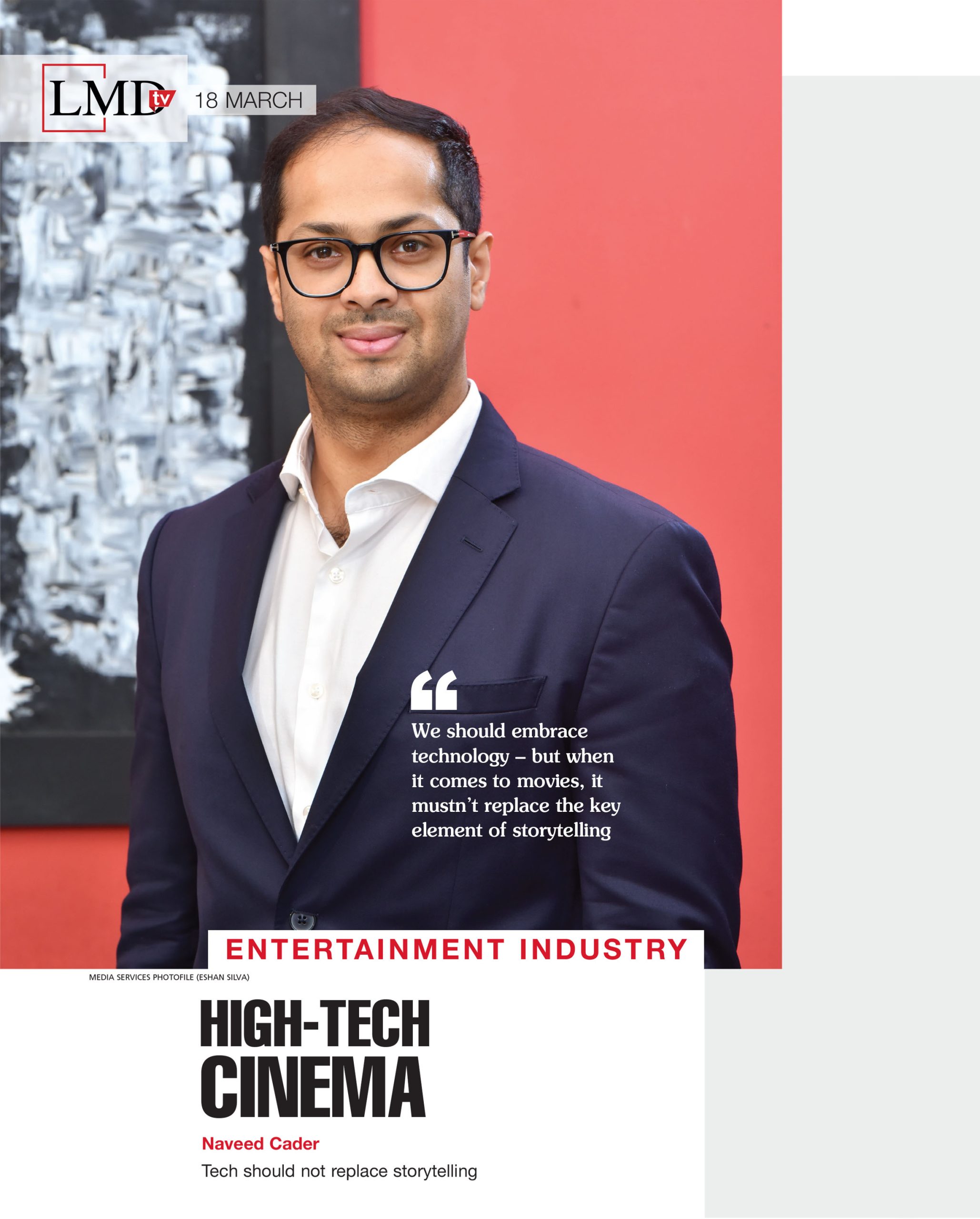
In addition to the visual experience and audio that have evolved with technology, so have the operational aspects of the industry. Tech has spread across the board and is here to stay, explained the Executive Chairman and CEO of Scope Cinemas Naveed Cader, when speaking to LMDtv’s Ruwandi Perera.
Although Sri Lanka might be somewhat behind in its adoption of technology, the country has seen substantial development in its cinema sector – such as introducing an IMAX theatre, Dolby Atmos audio systems, the latest LED screens and the use of AI.
And Sri Lanka has a long way to go since many rural areas only have single screen cinemas and the adoption process may take longer. However, Cader believes that the country is catching up.
Moviegoers have evolved as well, he pointed out: “Today, viewers demand a movie experience as opposed to simply a movie screening.”
Cader explained: “People are more aware of what is out there and naturally, demand trends shift. In the 1970s and ’80s, people went to the cinema to watch a film, which was simply a projector and sounds. Today, it’s a social activity; they want great popcorn, good food and drink options because it’s far more experiential than it used to be.”
On-demand streaming services, which gained popularity during the pandemic, have also influenced how people consume screen based entertainment.
He noted: “The sector was very concerned about whether streaming would lead to the end of cinema as there were studios that released movie titles only on streaming platforms. However, streaming doesn’t bring the same box office backing because at the end of the day, human beings are social creatures.”
“People like to hang out with friends and family, and cinemas offer opportunities for socialisation unlike streaming platforms,” he added.
Nevertheless, certain types of content work only on streaming platforms such as TV shows and series, which you can’t watch in a cinema. Cader said that “if you consider the big box office hits, they should only be watched on the biggest screens possible. They must be seen in the company of others while sharing the excitement with those around you.”
Today, movie makers have realised that they have two types of platforms to produce movies for. Cader believes that there’s space in the ecosystem for both and that a possible balance has been established.
He continued: “Though streaming is here to stay, you can never replace a large screen format or surround sound that’s found in a cinema.”
While technology is redefining cinema, it’s also posing challenges, he acknowledged: “Technology, which is evolving fast, drives production as well as exhibition costs. So if we build a cinema today and a new technology emerges tomorrow, people will demand it – because they’re aware of advancements. Therefore, keeping up with tech requires that we incur more capital expenditure.”
On the positive side, the use of tech generates data, which can be used to analyse experiences and improve operations.
AI is also used widely these days and data is gold. It’s about how cinema owners can use it to optimise screen times, sell the right products at the right price, plan where they need to head in the next two years and be on top of trends.
Though they need to adapt as they go along, Cader believes that the pros of technology outweigh the cons “We should embrace technology – but when it comes to movies, it mustn’t replace the key element of storytelling.”
And he emphasised that if the power of storytelling disappears, people will lose something far greater. On the other hand, if technology enhances the process, the whole cinema experience becomes richer.