SPORTING LIFE
M. F. Muhammad
FROM THERAPY TO TRIUMPH
The ascent of Sri Lanka’s emerging breaststroke Olympic contender
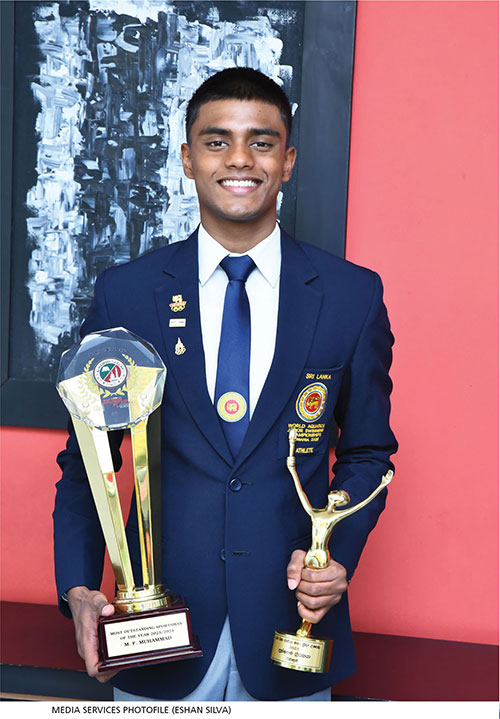
For M. F. Muhammad, swimming was never meant to be a career. It began as a remedy. In 2017, doctors advised the young boy to take up swimming to manage severe wheezing. And what started as therapy soon transformed into destiny.
Once his health improved, a sharp-eyed coach saw something more than recovery strokes in the pool – he saw potential. That coach was Fawaz Mohideen, the gentleman who first insisted that Muhammad’s future lay in competitive swimming, even when others believed it should end there.
That belief changed everything.
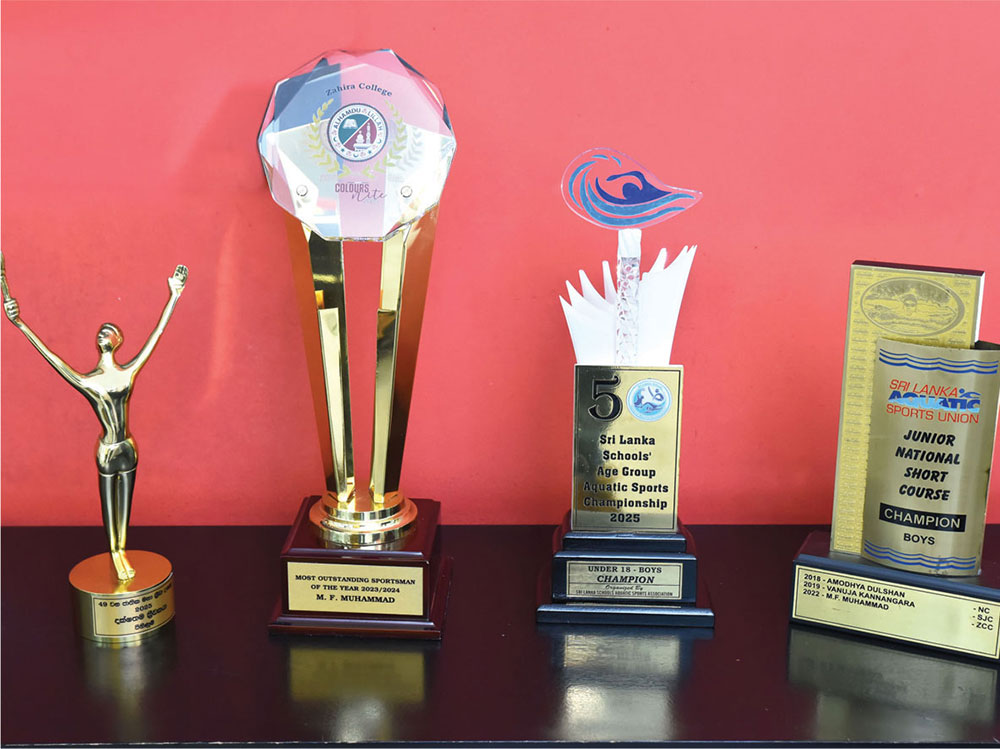
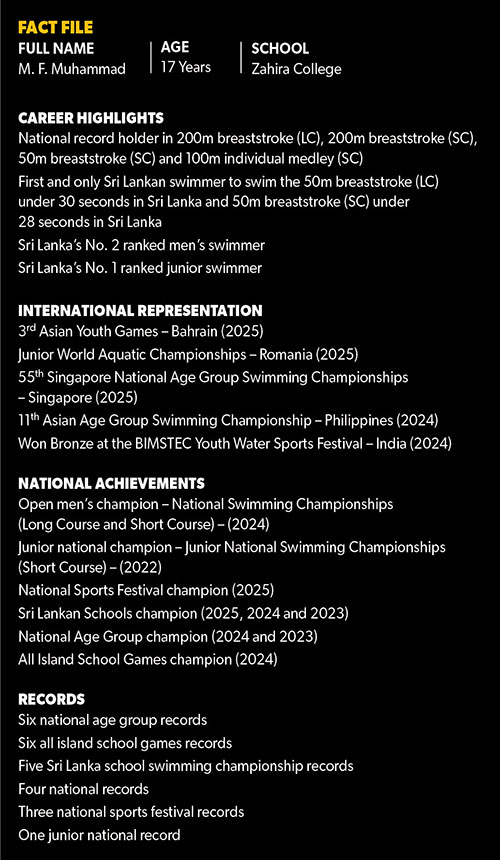
Today, Muhammad stands as one of Sri Lanka’s most accomplished young swimmers – a national record-holder and trailblazer in breaststroke. At 17, he has already rewritten the country’s record books across both long course and short course formats, establishing himself as Sri Lanka’s premier breaststroker.
Like many young swimmers, he tried multiple strokes, competing primarily in backstroke. The turning point came in 2022 at the Long Course National Championships. Competing in the junior category, his coaching team made a bold decision to shift his focus to breaststroke.
The change proved transformational. Results followed almost immediately and with them came clarity.
Breaststroke wasn’t just another event; it was his calling. From that moment onward, Muhammad committed himself fully. And his rise has been rapid and historic. He became the first Sri Lankan swimmer to break three major time barriers in breaststroke – a milestone that reflected not only raw talent but years of discipline, patience and technical mastery.
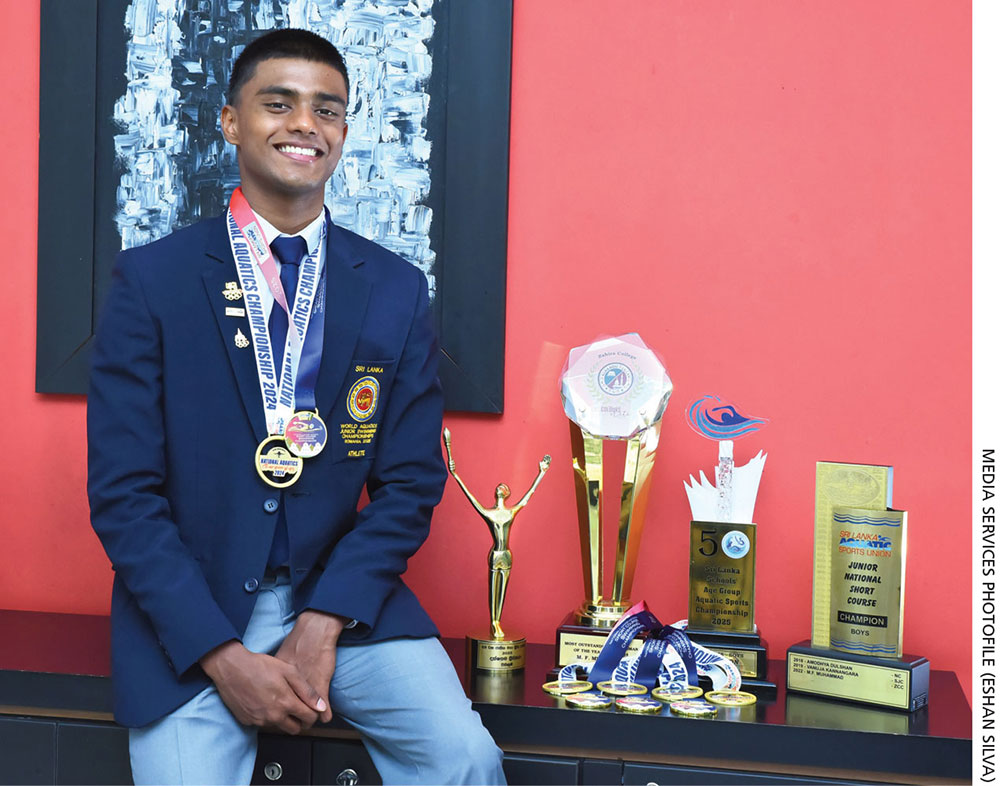
Today, he holds national records in the 50m and 200m breaststroke (short course), 200m breaststroke (long course) and 100m individual medley (short course). For Muhammad, these records represent more than numbers; they confirm his identity as the country’s leading breaststroke specialist.
Breaststroke is widely regarded as the most technical of swimming’s four strokes, demanding perfect coordination between pull, kick and glide. Muhammad thrives on that complexity.
His training places heavy emphasis on timing, efficiency and patience – particularly in longer events such as the 200m, where control matters more than speed alone. “It’s not a stroke everyone can do. You have to respect it,” he says.
Behind the records lies an unforgiving routine.
Muhammad’s day begins at 4.30 in the morning, long before the city wakes. After morning prayers and a quick snack, he is in the pool by 5 a.m. training at CR & FC with Killer Whale Aquatics.
Evenings bring another session – often in Sri Jayewardenepura – followed by recovery, meals and rest. There is little room for distraction – social events are rare; free time even rarer.
Mental strength has become just as important as physical preparation.
Muhammad relies heavily on visualisation, spending time mentally rehearsing races in detail – anticipating both success and setbacks. This method has helped him navigate high pressure situations including international competitions where margins are razor thin.
Representing Sri Lanka at events such as the Asian Youth Games and World Junior Championships exposed him to the sport’s global standard. Rather than feeling intimidation, he felt motivated: “When you see how fast they are, you realise the gap isn’t impossible – we’re all human.”
Pressure however, is unavoidable – especially at such a young age. Muhammad manages it through faith and perspective. He credits prayer with keeping him grounded. Rather than obsessing over outcomes, he trusts the work he has put in and leaves the results to God.
But his journey has not been without setbacks.
Disqualifications – including a painful one at the Asian Youth Games in Bahrain – tested his metal. His current coach, Olympic swimmer Matthew Abeysinghe, has played a pivotal role in guiding him through both triumphs and disappointments. Abeysinghe is also Muhammad’s greatest inspiration – a reminder of what it means to represent country before self.
At home, the foundation is even stronger.
Muhammad credits his parents as his greatest supporters. His father manages travel and finances, while his mother plans nutrition and recovery, tailoring meals around competition and training phases. His school has also been instrumental, sponsoring overseas training and competition – support that remains rare in Sri Lankan sport.
Looking ahead, Muhammad’s ambitions are unmistakably bold. His immediate targets include breaking South Asian records and challenging Indian national times – barriers he is already within seconds of surpassing.
Beyond that lies the ultimate dream: the 2028 Olympics. He does not speak of participation. He speaks of winning.
“I don’t want to be remembered as someone who competed. I want to be remembered as the first Sri Lankan swimmer to win an Olympic medal,” he says.
Muhammad is not waiting for history to define him. He is already shaping it – one stroke, one record and one relentless morning at a time.