LMDtv 3
“We have customs duties and the para tariff system, which makes it very difficult for enterprises to do business”
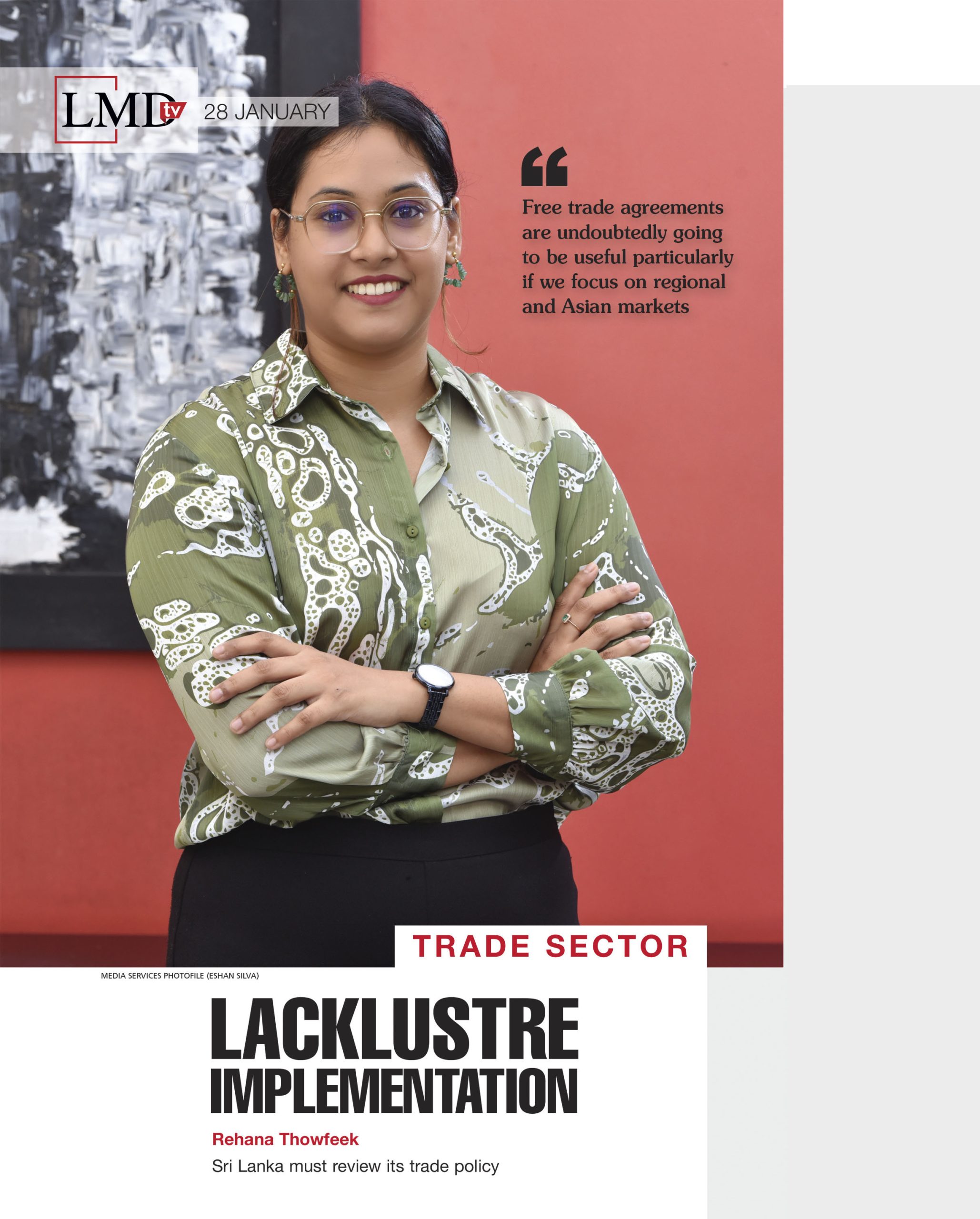
The past year was challenging for Sri Lanka, largely due to the shocking tariffs introduced by US President Donald Trump in April. According to economist, and Cofounder and Director of Civic Education at Arutha Research Rehana Thowfeek, 2026 is unlikely to be easier.
Speaking recently on LMDtv, she noted that last year was defined by tariffs. With global growth now slowing, and demand from major trading hubs such as the US and EU weakening, she said the year ahead will also be tough in terms of trade.
Amid increased power plays and global movements towards the polarisation of countries, Sri Lanka’s trade position could face heightened uncertainty.
Thowfeek explained: “Trump recently announced that he will impose an additional tariff on countries doing business with Iran. This is a problem for Sri Lanka because on the one hand,the US is our single largest export market and on the other, we also do business with Iran, which is one of our top 10 export markets for tea.”
According to her, the golden era of open trade is drawing to a close – and Sri Lanka appears to have missed it. She added that over the past few decades, several countries have become increasingly open to trade and were bringing down their trading barriers.
And they had begun looking at integrating with global value chains.
Thowfeek added that these efforts are now being reversed and the United States in particular is leading the change, as it’s beginning to build walls by being extremely hostile towards trading and doing business with other countries.
In terms of trade policy, she acknowledged that Sri Lanka can only manage what it has within its control. While the island has faced many challenges with its trade policy framework over the years, it has regrettably failed to overcome them for many years.
She observed: “One critical issue is the complexity of our tariff systems. We have customs duties and the para tariff system, which makes it very difficult for enterprises to do business. For small-time exporters, it’s especially difficult to understand how much they should be paying because sometimes the para tariff is a percentage and at other times, it is based on the weight of goods. It’s extremely complicated.”
FTAs, she noted, are another prospective avenue that Sri Lanka could and should actively focus on.
“We talk a lot about trade facilitation problems that exist; but we don’t really have an institution dedicated to looking at the trading challenges. So why don’t we establish an office that focusses purely on hammering out free trade agreements?” she asked.
Thowfeek cited several examples of inefficiencies regarding Sri Lanka’s free trade agreements, including those with India and Pakistan. Though they’ve been in existence for many years, these agreements have been plagued by issues with implementation.
She elaborated: “In terms of our FTA with India, one of the big implementation challenges is the lack of a mutual recognition agreement, which will mean that Indian standards are recognised in Sri Lanka and vice versa. This will make it very much easier for businesses because if you have been certified in one country, it would also be applicable in the other.”
However, there have been issues in this regard that have yet to be fully resolved. Sri Lanka had also signed an FTA with Singapore in 2018, which to date isn’t fully operational due to unresolved negotiations regarding levies.
And the country also signed an agreement with Thailand in 2024, which is still being discussed and negotiated – and therefore, has yet to be implemented.
“Free trade agreements are undoubtedly going to be useful particularly if we focus on regional and Asian markets.We already have several in place – we now need to get them going,” Thowfeek reiterated.
And she noted that as a small country, there’s very little Sri Lanka can do to influence the trajectory of major superpowers but added that it can adapt accordingly.