THE GRATIAEN TRUST
The Gratiaen Trust Announces the Panel of Judges for the 32nd Gratiaen Prize and the HAI Goonetileke Prize for Translations.
The Gratiaen Trust, in association with John Keells Foundation, is pleased to announce the distinguished panel of judges for Sri Lanka’s most prestigious literary award for creative writing in English, the 32nd Gratiaen Prize. Founded by Michael Ondaatje in 1992, the Gratiaen Prize is awarded annually to the best piece of creative writing in English by a Sri Lankan author residing in Sri Lanka. The prize aims to encourage and recognise literary talent in Sri Lanka, fostering a rich and diverse literary culture. The Trust also announces the jury panel for the HAIG Prize for Translations.
This year’s panel embodies the Gratiaen Prize’s continuing practice of including three viewpoints in the judging process: a creative writer, an academic, and an informed general reader. Collectively, they offer a rich blend of experience, insight, and diversity to assess this year’s submissions.
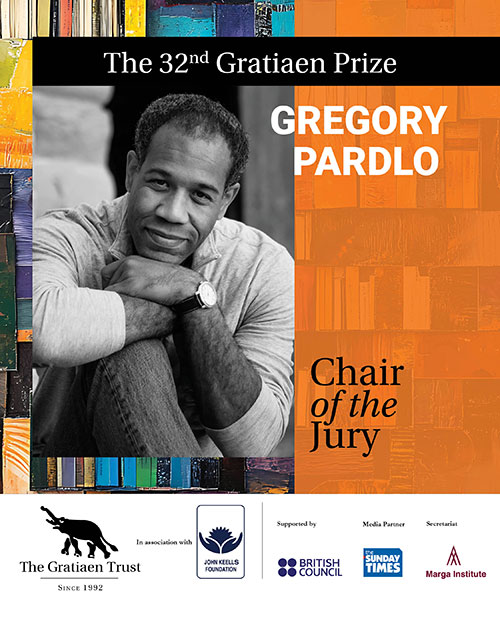
Gregory Pardlo – Chair of the jury (Creative Writer), is an internationally acclaimed poet, essayist, and educator. Pardlo is the author of Spectral Evidence, which was a finalist for the Kingsley Tufts Prize and longlisted for the National Book Award and Digest, which won the 2015 Pulitzer Prize for Poetry. His other works include Totem and Air Traffic, a memoir in essays. Pardlo’s contributions to literature have earned him numerous accolades, including fellowships from the New York Public Library’s Cullman Center, the National Endowment for the Arts, and the Guggenheim Foundation. Currently, he is the Head of the Literature and Creative Writing Programme at NYU Abu Dhabi, dividing his time between New York and the United Arab Emirates. His profound understanding of the creative process and global perspective make him an invaluable addition to the Gratiaen Prize panel.
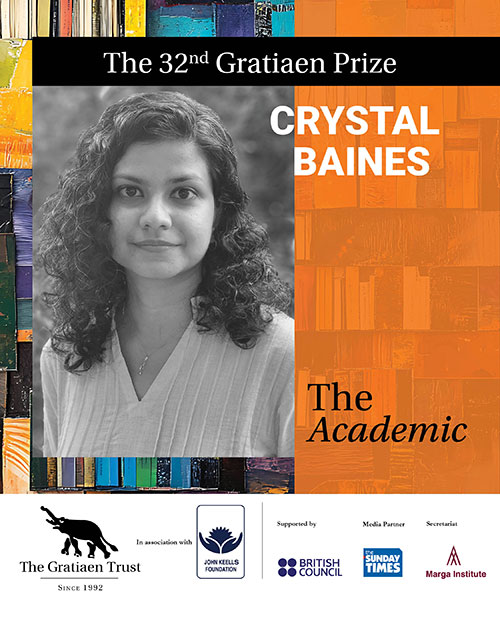
Dr Crystal Baines brings a scholarly perspective to the judging process. She holds a BA in English from the University of Peradeniya and a PhD in English and Comparative Literature from the University of Massachusetts, Amherst. Her research focuses on the intersections of secularisation narratives and Buddhist thought in twentieth-century South Asian literature. She is a researcher affiliated with the Social Scientists Association in Colombo and a Visiting Lecturer in the University of Colombo’s Department of English. Her deep engagement with South Asian literary traditions and her commitment to interdisciplinary scholarship contributes to a rigorous and thoughtful evaluation of this year’s submissions.
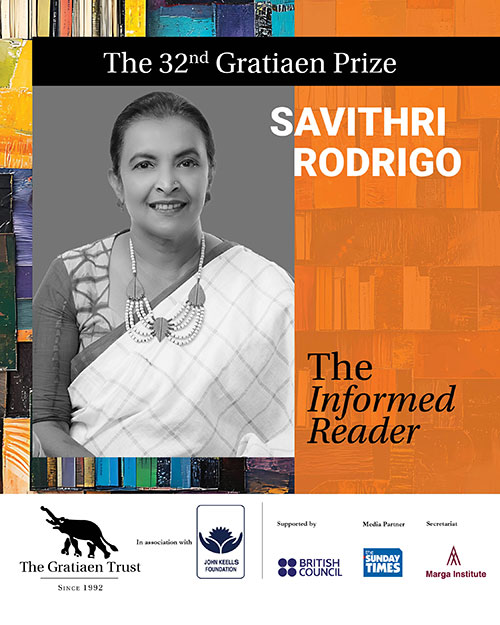
Representing the informed general reader is Savithri Rodrigo, an award-winning journalist with over 37 years of experience in the media industry. A Fellow of the ICSA (UK) and ICCSL (SL), her extensive experience as a communicator and storyteller brings a unique perspective to the Panel.
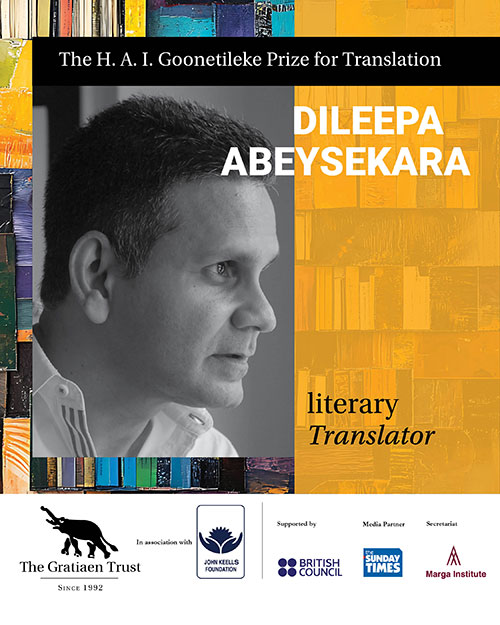
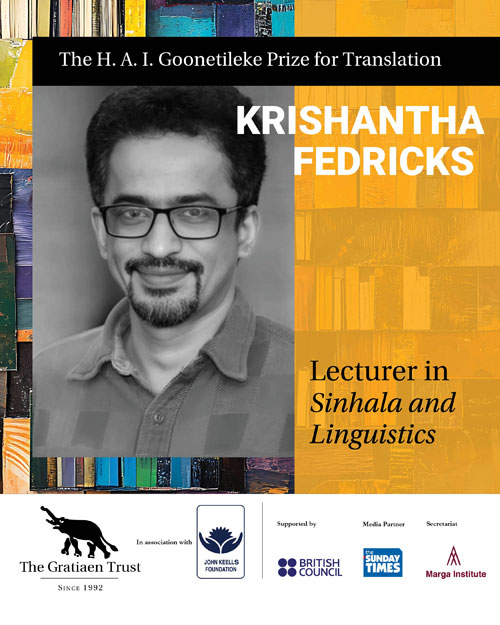
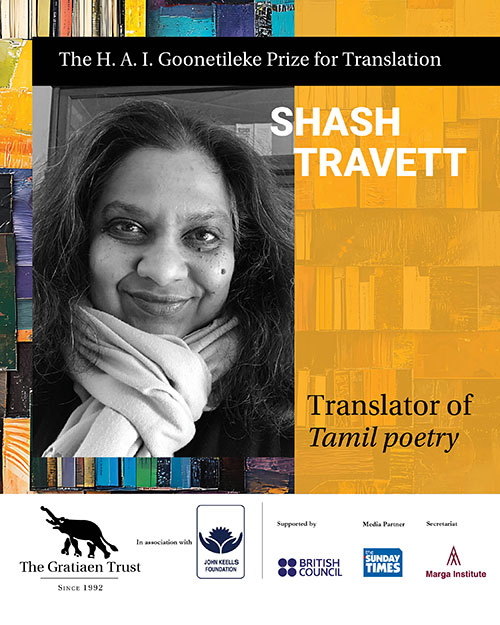
This year, the Gratiaen Trust will also present the HAIG Prize for Translation, a biennial award recognising exceptional translations from Sinhala or Tamil into English. The judging panel for this award comprises Shash Trevett, a poet, critic, and translator of Tamil poetry. Trevett is the co-editor of *Out of Sri Lanka: Tamil, Sinhala and English Poetry from Sri Lanka and its Diasporas* (Bloodaxe 2023, Penguin India 2023), which has been recognised as one of the Times Literary Supplement’s Books of the Year for 2023. Her translations are included in the Cambridge IGCSE and A Level syllabi. Dr. Krishantha Fedricks is a Senior Lecturer in Sinhala language, literature and Linguistics at the University of Colombo; he is a linguistic anthropologist specialising in language, culture, and media. He is also a poet, painter, and translator. Dileepa Abeysekera is a creative professional and literary translator whose work bridges the worlds of advertising and literature. His diverse experiences shapes his ability to see the world through multiple lenses, a skill that has defined his career. Apart from being a Creative Director in advertising, Dileepa is also known as a translator. He is best known for his Sinhala adaptations of Shehan Karunatilaka’s celebrated novels, The Chinaman (2015) and The Seven Moons of Maali Almeida (2023).
Apart from its flagship activities – the annual Gratiaen Prize, and the HAIG Prize for translations awarded every two years – the Gratiaen Trust organises workshops, masterclasses, outreach programs and many other activities to support an increasingly vibrant literary culture in Sri Lanka.
Since 2019, John Keells Foundation – the CSR entity of the John Keells Group, in line with its vision of “Empowering the Nation for Tomorrow” is the principal sponsor of the Gratiaen Trust. John Keells Foundation espouses numerous initiatives that promote education, biodiversity, livelihoods, and social health and cohesion, which encompass preserving and promoting arts and culture aimed at safeguarding and fostering the cultural heritage of Sri Lanka and boosting creative economies through strategic initiatives and collaborations.
For further details about the Gratiaen Prize, the HAIG Prize for Translation, and the upcoming awards ceremony, please visit www.gratiaen.com.