REGIONAL DIGITAL PAYMENTS LANDSCAPE
Digital payments are strengthening economic ties and fostering greater cross border collaboration, underpinned by a shared focus on regional integration and interoperability. The regional payments landscape is evolving rapidly, fuelled by growing consumer demand, expanding acceptance infrastructure and ongoing digital innovation.
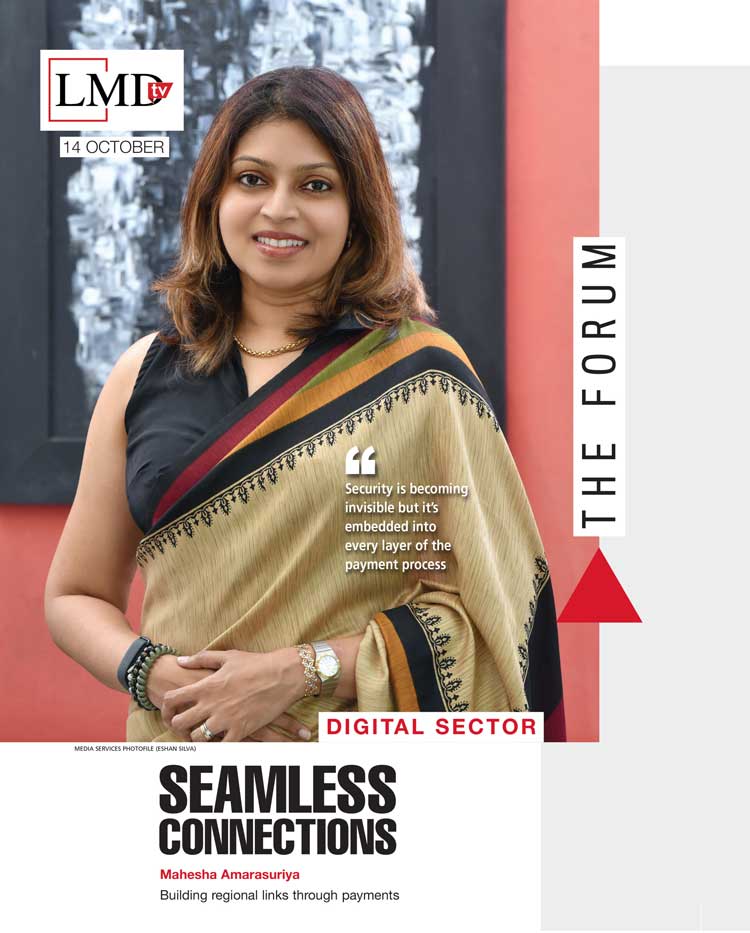
Country Manager Sri Lanka for Mastercard Mahesha Amarasuriya spoke to LMDtv recently, and explained how payments follow people who are increasingly moving across the region for work, trade, education and leisure.
“The yardstick for a successfully integrated and inclusive payments ecosystem is whether all users, including the smallest merchants, can transact securely and seamlessly,” she explained.
There are several trends that Amarasuriya believes will influence digital payments in the years to come, beginning with changing consumer behaviour.
The manner in which consumers pay has evolved dramatically, from cash led transactions to card payments and now frictionless contactless experiences.
“Consumers are increasingly embracing tap and go solutions for their speed and convenience. As digital wallets such as Google Pay and Apple Pay become widely available, we expect contactless payments to become an integral part of everyday commerce,” she asserted.
Another key trend is the increase in digital payment acceptance.
“Merchants should be able to accept multiple forms of payments that come in,” Amarasuriya added, citing the widespread adoption of Alipay in China, which allows foreign travellers to use any credit or debit card issued in their home country through its app.
The trend towards tokenisation, she noted, is also influencing the digital payments landscape, alongside a widespread shift towards password less authentication. “Security is becoming invisible but it’s embedded into every layer of the payment process,” she stressed.
And the Asia-Pacific is buzzing with growth in digital payments.
Amarasuriya shared that tourism is perhaps one of the region’s most significant opportunities: “Intraregional tourism is particularly important with millions travelling across the region.”
“Here, we see the opportunity to facilitate tourist payments in multiple ways. Another related opportunity is in transit, when tourists use public transport and need to make payments using credit and debit cards issued by banks in their home country. Sri Lanka is progressing in that direction whereas some South Asian countries have already started,” she observed.
Another noteworthy area for digital payments relates to small and medium enterprises (SME), and business to business (B2B) transactions. Currently, many SMEs and B2B operations, both regionally and within countries, rely heavily on paper based payment processes.
Amarasuriya noted that “digitising these processes will not only bring payment flows into formal channels but also support businesses expand their marketplace and enjoy cost savings, as handling cash has its own costs.”
“It’s already happening; but there’s plenty of room for improvement in terms of safety and security, and speed and convenience,” she claimed. Amarasuriya also explained how payment solutions such as virtual cards can elevate security in B2B payments.
She opined: “Businesses can issue virtual cards when making payments to other businesses, with predefined controls over how the payment is used. For example, they can restrict the number of transactions, specify where the card can be used and set its validity period, thereby enhancing security and control.”
It boils down to a mindset that is open to using technology not merely for consumption but solve real problems too.
“It’s about ensuring that users are able to truly understand and adopt digital payments, not because someone tells them to do it but because they genuinely see the benefit,” she concluded.