POWER SECTOR
Over the years, Sri Lanka’s energy crisis has gradually worsened; and it has imposed a heavy burden on consumers. Low income groups in particular have faced power cuts due to their inability to settle exorbitant electricity bills.
Another recent issue follows reports of imports of low quality coal, leading to exchanges of accusations and denials between the government and opposition. There is also a move to restructure the Ceylon Electricity Board (CEB), resulting in some employees resigning – they accuse the government of not keeping its promises.
THE DARK TUNNEL OF ENERGY
Janaka Perera laments Sri Lanka’s unenlightened power sector proposition
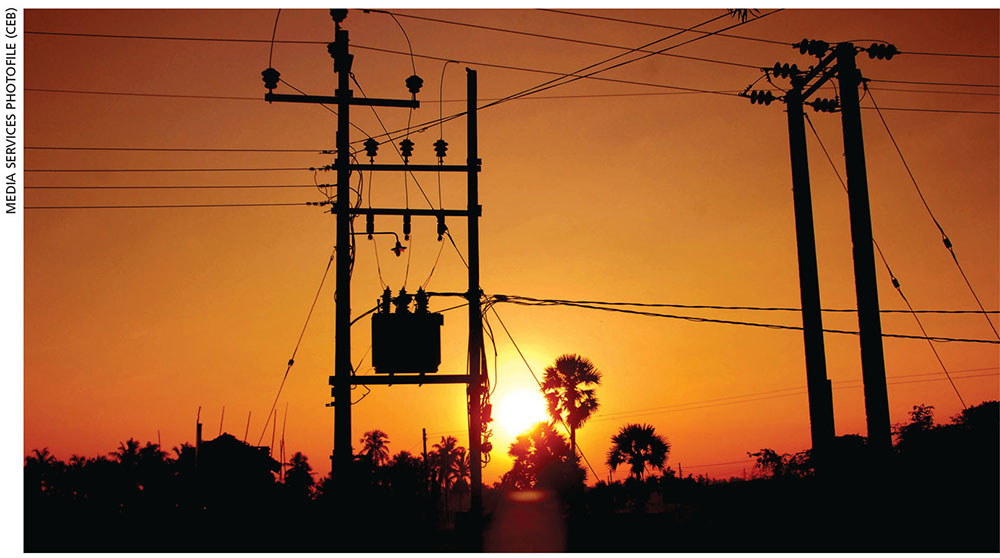
The power crisis is a multidimensional challenge that’s rooted in economic mismanagement, heavy dependency on fossil fuel imports and environmental vulnerabilities. Historically reliant on hydropower, Sri Lanka has increasingly shifted towards thermal power, and left itself exposed to global price shocks and domestic foreign exchange shortages.
This crisis stems from a chronic overdependence on hydropower and imported fossil fuels, which is exacerbated by forex shortages, ageing infrastructure and climate driven droughts. These issues have led to strong demands for policy reform and a swift transition to renewable energy.
At the centre of the power crisis is an inability to pay for imported coal and diesel due to depleted forex reserves, and the resultant interruption of power generation. The other problem is Sri Lanka’s heavy dependence on rainfall driven hydropower, whereby droughts trigger staggered power outages.
This predicament is worsened by infrastructure failures and a lack of investment. Slow progress in building new diversified power plants and outdated grid technology also causes capacity gaps.
The CEB has long suffered from financial instability, and this poses economic challenges that in turn impact industries and services that account for 60 percent of the economy. And the lack of adequate energy coupled with fuel shortages often results in widespread protests and social frustration.
Concerns also exist about potential world oil price fluctuations and supply chain disruptions. However, the government maintains that it is managing the situation and has adequate reserves. In fact, the administration has repeatedly assured the public that sufficient reserves are available to meet demand, dismissing rumours of any impending crisis.
Early last year, a dispute arose over fuel dealer commissions, which led to some private distributors suspending new orders – and temporary distribution issues affecting privately owned stations in particular followed. However, Ceylon Petroleum Corporation (CPC) and Lanka IOC stations continued to operate.
In their efforts to quell panic among the public, state and CPC officials reassured people, urging them not to engage in hoarding as this would lead to fuel shortages. They claimed that Sri Lanka has sufficient reserves to last two months and were expecting more crude oil to arrive.
For the past several decades, global economies have been shaped by fossil fuels – an overreliance that is hard to shake off. The world can’t do away with fossil fuels overnight and our current energy crisis cannot be blamed on external factors alone – our plight stems from a combination of short-sighted political leadership and poor application of reforms.
In contrast to previous decades, renewable energy technology has become much cheaper. Since 2010, there has been a sustained reduction of up to 85 percent in the cost of solar and wind energy, and energy storage batteries. With the energy sector accounting for almost three-quarters of human caused greenhouse gas (GHG) emissions, a shift to clean and renewable sources is critical.
Reforms must include the conversion of three-wheeled vehicles and buses to electric technology to reduce the burden of foreign exchange outflows for fossil fuel imports. There must also be an automatic fuel pricing system to determine who can and should pay.
A few years ago, the Sunday newspaper Aruna reported that some 100,000 households still use bottle lamps to illuminate their homes at night. This situation existed in Sri Lanka over 60 years ago.
Although the 2022 energy crisis was the worst we have faced, there have been cyclical power issues since the 1990s because we failed to implement sustainable long-term solutions. Moving towards solar, wind and other clean energy sources is critical to ending our fossil fuel addiction.
Unless a monthly payment system is introduced however, very few can afford the initial cost of shifting to solar power. It is also essential to modernise infrastructure by upgrading the grid and developing storage solutions to manage peak demand.
The energy crisis is a symptom of broader economic, structural and environmental mismanagement. Overcoming this requires diversifying the energy mix, investing in renewables and reforming sector governance to ensure long-term stability.