EDUCATION SECTOR
Q: How is hands-on maker based learning shaping the skills future professionals need compared to traditional education?
A: Sri Lanka’s traditional education system produces professionals who successfully enter higher education and the workforce. However, it was designed during the industrial era with a focus on following instructions, memorising content and performing well in examinations.
Compiled by Prashanthi Cooray
LEARNING NEEDS A MAKEOVER
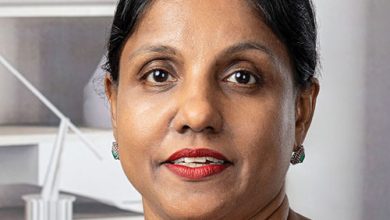
Nevindaree Premarathne explains why hands-on learning matters today

While this built discipline, it is insufficient in today’s innovation driven economy.
Hands-on maker based learning shifts learners from being passive recipients of information to active creators. Students design, build, test, fail and improve – experiencing the same processes used in workplaces. This develops problem solving ability, resilience, adaptability and collaboration.
Maker based learning also engages students who may not thrive in traditional academic settings. With over half of Advanced Level students unable to enter university, alternative practical learning models are essential. Maker spaces and project based environments foster entrepreneurship, vocational skills and innovation.
By prioritising application rather than memorisation, maker based learning prepares students for a future where creativity and real world problem solving matter more than exam scores.
Q: What skills do you believe science, technology, engineering, arts and mathematics (STEAM) education must prioritise today to stay relevant?
A: We have moved from the industrial and information age, to an imagination and AI driven era where knowledge alone is no longer a competitive advantage. Information is freely available, and artificial intelligence can analyse and synthesise data faster than humans.
What matters today is how learners apply knowledge.
Therefore, STEAM education must prioritise problem solving, creativity, and critical and systems thinking. Students should learn how to identify problems, analyse situations and design solutions. Digital literacy, AI awareness and cybersecurity fundamentals are now essential across industries.
Equally important are human skills such as empathy, communication and leadership, as understanding user needs and social impacts is central to meaningful innovation.
STEAM programmes must also cultivate lifelong learning. When students gain confidence in experimentation and self-learning, they remain relevant regardless of technological change.
Q: So where do current education systems fall short in preparing learners for real world problem solving and innovation?
A: One key limitation of current education systems is the focus on memorisation and standardised testing – students are evaluated based on information retention rather than effective knowledge application.
Although we entered the information era with widespread internet access, curricula and assessment methods did not evolve accordingly. Knowledge became a commodity, yet education systems continued to reward information recall. In the AI era, this gap is even more evident.
Another shortcoming is the lack of alternative learning pathways. With limited university capacity, many students leave formal education without access to structured vocational, entrepreneurial or creative learning ecosystems. Personalised and flexible models remain underdeveloped.
Additionally, learners have limited exposure to real industry problems, multidisciplinary projects and experimentation. Failure is discouraged, yet innovation requires trial and error. Without safe spaces to test ideas, students struggle to develop confidence, initiative and entrepreneurial thinking.
Q: What structural gaps in Sri Lanka’s tech and startup ecosystem limit the scaling of early stage ventures today?
A: One of the biggest gaps is limited exposure to global markets, standards and best practices.
Many early stage founders operate within a small local ecosystem, and lack access to international networks, mentors and industry benchmarks. As a result, startups often struggle to design products that are scalable and competitive beyond Sri Lanka.
Another gap is policy and institutional support. While entrepreneurship is encouraged, practical support mechanisms such as tax incentives, simplified regulations, startup friendly procurement policies and government backed pilot opportunities are limited.
Providing startups with early credibility through public sector partnerships and endorsements could strengthen their growth potential.
Founder mindset and capability development is also an issue. Many entrepreneurs focus on fundraising instead of validating ideas, understanding users and developing strong products, weakening sustainability and investor confidence.
Access to early stage funding – particularly structured grants and seed mechanisms – remains constrained. However, funding is most effective when combined with validation, exposure and policy support.
Addressing these gaps requires ecosystem reform alongside deeper founder capacity building.
Q: Looking ahead, how will the maker movement influence entrepreneurship, workforce development and the innovation culture in Sri Lanka?
A: The maker movement has the potential to reshape Sri Lanka’s innovation culture by encouraging learning through doing, experimentation and problem solving from an early age.
Maker based learning builds confidence to test ideas, fail safely and iterate. This reduces fear of failure and encourages youth to explore startups and social enterprises. It also promotes low-cost innovation, allowing founders to validate ideas before seeking major funding.
In terms of workforce development, the maker movement nurtures multidisciplinary talent. Learners develop technical skills alongside creativity, collaboration and critical thinking – qualities that industry demands.
And finally, it shifts mindsets. When students are exposed to challenges and opportunities early, they think beyond their limits. With proper ecosystem support, makers can become founders, innovators and industry leaders.