
JEWELLERY SECTOR
Q: What role does technology play in ensuring transparent and real-time pricing in the jewellery sector today?
A: Technology has become the backbone of transparent and real-time pricing in the modern jewellery sector.
Compiled by Tamara Rebeira
BEYOND CARATS AND COMMERCE
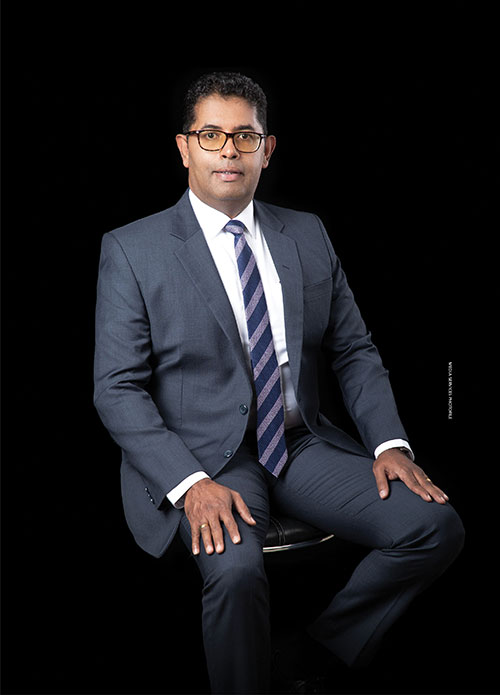
Nandana Herath calls for jewellery sector innovation and differentiation
With gold prices and exchange rates constantly fluctuating, manual pricing models are no longer sustainable. Advanced systems linked to international bullion markets enable retailers to adjust prices instantly, ensuring competitiveness and margin protection in a volatile environment.
Beyond efficiency, technology strengthens customer trust. Today’s informed customers expect clarity in pricing. Digital displays, integrated POS systems and online platforms enable customers to understand gold rates, weights and value additions with complete transparency.
Technology also supports strategic pricing through data driven insights. By analysing customer behaviour, demand patterns and inventory performance, retailers can optimise pricing without eroding brand value.
In this landscape, pricing transparency is not merely a technical necessity but a competitive advantage. Jewellery businesses that adopt advanced pricing systems are better equipped to ensure consistency, build customer confidence and sustain profitability in a dynamic global market.
Q: In terms of international jewellery trade, how do you view Sri Lanka positioning itself in the global market?
A: Sri Lanka has a strong opportunity to position itself as a premium niche player in the global jewellery market by leveraging its heritage in gemstones, craftsmanship and authenticity.
While larger producers compete on volume, Sri Lanka’s strength lies in quality and distinctive designs, and its reputation as a trusted source of precious gemstones.
However, future growth depends on moving beyond raw gemstone exports to value added jewellery manufacturing and branded products. Global markets increasingly reward origin based branding and authenticity – attributes that Sri Lanka holds a natural advantage in, provided quality standards and brand positioning remain consistent.
To compete internationally, the sector must prioritise design innovation, certification and modern production while preserving traditional craftsmanship. Strategic global partnerships and participation in international trade platforms will also be key to expanding market access.
With clear strategic direction, Sri Lanka can establish itself not as a mass producer but a trusted source of high quality, gemstone rich jewellery, thereby securing sustainable long-term growth and stronger global recognition.
Q: How important are international exhibitions and trade shows, in the context of brand exposure and sector insights?
A: Global exhibitions and trade shows are vital platforms for jewellery businesses seeking international recognition and growth. In a relationship driven sector, they offer direct access to global buyers, suppliers and sector leaders – opportunities that digital channels cannot fully replicate.
For established brands, exhibitions reinforce credibility and showcase design capabilities on an international stage. For emerging companies, they open doors to new markets and long-term partnerships. Consistent participation also signals stability and professionalism, which are key attributes in world trade.
These events also provide valuable strategic insights, offering early exposure to emerging trends in design, technology and consumer behaviour. This enables companies to anticipate market shifts rather than simply react.
From a leadership perspective, international exhibitions are not merely marketing exercises but strategic investments. Consistent participation strengthens networks, deepens knowledge and supports international expansion, making exhibitions essential to long-term growth.
Q: In what ways has digital transformation reshaped customer expectations in the jewellery sector?
A: Digital transformation has reshaped customer expectations in the jewellery sector, creating a more informed and selective consumer.
Today’s customers research gold prices, design trends and product value before entering a store, requiring retailers to operate with greater transparency and professionalism.
Consumers now expect seamless integration between digital and physical experiences. Online platforms, social media and digital catalogues are critical touchpoints – they influence decisions long before showroom visits. Speed and responsiveness are equally important.
Moreover, customers demand quick communication, accurate information and efficient service across all channels. Retailers who fail to meet these expectations risk losing relevance.
Digital transformation has also raised standards for brand presentation and trust, making high quality visuals and consistent communication essential. Jewellery retail has shifted from a purely transactional model to a more informed, experience driven relationship with customers.
Q: How do you see evolving consumer trends – such as demand for ethical sourcing or personalised pieces – shaping the future of jewellery businesses?
A: Evolving consumer trends are steering the jewellery sector towards authenticity, responsibility and individual expression.
Modern buyers want to understand the origin of gemstones and precious metals, making ethical sourcing and transparency essential rather than optional.
Personalisation is also reshaping demand with customers seeking pieces that reflect their stories and identities rather than standard designs. This shift pushes businesses to strengthen design capability, craftsmanship and customer engagement.
As a result, the sector is moving from volume driven retailing to value driven relationships. Jewellery is increasingly seen as a meaningful and lasting asset, elevating the importance of quality and uniqueness.
Looking ahead, successful brands will combine ethical responsibility with design innovation and deep customer insights, ensuring relevance and sustainable growth in a more discerning global market.