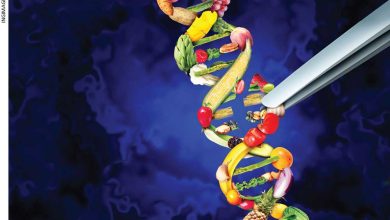
GOLD BIOTECHNOLOGY
LEAPFROG INTO A NEW FRONTIER
Akila Wijerathna weighs the prospects for Sri Lanka as a digital biotech hub

For decades, biotechnology has been synonymous with billion dollar laboratories, highly specialised equipment and vast research campuses filled with scientists in white coats.
Countries seeking to enter the global biotechnology sector traditionally faced a daunting challenge: build expensive infrastructure first and hope that innovation follows. But today, a new technological convergence is rewriting that rule book.
A rapidly emerging field known as ‘gold biotechnology’ is shifting the centre of gravity of biological discovery away from laboratory benches, and towards computer servers, AI systems and high-performance computing platforms.
This transformation presents a unique opportunity for countries such as Sri Lanka. Rather than attempting to replicate the costly biotechnology ecosystems of the US, Europe or China, Sri Lanka has the potential to leapfrog directly into the computational frontier of life sciences by leveraging its thriving information tech sector.
At its core, gold biotechnology represents the fusion of biology with computer science, data engineering, artificial intelligence and nanoscale design. It encompasses disciplines such as bioinformatics, computational biology, systems biology and nano biotechnology.
Instead of conducting experiments solely through physical manipulation of biological samples, scientists increasingly use algorithms to analyse genomic data, simulate biological systems, predict protein structures and design next generation therapeutics.
The shift has fundamentally changed the economics of biotechnology.
While traditional biotechnology often requires substantial capital investments in laboratories, chemicals and specialised facilities, computational biotechnology depends primarily on human expertise, computing infrastructure and access to biological data.
In many cases, a skilled team of data scientists and biologists equipped with cloud computing resources can generate discoveries that once required years of laboratory work.
This transition couldn’t have come at a better time for Sri Lanka.
Over the past two decades, the country’s IT and business process outsourcing (BPO) sectors have evolved into one of its most successful export services.
Thousands of graduates enter the workforce each year with expertise in software engineering, cloud computing, data analytics, cybersecurity and AI. And Sri Lankan tech companies have already demonstrated their ability to compete globally by delivering sophisticated digital solutions to international clients.
The skills that power modern software development are remarkably similar to those required in computational biotechnology. Data engineers who build large-scale customer analytics platforms can apply the same principles to genomic databases.
And machine learning specialists who develop predictive models for financial services can adapt those techniques to identify disease biomarkers. Cloud architects managing enterprise scale infrastructure can support high throughput biological data processing pipelines.
In essence,Sri Lanka doesn’t need to build an entirely new biotechnology workforce because it already possesses much of the technical talent required. But the challenge lies in directing that expertise towards biological and healthcare applications.
The most immediate opportunity is the establishment of specialised bio computational outsourcing services. Pharmaceutical companies, biotechnology firms, hospitals and research organisations generate enormous volumes of biological data from genomic sequencing, proteomics, metabolomics and clinical studies.
Processing and analysing these datasets require skilled personnel who understand both data science and biology, because gold biotechnology requires professionals who can operate comfortably in both biological sciences and computer sciences.
Sri Lankan tech companies are ideally positioned to fill this gap. By developing expertise in bioinformatics tools, workflow management systems and biological data analytics, local firms can provide high value services to global life science organisations.
Such services will command far higher margins than traditional outsourcing while positioning the country within one of the world’s fastest growing industries.
Strategic partnerships between biotechnology institutions and established tech companies could accelerate the development of shared computational infrastructure, including high-performance computing environments and cloud based research platforms.
Such collaborations can also attract foreign direct investments (FDI). Global biotechnology companies increasingly seek locations that offer a combination of technical talent, cost efficiency, regulatory stability and innovation friendly environments.
By positioning itself as a regional hub for computational biology and digital biotechnology services, Sri Lanka can capture a share of this growing market.